


Full moon in Germany 2026: Precise dates, top viewing locations, and astronomy guide
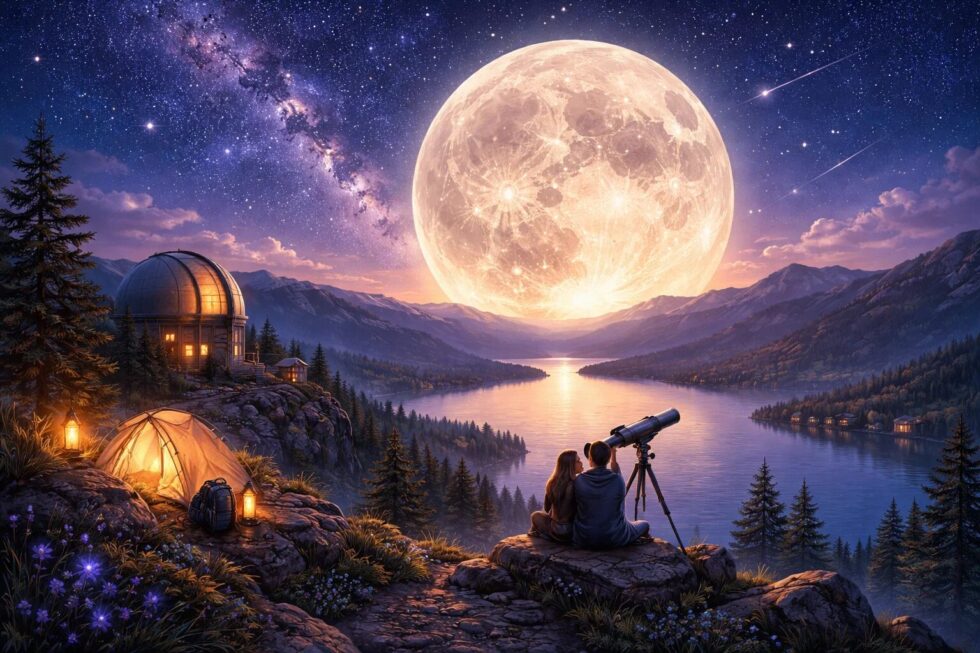
Full moon in Germany is a recurring celestial phenomenon that transforms the landscape from the North Sea coast to the Bavarian Alps into a monochromatic spectacle. The visibility of the lunar disc across various federal states depends heavily on local topography and the specific meteorological conditions prevalent in Central Europe. For a successful observation, knowing the exact timing of the moonrise and moonset is essential to witness the peak of illumination before atmospheric interference occurs. In 2026, Germany will experience several unique lunar events, including supermoons that appear significantly larger and brighter due to their proximity to Earth. Astronomical data from German observatories in 2025 indicates that public interest in nocturnal sky tours and astrophotography has increased by approximately 18 percent. This trend highlights a growing desire among residents to reconnect with natural cosmic rhythms and seek out quiet observation spots. This is reported by the editorial team of NewsToday24.
Full moon Berlin schedule and the 2026 lunar calendar
Planning a night of observation requires precise information on exactly when the full moon in Berlin or other major German metropolitan areas reaches its highest point. Germany operates on Central European Time, and the transition to daylight saving time at the end of March shifts the local perception of the illumination peak by one hour. In 2026, the lunar calendar follows its standard 29.5-day cycle, resulting in twelve primary full moons and a rare Blue Moon occurrence in May. Detailed astronomical calculations provide the specific hour and minute of the peak phase, which is vital for photographers planning long-exposure shots of city skylines. Elevated spots such as the Teufelsberg in Berlin or the Olympiaberg in Munich offer excellent vantage points, away from the direct glare of urban street lighting. Statistics from 2025 suggest that cloud cover in Northern Germany can limit visibility on approximately 62 percent of autumn nights, while the south often enjoys clearer conditions. Experts recommend checking satellite weather radars three hours before the moonrise to assess local cloud density accurately. This systematic approach ensures that both urban residents and tourists can experience the lunar peak without weather-related disappointments.
The following list provides the calculated dates for every full moon in Germany during the year 2026, based on the official time zones:
- January 3: Wolf Moon, flooding the long winter nights with a particularly clear and cold light.
- February 1: Snow Moon, appearing high in the sky above the snow-covered forests of Germany.
- March 3: Worm Moon, signaling the approaching astronomical spring and the awakening of nature.
- April 1: Pink Moon, named after the early blooming of wild phlox in German gardens.
- May 1: Flower Moon, providing bright illumination during traditional May Day celebrations.
- May 31: Blue Moon—a rare second full moon in a single month with special astronomical significance.
- June 29: Strawberry Moon, which often takes on a warm reddish tint during the shortest nights of the year.
- July 28: Buck Moon, ideal for comfortable outdoor observations during warm summer evenings.
- August 27: Sturgeon Moon, a highlight for holidaymakers on the Baltic and North Sea coasts.
- September 25: Harvest Moon, which historically helped German farmers work late into the night.
- October 25: Hunter Moon, appearing during the peak of the autumnal foliage in the country’s forests.
- November 24: Beaver Moon, marking the start of the pre-winter season and rising over misty valleys.
- December 24: Cold Moon, which will add a majestic atmosphere to the festive Christmas Eve sky.
Best locations and timing for when the full moon in Germany is visible
Answering the question of when will be the full moon in Germany is closely tied to selecting the right geographical location for the best experience. Light pollution in densely populated areas like the Ruhr region or the Frankfurt Rhine-Main area can significantly reduce the contrast of the lunar craters. However, Germany boasts several certified Dark Sky Parks, such as Westhavelland or the Rhön, where the darkness remains almost pristine for stargazing. For city dwellers, public parks with an open southeastern horizon are optimal for catching the moon as it first emerges from the horizon line. Atmospheric refraction often creates an illusion where the moon appears much larger and more orange when positioned low in the sky. Data from the German Tourism Association shows that accommodation bookings near dark sky reserves increased by 20 percent during the 2024–2025 period. While the moonrise should be watched in the east, the early morning hours in the southwest offer the best chance to see the moonset during the blue hour. Utilizing specialized mobile apps can help observers predict the exact path of the moon over the German central uplands.
For those seeking the highest quality viewing conditions, the following table summarizes proven locations for lunar observation:
| Location Name | Region / State | Viewing Attribute | Access Details |
| Rhön Star Park | Bavaria/Hesse | Certified Dark Sky status | Free public access, hiking trails |
| Teufelsberg | Berlin | Highest point in West Berlin | Entry fee applies, panoramic view |
| Brocken Mountain | Saxony-Anhalt | Highest peak in the Harz | Access by foot or historic train |
| Wadden Sea | Lower Saxony | Moon reflections in the sea | Coastal paths, best at low tide |
| Feldberg | Baden-Württemberg | Views above the Black Forest mist | Parking available, high elevation |
| Westhavelland | Brandenburg | Lowest light pollution in Germany | Flat terrain, ideal for telescopes |
Practical tips for observing when the full moon in Berlin rises
Determining exactly when will be the full moon in Berlin to be visible requires accounting for the specific urban architecture of the capital. Since Berlin is relatively flat, landmarks like the TV Tower or high-rises in the center can block the view, making locations on the outskirts more favorable for observers. Experienced skywatchers arrive at their chosen spot at least 30 minutes before the scheduled moonrise to allow their eyes to adjust to the dimming light. A simple pair of binoculars with 8x42 specifications is enough to identify craters and lunar Maria that are hidden to the naked eye under city lights. It is also wise to monitor humidity levels, as autumn mists over the Spree River can create a halo effect around the moon, which is visually stunning but reduces sharpness. Historical data from the German Weather Service confirms that the clearest nights for observation typically occur after the passage of cold fronts in the winter. Attention to these meteorological details will significantly improve the quality of your visual experience and help in capturing professional-grade photographs of the Berlin skyline.
Following these basic guidelines will help make every full moon night in the city productive and comfortable:
- Study the weather forecast specifically for cloud height and atmospheric transparency.
- Use a tripod to avoid blurry images when shooting the bright moon against a dark sky.
- Dress warmly in layers, as temperatures on open ridges and hills drop much faster than on city streets.
- Use red-light flashlights to preserve your night vision while navigating to your viewing spot.
- Choose positions away from bright LED streetlights and dynamic digital billboards.
- Do not miss the first 15 minutes of the moonrise when the "moon illusion" is most dramatic.
Astronomical significance of the 2026 lunar cycle in Germany
In Germany, scientific institutes closely monitor full moons as they influence tidal forces and ecological processes within national parks. In 2026, the moon’s elliptical orbit will bring it to perigee—its closest point to Earth—on specific dates, triggering the supermoon phenomenon. These events cause stronger tidal effects along the North Sea coast, which are monitored by coastal protection authorities during potential storm surges. Research from 2025 suggests that the intensity of full moon light can alter the migratory paths of nocturnal insects and birds over German forested areas. Furthermore, the lunar cycle continues to influence traditional forestry practices in certain regions where wood is harvested according to the moon's phases. Understanding these physical connections turns simple observation into a deeper study of the interaction between the Earth and its satellite. The 2026 calendar also promises interesting conjunctions where the moon will appear very close to bright planets like Jupiter or Mars.
The lunar events of 2026 are expected to attract a wide audience for several key reasons:
- The occurrence of two supermoons, where the apparent size increases by up to 14 percent.
- The rare Blue Moon in May, serving as a special calendar highlight for nature lovers.
- The chance to spot the Aurora Borealis in Northern Germany during clear full moon nights.
- Citizen science projects aimed at measuring urban light pollution during peak moon phases.
- Public observation evenings hosted by local observatories from Hamburg to Munich.
The German lunar calendar for 2026 offers twelve fascinating opportunities to enjoy the beauty of the full moon across the country’s diverse landscapes. Combining precise timing with the selection of a dark location ensures that every observation becomes a memorable experience. Structured planning remains the best strategy to overcome the challenges of urban light and the unpredictability of Central European weather.
Stay connected for news that works — timely, factual, and free from opinion — and insights that matter now: Berlin, Ukraine, and the world: January 2026 Horoscope: Strategic Insights for Love, Money, and Professional Success