



What should travellers know after AIDAdiva turned back to Hawaii over medical emergencies
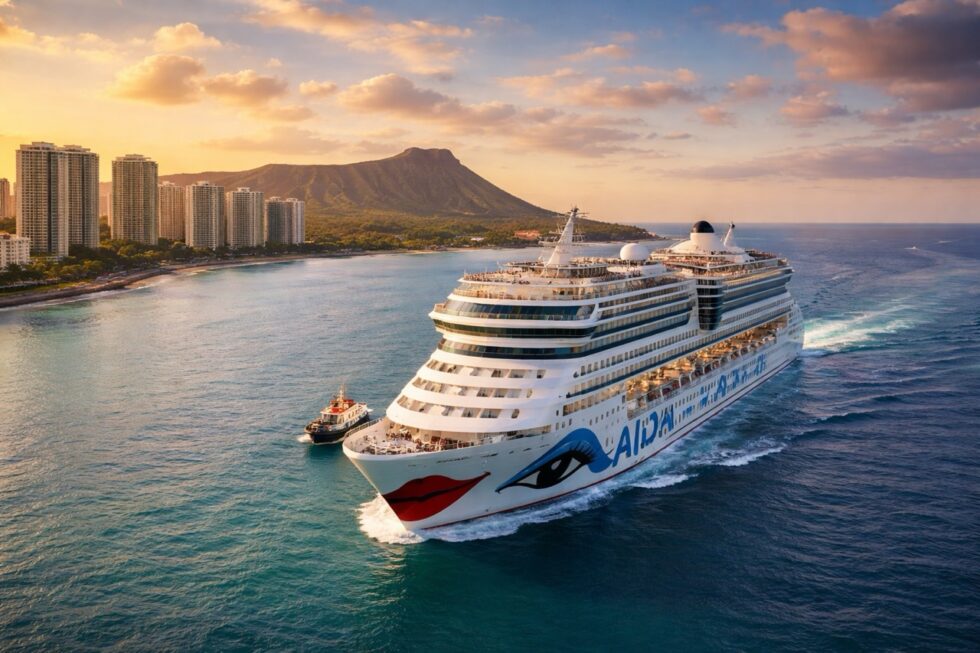
The luxury cruise liner AIDAdiva was forced into a rare mid-ocean reversal on 2 January after two serious medical emergencies on board disrupted what was meant to be one of the longest and calmest legs of its 2025–26 world cruise, turning a ten-day Pacific crossing into a coordinated safety operation involving ship doctors, the bridge team and emergency port authorities in Honolulu, N24 reports.
The vessel had departed Honolulu bound for Busan, South Korea, carrying more than 2,000 passengers who were expecting almost two uninterrupted weeks at sea — one of the signature experiences of any world voyage. Instead, within hours of departure, medical teams reported two unrelated emergencies serious enough to require specialist treatment unavailable on board, prompting the captain to order a complete course reversal on 2 January 2026.
Why did the ship have to return to Hawaii
Although modern cruise ships like AIDAdiva are equipped with onboard hospitals staffed by qualified doctors and nurses, they are designed for stabilisation, not complex interventions. Conditions such as heart attacks, strokes, severe infections or internal injuries require facilities that only land-based hospitals can provide.
At the time of the incidents, the ship was already far beyond helicopter evacuation range. Over the Pacific, rescue aircraft are limited by distance, fuel and weather, making airlift impossible once a vessel passes a critical offshore threshold. Faced with this reality, the medical team and bridge agreed that returning to Honolulu was the only safe option to protect the patients’ lives.
What happened in Honolulu
Emergency services were placed on standby as AIDAdiva re-entered Honolulu harbour. Both patients were transferred ashore and taken to specialist hospitals for urgent treatment, while port officials and cruise operations staff coordinated the rapid medical handover. The ship remained alongside for only about an hour — just long enough to complete the transfer — before being cleared to depart again and continue its long journey across the Pacific.
How does this affect the cruise schedule
The unplanned detour inevitably cost valuable sailing time. As a result, the ship’s arrival in Busan has shifted from 11 January to 12 January 2026, eliminating the planned overnight stay in South Korea.
Passengers will still be able to visit the city, but with a reduced time window. Subsequent calls in Tokyo, Shimizu and Kobe remain on the itinerary, though the margin for further disruption has narrowed.
What does this mean for passengers and future travellers
For anyone booked on long-haul cruises, the AIDAdiva incident highlights a crucial reality: even luxury voyages are vulnerable to medical and operational shocks. One emergency can cascade through multiple ports, flights and hotel bookings.
Cruise contracts give captains sweeping authority to change routes for safety or medical reasons, meaning missed ports or shortened stays rarely qualify for compensation. This makes comprehensive travel insurance — covering medical care, evacuation and trip disruption — essential rather than optional.
Why helicopters cannot always save lives at sea
Many travellers assume helicopter rescue is always available. In reality, helicopters operate within strict range limits, particularly over open ocean. Once a ship is hundreds of kilometres offshore, especially at night or in difficult weather, air evacuation becomes impossible.
In those situations, the only way to deliver life-saving care is to turn the ship itself into a moving medical evacuation unit by returning to port — even if that means losing days of progress.
What happens behind the scenes when a ship turns back
A mid-ocean U-turn triggers a massive logistical chain reaction. Cruise operators must renegotiate berths in Asia, notify harbour masters, reschedule pilots and tugboats, rebook excursions and adjust crew working hours. Fuel consumption, catering, border formalities and port slots all have to be recalculated in real time, while thousands of passengers must be kept informed as the ship continues moving through international waters.
What should travellers do if their cruise ship turns back
When a ship like AIDAdiva changes course, passengers should act calmly but strategically:
Do not rebook flights immediately. Airlines and insurers need official confirmation of the delay before approving changes.
Ask the ship for a written delay notice. This document is vital for insurance claims.
Keep all receipts. Hotels, taxis, missed excursions and new flights may be reimbursed.
Check medical-evacuation cover. Treatment in places like Hawaii, Japan or the US can run into six-figure sums without insurance.
Monitor official updates. Ship apps, onboard notices and the reception desk are more reliable than social media.
Passenger rights: what cruise lines must — and do not — provide
Under international cruise contracts, maritime law and EU package travel rules, passengers should be aware of the following:
• Cruise lines are legally required to prioritise safety and emergency medical care for all passengers and crew
• Captains have full authority to change routes or skip ports for medical, safety or operational reasons without paying compensation
• Missed ports of call are normally not refundable, unless a large part of the itinerary is cancelled
• If a cruise is cancelled entirely, passengers are entitled to a refund or rebooking under EU Package Travel Regulations
• Additional costs such as hotels, flights and transfers are usually covered by travel insurance, not by the cruise operator
This legal framework explains why comprehensive travel insurance — including medical evacuation and trip disruption cover — is considered essential for long-distance and world cruises.
The ship will soon cross the International Date Line, meaning passengers will skip a full calendar day as it heads west across the Pacific. Despite the delay, AIDAdiva remains on track to complete its global voyage, with final arrival in Hamburg scheduled for 23 March 2026. For travellers, the message is clear: even the most carefully planned ocean journeys are ultimately governed by health, distance and the unforgiving realities of the open sea.
Stay connected for news that works — timely, factual, and free from opinion — and insights that matter now: Berlin power outage: why tens of thousands remain without electricity