


When Will Berlin Marathon 2026 Close Roads? September 26–27 Traffic

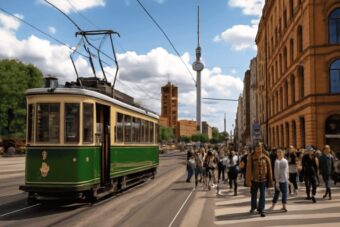
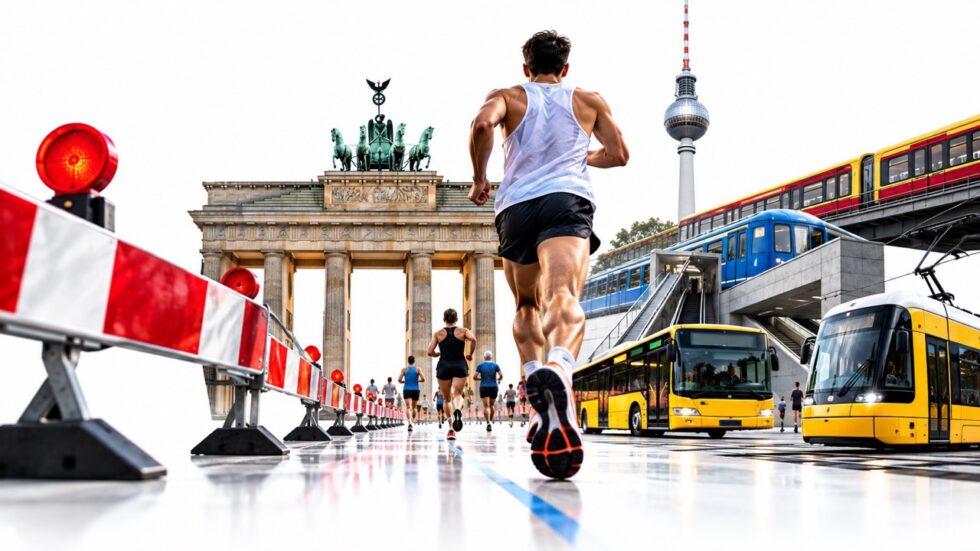
Berlin is preparing for one of its most disruptive traffic weekends of the year as the 52nd Berlin Marathon takes over large parts of the capital on Saturday, September 26, and Sunday, September 27, 2026. The main marathon starts on Sunday, but road closures have already begun around Tiergarten, Brandenburg Gate and the government district, and further restrictions will spread across Mitte, Charlottenburg-Wilmersdorf, Friedrichshain-Kreuzberg, Neukölln and Tempelhof-Schöneberg during the weekend. More than 56,000 participants are expected, while hundreds of thousands of spectators are likely to line the route. For drivers, the decisive hours begin early: some roads close from 5:00 a.m. on Saturday, the main marathon course will be secured from around 7:00 a.m. on Sunday, and several central streets will remain inaccessible long after the final runner has crossed the finish line. U-Bahn and S-Bahn services will therefore be the most practical alternatives for many journeys, while buses and trams face widespread diversions, shortened routes and temporary interruptions. Some restrictions around Straße des 17. Juni will continue into the following week, meaning the impact will not end on Sunday evening, NewsToday24 reports
The traffic situation is unusually complex because the Berlin Marathon weekend consists of more than Sunday's 42.195-kilometre race. Saturday brings the G5K, R5K Tour, Mini Marathon and Inline Skating Marathon, each requiring temporary closures in central Berlin. Sunday then expands the secured area dramatically as the marathon course crosses the city from Tiergarten through the eastern and southern districts before returning through western Berlin to Brandenburg Gate and the finish on Straße des 17. Juni. For residents, visitors and commuters, it is therefore important to distinguish between roads that are closed for several days, streets affected only during individual races and public transport services that remain available despite the road restrictions.
Which Berlin Roads Are Already Closed Before the Marathon Weekend
The Berlin Marathon traffic restrictions did not begin on race day. The first major closure came into force at 6:00 a.m. on Monday, September 21, when Straße des 17. Juni was closed between Großer Stern and Brandenburg Gate. Yitzhak-Rabin-Straße is also included in the central event area. This is one of the most important points for motorists because Straße des 17. Juni normally functions as a major east-west connection through Tiergarten, and its closure changes traffic patterns several days before the marathon itself.
The restrictions in this area will also continue after the runners have finished. The section from Großer Stern up to and including Yitzhak-Rabin-Straße is scheduled to reopen on Tuesday, September 29. The final section between Yitzhak-Rabin-Straße and Ebertstraße is expected to remain closed even longer, until Thursday, October 1, at 6:00 p.m. The central event infrastructure therefore affects traffic for more than a week. A second major group of restrictions began at 6:00 p.m. on Thursday, September 24, around Berlin's government district. Ebertstraße, John-Foster-Dulles-Allee, Scheidemannstraße and Dorotheenstraße are among the affected streets, together with additional areas surrounding the Bundestag and Brandenburg Gate. These restrictions are scheduled to remain in place until noon on Monday, September 28.
The main pre-marathon closures can therefore be summarised as follows:
- Straße des 17. Juni between Großer Stern and Brandenburg Gate: closed since September 21 at 6:00 a.m.; sections will reopen gradually after the marathon.
- Yitzhak-Rabin-Straße: part of the event area since September 21; reopening is planned in stages from September 29.
- Ebertstraße: restrictions have applied since September 24 at 6:00 p.m.; the government-district measures are scheduled to end on September 28 at noon.
- John-Foster-Dulles-Allee: affected from September 24 at 6:00 p.m. until the planned reopening on September 28 at noon.
- Scheidemannstraße: included in the government-district restrictions until September 28 at noon.
- Dorotheenstraße: affected by the same security and event arrangements.
- The final section between Yitzhak-Rabin-Straße and Ebertstraße: scheduled to remain closed until October 1 at 6:00 p.m.
The practical consequence is that drivers travelling around Brandenburg Gate, the Bundestag, Tiergarten or Straße des 17. Juni should not expect normal traffic conditions even before the major weekend races begin. Routes that may appear geographically convenient can already be inaccessible, while surrounding roads may carry considerably more traffic than usual.
What Will Be Closed in Berlin on Saturday, September 26
Saturday is not simply a preparation day for Sunday's marathon. Several competitive events take place in central Berlin, creating their own closures and traffic restrictions.
The first major Saturday closure begins at 5:00 a.m. on Potsdamer Straße, affecting the section between Potsdamer Platz and Reichpietschufer. This means one of the city's most important central traffic corridors is restricted before many weekend visitors have even entered the city centre.
At 7:00 a.m., another important closure begins on Unter den Linden between Pariser Platz and Friedrichstraße. This section is scheduled to remain closed until approximately 6:00 p.m.
Further restrictions are introduced from around 8:50 a.m. as the routes for the G5K, R5K Tour and Mini Marathon are secured.
The G5K starts at 10:00 a.m. at Potsdamer Platz. Its five-kilometre course runs through prominent parts of central Berlin, including Leipziger Platz, Gendarmenmarkt and Unter den Linden, before reaching the finish area on Straße des 17. Juni.
At 11:50 a.m., the R5K Tour follows over the same general central route. The Mini Marathon begins at noon, bringing another group of participants onto the secured streets.
The most extensive Saturday restrictions are connected with the Inline Skating Marathon. Preparations and road closures begin from approximately 11:15 a.m., with the race scheduled to start at 12:20 p.m. The approximately eight-kilometre circuit is completed five times, requiring a broad section of central Berlin to remain protected from normal traffic.
Among the streets and locations affected by the Saturday skating course are:
- Straße des 17. Juni
- Großer Stern
- Ernst-Reuter-Platz
- Otto-Suhr-Allee
- Helmut-Kohl-Allee
- Reichpietschufer
- Potsdamer Straße
- Leipziger Straße
- Jerusalemer Straße
- Markgrafenstraße
- Französische Straße
- Glinkastraße
- Unter den Linden
The course is expected to be cleaned and gradually released by around 5:30 p.m., although reopening does not necessarily occur everywhere at exactly the same moment. Police and event staff release individual sections once the competition has passed and the route is considered safe for normal traffic again.
Saturday, September 26: The Key Times
For anyone planning to cross central Berlin on Saturday, these are the main times to remember:
- 5:00 a.m.: the first major closure begins on Potsdamer Straße between Potsdamer Platz and Reichpietschufer.
- 7:00 a.m.: Unter den Linden closes between Pariser Platz and Friedrichstraße.
- Around 8:50 a.m.: additional restrictions begin for the G5K, R5K Tour and Mini Marathon.
- 10:00 a.m.: G5K starts at Potsdamer Platz.
- 11:15 a.m.: closures for the Inline Skating Marathon begin.
- 11:50 a.m.: R5K Tour starts.
- 12:00 noon: Mini Marathon starts.
- 12:20 p.m.: Inline Skating Marathon starts.
- Around 5:30 p.m.: cleaning and gradual reopening of the skating route are expected.
- Around 6:00 p.m.: the Saturday closure on Unter den Linden is scheduled to end.
One important alternative remains available to motorists: the Tiergarten Tunnel is expected to remain open as a crossing route on Saturday. However, access to and from Kemperplatz will only be possible via Lennéstraße.
The timing of Saturday's restrictions also means that the disruption moves through the city rather than remaining identical all day. A street closed early in the morning may reopen before another part of the route is released. Drivers should therefore treat the situation as dynamic rather than assuming that one fixed closure map applies from morning until evening.
Which Roads Will Be Closed on Sunday, September 27
Sunday is the decisive day for traffic. The main Berlin Marathon brings a much larger secured zone, with closures stretching across several districts and affecting major east-west and north-south connections.
The first Sunday restriction begins at 5:00 a.m. on Altonaer Straße, where the closure is expected to continue until approximately 11:30 a.m.
At 5:30 a.m., Unter den Linden closes between Pariser Platz and Friedrichstraße. Unlike Saturday, when the closure is scheduled to end at 6:00 p.m., Sunday's restriction is expected to continue until 7:00 p.m.
From around 7:00 a.m., the actual marathon course begins to close progressively. Exact times vary according to the district and position along the route because each section must be secured before runners arrive and can only reopen after the field has passed and cleaning work has been completed.
The planned Sunday closure windows include:
- Altonaer Straße: from 5:00 a.m. until approximately 11:30 a.m.
- Unter den Linden: from 5:30 a.m. until 7:00 p.m.
- Mitte: affected sections from approximately 7:15 a.m. until 6:00 p.m.
- Charlottenburg-Wilmersdorf: affected sections from approximately 7:15 a.m. until 6:00 p.m.
- Friedrichshain-Kreuzberg: affected sections from approximately 7:30 a.m. until 2:00 p.m.
- Tempelhof-Schöneberg: affected sections from approximately 7:45 a.m. until 4:30 p.m.
- Tiergarten: restrictions apply according to the progress of the race and subsequent reopening.
- Neukölln: closure times depend on the relevant section of the marathon route.
- Steglitz and Zehlendorf: individual sections are affected according to the race schedule and course clearance.
These times should not be interpreted as meaning that every street in an entire district is closed for the complete period. They refer to the sections crossed or directly affected by the marathon course.
When Does the Berlin Marathon Start
The first competition begins at 8:20 a.m., when wheelchair racers and handcyclists start.
The main field follows from 8:45 a.m. Rather than starting simultaneously, runners leave in six waves, with the start process continuing until approximately 10:30 a.m.
This extended start period is one reason the course remains occupied for much of the day. The fastest runners move through Berlin quickly, but tens of thousands of participants remain distributed across the 42.195-kilometre route for several hours.
The final participants are expected to reach the finish on Straße des 17. Juni at approximately 5:00 p.m.
Even then, however, the roads cannot immediately reopen. Barriers, event infrastructure and waste must be removed, and the road surface must be cleaned before police can release individual sections.
Most of the marathon route is expected to be cleaned and reopened by around 6:00 p.m., but this is not a universal reopening time. Some sections will become accessible significantly earlier, while others — particularly around the central event zone — will remain restricted longer.
Where Does the Berlin Marathon 2026 Route Go?
The marathon begins in the Tiergarten area on Straße des 17. Juni, one of Berlin's best-known boulevards and the traditional start and finish zone of the race.
From there, runners head towards Ernst-Reuter-Platz before continuing through Alt-Moabit, Otto-von-Bismarck-Allee, Reinhardtstraße and Torstraße.
The route then enters central and eastern Berlin via Karl-Liebknecht-Straße, Alexanderstraße and Karl-Marx-Allee, reaching Strausberger Platz.
From Strausberger Platz, the field continues via Lichtenberger Straße and Heinrich-Heine-Straße, moving towards Kreuzberg.
The Kreuzberg section takes runners through Moritzplatz, Kottbusser Tor and Kottbusser Damm before the course reaches Hermannplatz in Neukölln.
From Hermannplatz, the route continues past Hasenheide and then moves westwards via Yorckstraße, Grunewaldstraße and Martin-Luther-Straße towards Rathaus Schöneberg.
The course then passes through the western parts of the city, including Friedenau and Schmargendorf, before turning back towards central Berlin.
Important western sections include Hohenzollerndamm, Konstanzer Straße and Kurfürstendamm. From there, runners reach Wittenbergplatz, continue along Kleiststraße and Potsdamer Straße, and arrive at Potsdamer Platz.
The final kilometres bring the marathon back into the historic centre. Runners travel along Leipziger Straße, pass Gendarmenmarkt, enter Unter den Linden, run through Brandenburg Gate and finally return to the finish on Straße des 17. Juni.
The key roads along the course therefore include Straße des 17. Juni, Ernst-Reuter-Platz, Otto-von-Bismarck-Allee, Reinhardtstraße, Torstraße, Karl-Liebknecht-Straße, Alexanderstraße, Karl-Marx-Allee, Lichtenberger Straße, Heinrich-Heine-Straße, Moritzplatz, Kottbusser Tor, Kottbusser Damm, Hermannplatz, Hasenheide, Yorckstraße, Grunewaldstraße, Martin-Luther-Straße, Hohenzollerndamm, Konstanzer Straße, Kurfürstendamm, Kleiststraße, Potsdamer Straße, Leipziger Straße and Unter den Linden.
This geographical spread explains why the marathon affects far more than the tourist centre around Brandenburg Gate. The route cuts across transport corridors connecting Berlin's eastern, southern, western and central districts.
Which Berlin Districts Will Be Most Affected?
Mitte and Tiergarten face some of the most significant disruption because the start and finish area is located there and the marathon returns to the historic centre for its final kilometres.
Charlottenburg-Wilmersdorf is affected by several important roads, including Hohenzollerndamm, Konstanzer Straße and Kurfürstendamm.
Friedrichshain-Kreuzberg is crossed during the eastern and south-eastern part of the race, including important areas around Strausberger Platz, Heinrich-Heine-Straße, Moritzplatz and Kottbusser Tor.
Neukölln is affected around Hermannplatz, Kottbusser Damm and Hasenheide.
The course later moves through Tempelhof-Schöneberg, while sections of Steglitz and Zehlendorf are also affected by the western part of the route.
Because the race moves continuously through these districts, the impact does not occur everywhere simultaneously. Friedrichshain-Kreuzberg, for example, is expected to see affected streets released considerably earlier than Mitte and Charlottenburg-Wilmersdorf.
When Will Roads Reopen on Sunday?
The reopening will occur section by section.
In Friedrichshain-Kreuzberg, affected sections are expected to be released from around 2:00 p.m.
In Tempelhof-Schöneberg, the planned reopening is around 4:30 p.m.
In Mitte and Charlottenburg-Wilmersdorf, restrictions may remain in force until approximately 6:00 p.m.
Unter den Linden is scheduled to remain closed until 7:00 p.m.
This means the approximately 5:00 p.m. arrival of the last marathon participants does not mark the immediate end of Berlin's traffic restrictions.
Where Can Cars Cross the Marathon Route?
Direct road crossings are extremely limited during the race.
For motorists travelling through western Berlin, the A100 and the Steglitz interchange provide important alternatives for bypassing the marathon route.
There are, however, additional restrictions. The Hohenzollerndamm and Innsbrucker Platz motorway junctions are expected to be closed during the races. Traffic congestion around the remaining motorway connections is therefore likely.
In central Berlin, two particularly important options remain available:
- Tiergarten Tunnel: expected to remain available as a crossing route during the event.
- Alexanderplatz Tunnel: also expected to remain open for crossing the affected area.
On Saturday, the Tiergarten Tunnel can likewise be used to cross the event zone, although the Kemperplatz entrance and exit can only be reached from Lennéstraße.
These tunnels should not be interpreted as guarantees of a fast journey. With many normal streets unavailable, traffic can concentrate heavily on the few remaining crossings.
What Should Drivers Do During the Berlin Marathon Weekend
For motorists, the most important planning principle is to avoid treating the marathon as a single road closure. It creates a chain of restrictions extending across multiple districts. On Saturday, the main new closures are concentrated around Potsdamer Platz, Unter den Linden and the Inline Skating Marathon circuit. On Sunday, the situation becomes considerably more complicated. The secured area extends from Tiergarten and Mitte through Friedrichshain-Kreuzberg and Neukölln before continuing through Schöneberg and western Berlin. Parking close to the marathon route is also expected to be extremely limited. Drivers heading to an address near the course should therefore consider whether they can park outside the restricted area and complete the final part of the journey by U-Bahn, S-Bahn or on foot.
The five most important points for motorists are:
- From 5:00 a.m. Saturday, Potsdamer Straße is affected by a major closure.
- From 5:30 a.m. Sunday, Unter den Linden is closed between Pariser Platz and Friedrichstraße.
- From approximately 7:00 a.m. Sunday, the main marathon course begins closing progressively.
- Tiergarten Tunnel, Alexanderplatz Tunnel, the A100 and Steglitz interchange are among the principal alternatives for crossing or bypassing the route.
- Parking and direct road crossings near the marathon course will be severely limited.
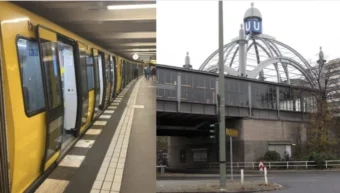
Will Berlin's U-Bahn Be Closed on September 26 or 27?
There is no general U-Bahn closure because of the Berlin Marathon in the official traffic information for the weekend.
This is particularly important because underground trains provide one of the most effective ways to move between areas separated by the marathon route. While streets above ground may be closed, U-Bahn trains can continue beneath the secured area.
The city therefore recommends using U-Bahn and S-Bahn services instead of travelling by car through affected parts of Berlin.
U-Bahn stations also play another practical role: their underpasses can be used by pedestrians to cross the marathon route at certain locations.
Cyclists may also use these underpasses where permitted, but they must dismount and push their bicycles. Passengers should nevertheless distinguish marathon restrictions from unrelated engineering works or service interruptions elsewhere in the network. The fact that the U-Bahn is not generally closed because of the marathon does not mean every individual journey across Berlin is automatically disruption-free.
How Will Berlin Buses and Trams Operate During the Marathon?
Buses and trams face much greater disruption than the U-Bahn because they depend on the same streets that are being closed for the race. Around 40 bus and tram lines are expected to be temporarily affected. Depending on the location and time, individual services may be:
- diverted onto alternative streets;
- shortened before reaching their normal terminus;
- divided into separate sections;
- temporarily interrupted;
- restored gradually after police reopen the relevant roads.
This makes surface public transport particularly dynamic on Sunday. A bus that cannot cross the marathon course in the morning may return to its normal route later in the afternoon once the relevant section has been released. Passengers should therefore check the current status of their specific line shortly before travelling rather than relying exclusively on the normal timetable.
For longer journeys through central Berlin, U-Bahn and S-Bahn services are generally the more practical choice during the marathon.
Which S-Bahn Lines Are Affected
The marathon itself does not create a general shutdown of Berlin's S-Bahn network, making the S-Bahn another important alternative to travelling by road. There is, however, a separate disruption affecting the S8 and S46 between Königs Wusterhausen and Grünau. The interruption begins with the start of service on Friday, September 25, and continues until approximately 1:30 a.m. on Monday, September 28.
Accessible replacement buses are operating on the affected section. This work is not caused by the Berlin Marathon, but the timing makes it particularly relevant for spectators, participants and residents travelling into Berlin from the south-east or from the Königs Wusterhausen area. Anyone planning to use the S8 or S46 during marathon weekend should therefore allow additional travel time and include the replacement bus section in their journey.
Where Can Pedestrians Cross the Berlin Marathon Route?
The marathon course cannot simply be crossed at any convenient intersection while the race is underway. The secured route must remain clear for competitors, emergency services and race operations. Official crossing points and U-Bahn underpasses therefore become particularly important.
On Saturday, useful pedestrian crossings include:
- Potsdamer Platz near the U-Bahn station and traffic lights;
- Leipziger Straße/Friedrichstraße;
- Französische Straße/Friedrichstraße.
On Sunday, additional crossing opportunities include:
- Kurfürstendamm/Tauentzienstraße before Rankestraße;
- Wittenbergplatz;
- Potsdamer Platz near the U-Bahn station and traffic lights;
- Leipziger Straße/Friedrichstraße;
- Französische Straße/Friedrichstraße.
U-Bahn underpasses can also provide a way beneath the race course.
Visitors should nevertheless allow additional time. A destination that appears only a few hundred metres away on a map can require a considerably longer walk if the direct street crossing is unavailable.
Can Cyclists Travel Through Berlin During the Marathon
Cycling remains possible in many areas, and bicycle access along the general vicinity of the route is intended to be maintained where conditions allow. The key distinction is between travelling along the marathon area and attempting to cross or enter the secured race course. Cyclists cannot simply ride across the runners' route at closed intersections. Where U-Bahn underpasses provide a crossing, bicycles must be pushed rather than ridden. Depending on the station, this can also involve stairs and crowded pedestrian areas. For longer journeys across several affected districts, a substantial detour may therefore be easier than repeatedly attempting to cross the marathon course.
Cyclists should also avoid entering the closed competition area itself. The secured route is reserved for the event and must remain clear.
What Is Closed Around Potsdamer Platz and Brandenburg Gate
The corridor between Potsdamer Platz and Brandenburg Gate is one of the most heavily affected parts of central Berlin.
On Saturday, Potsdamer Straße is restricted from early morning, while Unter den Linden closes between Pariser Platz and Friedrichstraße.
On Sunday, Unter den Linden is closed from 5:30 a.m. until 7:00 p.m. The final section of the marathon also passes through this part of the city. Runners approach via Leipziger Straße and Gendarmenmarkt, continue along Unter den Linden, pass through Brandenburg Gate and finish on Straße des 17. Juni.
Straße des 17. Juni is particularly important because its event-related restrictions began days before the marathon and continue after the weekend.
For motorists attempting to cross central Berlin rather than reach a destination directly inside the event zone, the Tiergarten Tunnel and Alexanderplatz Tunnel are among the most important alternatives.
When Will Straße des 17. Juni Reopen
Straße des 17. Juni has one of the longest closure periods associated with the event.
The main restriction began at 6:00 a.m. on September 21.
The section from Großer Stern up to and including Yitzhak-Rabin-Straße is scheduled to reopen on Tuesday, September 29.
The final section between Yitzhak-Rabin-Straße and Ebertstraße is expected to remain closed until Thursday, October 1, at 6:00 p.m.
The reason is that the area is not merely part of the running course. It also contains extensive start, finish and event infrastructure that must be dismantled after the marathon. Normal traffic through Tiergarten will therefore not be restored immediately on Monday morning.
When Will Berlin's Government District Reopen
Restrictions introduced around the government district at 6:00 p.m. on Thursday, September 24, are scheduled to end at noon on Monday, September 28.
The affected area includes Ebertstraße, John-Foster-Dulles-Allee, Scheidemannstraße and Dorotheenstraße, together with other nearby streets. These restrictions should be considered separately from the moving Sunday marathon closure. Even after runners have left central Berlin and individual parts of the race route reopen, event measures around the Bundestag and Brandenburg Gate can remain in force.
What Applies to Marathon Participants and Spectators on Public Transport
Registered participants receive an additional transport benefit: according to the event information, the race number is valid as a public transport ticket in Berlin's ABC fare zones from September 24 through September 27.
This provision applies to registered participants in the Berlin Marathon and associated events. Spectators do not automatically receive the same benefit and therefore need their own valid public transport ticket. For spectators moving between several points along the course, U-Bahn and S-Bahn connections are particularly useful because they avoid many of the surface closures.
However, passengers travelling from the south-east must remember the separate S8 and S46 interruption between Königs Wusterhausen and Grünau.
Berlin Marathon 2026: The Most Important Weekend Times
For a quick overview, these are the times most likely to matter for travel planning.
Saturday, September 26:
- 5:00 a.m. — Potsdamer Straße closure begins.
- 7:00 a.m. — Unter den Linden closes.
- Around 8:50 a.m. — additional race-related restrictions begin.
- 10:00 a.m. — G5K starts.
- 11:15 a.m. — Inline Marathon closures begin.
- 11:50 a.m. — R5K Tour starts.
- 12:00 noon — Mini Marathon starts.
- 12:20 p.m. — Inline Skating Marathon starts.
- Around 5:30 p.m. — cleaning and gradual reopening of the skating route.
- Around 6:00 p.m. — major Saturday restrictions begin to end.
Sunday, September 27:
- 5:00 a.m. — Altonaer Straße closes.
- 5:30 a.m. — Unter den Linden closes.
- Around 7:00 a.m. — progressive closure of the marathon course begins.
- Around 7:15 a.m. — affected sections in Mitte and Charlottenburg-Wilmersdorf are secured.
- Around 7:30 a.m. — restrictions affect Friedrichshain-Kreuzberg.
- Around 7:45 a.m. — affected sections in Tempelhof-Schöneberg are secured.
- 8:20 a.m. — wheelchair and handcycle races start.
- 8:45 a.m. — first wave of the main marathon field starts.
- Until around 10:30 a.m. — the six starting waves continue.
- Around 2:00 p.m. — affected streets in Friedrichshain-Kreuzberg are expected to begin reopening.
- Around 4:30 p.m. — Tempelhof-Schöneberg sections are expected to reopen.
- Around 5:00 p.m. — final marathon participants are expected at the finish.
- Around 6:00 p.m. — large parts of the marathon route should be cleaned and released.
- 7:00 p.m. — Unter den Linden is scheduled to reopen.
When Will Traffic in Berlin Be Completely Back to Normal
There is no single moment when Berlin's entire road network returns to normal. The first marathon sections will reopen while the race is still taking place elsewhere in the city. Friedrichshain-Kreuzberg is expected to see significant reopening from around 2:00 p.m., followed by Tempelhof-Schöneberg at approximately 4:30 p.m. Mitte and Charlottenburg-Wilmersdorf may remain affected until approximately 6:00 p.m., while Unter den Linden is scheduled to stay closed until 7:00 p.m.
After Sunday, several longer-term restrictions remain:
- Monday, September 28, noon: restrictions around the government district are scheduled to end.
- Tuesday, September 29: the section from Großer Stern through Yitzhak-Rabin-Straße is scheduled to reopen.
- Thursday, October 1, 6:00 p.m.: the final affected section towards Ebertstraße is scheduled to reopen.
For anyone travelling across Berlin during the weekend, the most useful distinction is therefore between rail and road. U-Bahn and most S-Bahn services remain the strongest alternatives for crossing areas where surface traffic is restricted. Buses and trams are much more exposed to short-term changes because their routes intersect directly with the marathon course.
Drivers should expect longer journeys, limited parking and congestion on the few remaining crossing routes. Pedestrians should use designated crossings and U-Bahn underpasses, while cyclists should be prepared to dismount at underground crossings or make wider detours around secured sections.
The Berlin Marathon is therefore not simply a Sunday morning road closure. Its transport impact begins several days before the main race, intensifies through Saturday's running and skating events, reaches its peak on Sunday and continues in parts of central Berlin into the following week. Planning around the closure windows — rather than only around the 8:45 a.m. marathon start — is the most reliable way to move through the city during one of Berlin's largest sporting weekends.
Official Sources Used
Verkehrsinformationszentrale Berlin (VIZ Berlin), Berlin.de, Berlin Police, BMW Berlin Marathon, official Berlin Marathon 2026 traffic information, official road-closure schedules, marathon route and start-time information, U-Bahn and S-Bahn service information, bus and tram operating notices, and official guidance on pedestrian and cyclist crossings.
Stay connected for news that matters — timely, factual, and free from bias. Read trusted updates from Berlin, Ukraine, and around the world: AfD Leads CDU by Five Points in Germany as Insa Poll Shakes Berlin Before Key Elections