



What changes for drivers in Germany in 2026 – costs, Euro 7 rules, taxes and incentives
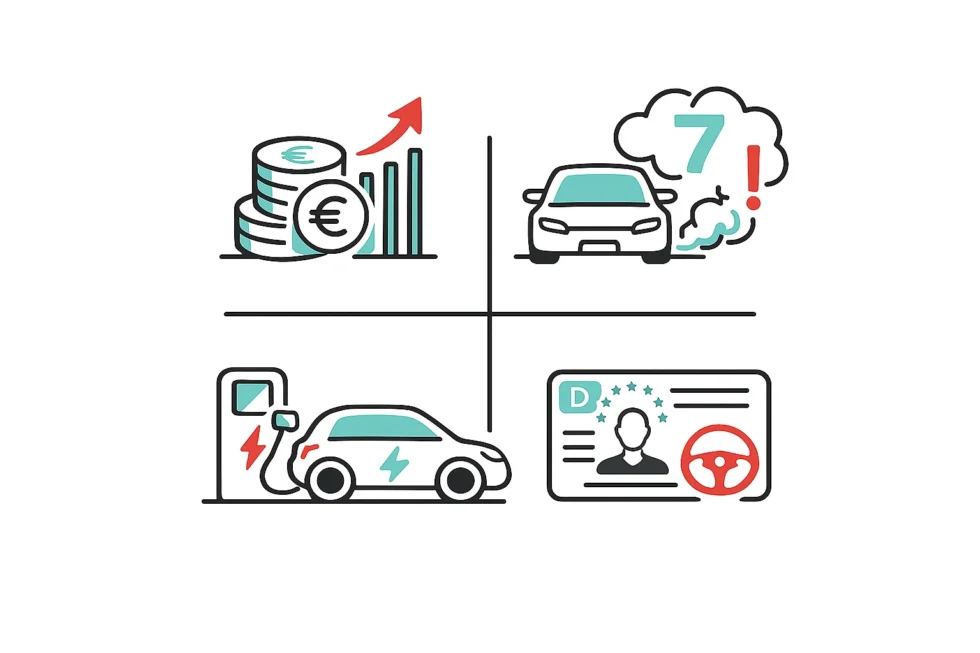
For drivers in Germany, 2026 marks a decisive shift. Environmental regulation, taxation, vehicle technology and mobility policy are being recalibrated at the same time, affecting everything from fuel prices and company cars to insurance premiums and cross-border travel. These changes are not isolated measures but part of a broader transformation of road transport economics. This is reported by based on research by Renewz.de and assessments by the German automobile association ADAC.
What changes for drivers in Germany in 2026 – in detail
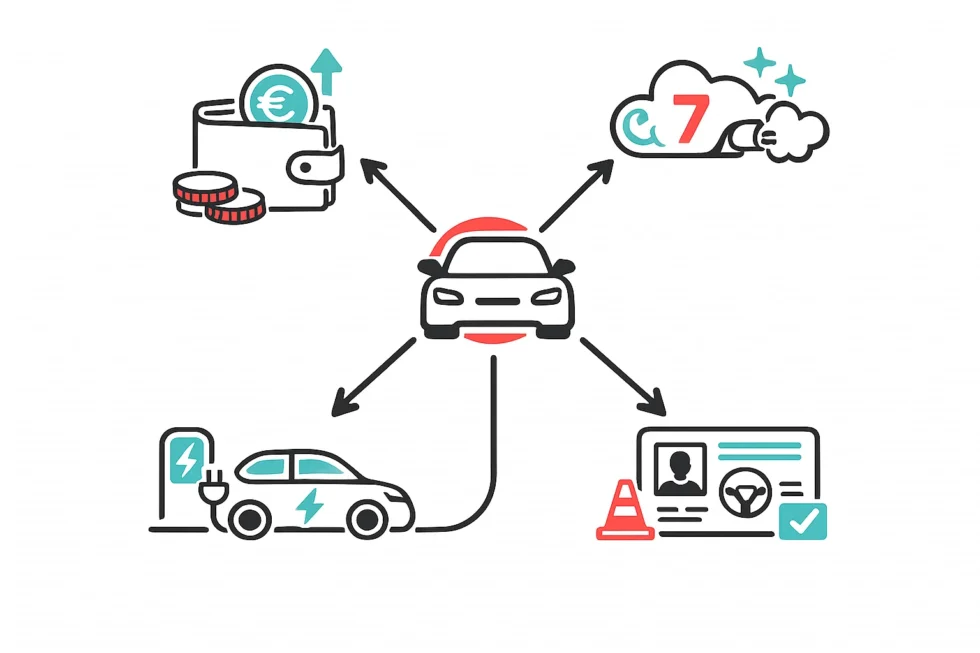
1. Electric car incentives return, but with strict income limits
The German government plans to reintroduce a purchase incentive for battery-electric vehicles in 2026. Unlike earlier schemes, the new model is means-tested. Eligibility is tied to taxable household income, capped at €80,000 per year, with an additional €5,000 allowance per child.
The proposed structure includes:
- a base subsidy of €3,000
- a child bonus of up to €1,000
- possible top-ups for very low-income households
Crucially, the programme requires state-aid approval from the European Commission. Market observers expect a launch in spring 2026 rather than at the start of the year.
What this means in practice: Buyers should expect temporary price adjustments from manufacturers and dealers. Previous subsidy cycles showed that incentives only reduce real prices if list prices remain stable.
2. Euro 7 regulation: emissions, batteries and wear particles
The Euro 7 regulation introduces the most comprehensive overhaul of vehicle standards in decades.
Key dates
- 29 November 2026: applies to newly type-approved passenger cars
- 29 November 2027: mandatory for all new registrations
Euro 7 goes beyond tailpipe emissions. It introduces:
- measurement of ultrafine particles below 10 nanometres
- extended real-world emissions testing
- durability requirements for emission systems
- binding minimum standards for traction batteries
Battery performance thresholds include:
- 80% remaining capacity after 5 years or 100,000 km
- 72% after 8 years or 160,000 km
In addition, Euro 7 regulates brake and tyre abrasion, recognising non-exhaust particles as a major source of urban pollution.
Practical impact: Battery health documentation will become critical in the used-car market. Vehicles without transparent degradation data may lose value faster.
3. CO₂ pricing: fuel costs remain predictable but structurally higher
From 2026, Germany shifts its national emissions trading system to an auction-based model. CO₂ certificates will trade within a corridor of €55 to €65 per tonne, with additional fixed-price sales at €68.
Estimated impact at the pump:
- petrol: approx. +2.8 cents per litre
- diesel: approx. +3.2 cents per litre (VAT included)
What this means: While price increases remain moderate in 2026, the policy sends a long-term signal. Fossil fuels are not subject to sudden shocks, but their baseline cost is locked into an upward trajectory4. Commuter allowance rises permanently
From 1 January 2026, Germany’s commuter allowance increases to 38 cents per kilometre from the first kilometre, replacing the previous tiered system.
Why this matters: Short-distance commuters benefit for the first time. For many households, the tax relief offsets higher fuel costs more effectively than headline CO₂ price debates suggest.
5. Company cars and depreciation: electric vehicles favoured
Fully electric company cars benefit from:
- a 0.25% tax rule up to a €100,000 list price
- conventional vehicles remain taxed at 1%
Additionally, a temporary declining-balance depreciation for electric vehicles applies to purchases made up to the end of 2027.
Impact: For businesses, fleet electrification becomes financially more attractive than maintaining combustion-engine fleets.
6. Motor insurance: millions affected by new classifications
Insurance premiums in 2026 are reshaped by updated vehicle type classes and regional risk zones.
- approx. 5.9 million drivers face higher classifications
- about 4.5 million benefit from lower ratings
- the majority remain unchanged
Premium changes may occur without any claim or accident history.
Advice: Annual policy reviews become essential, regardless of no-claims bonuses.
7. Germany ticket increases to €63
From 1 January 2026, the nationwide public transport ticket costs €63 per month. Funding is secured until 2030.
Important detail: subscribers via Deutsche Bahn must actively approve the price increase. Without confirmation, subscriptions may end automatically at the end of 2025.
8. Emergency call systems switch to LTE/5G
From 2026, new vehicle models require an LTE/5G-based emergency call system. By 2027, all new registrations must comply, as legacy 2G/3G networks are phased out.
Effect on drivers: Existing vehicles are unaffected. New-car buyers should expect this technology to be standard rather than optional.
9. Driving licences: exchange deadlines and digital future
Drivers holding card licences issued between 1999 and 2001 must exchange them by 19 January 2026. Failure results in a €10 administrative fine.
Germany also plans to introduce a digital driving licence by the end of 2026 for domestic use, while physical cards remain relevant for international travel.
10. Driving abroad: new enforcement and fees
Several European countries introduce new measures:
- Austria: camera-based access controls, applicable to foreign plates
- Croatia: digital, distance-based motorway tolls
- Venice: day-entry fees on up to 60 days per year
- England and Wales: planned reduction of drink-driving limits
Practical takeaway: Drivers should check local rules before travelling. Fines increasingly apply automatically across borders.
The year 2026 does not bring a single dramatic change but a systemic redefinition of driving in Germany. Costs, technology, taxation and compliance are more tightly connected than before. Drivers who understand the new framework early can adapt and avoid unnecessary expenses; those who ignore deadlines and thresholds risk paying more than expected.
Stay connected for news that matters — timely, factual, and free from bias. Read trusted updates from Berlin, Ukraine, and around the world: Cloudflare outage disrupts services across Germany: ChatGPT, X and major platforms affected