



Extreme Cold Brings School Closures Across Germany as Winter Storm “Elli” Advances
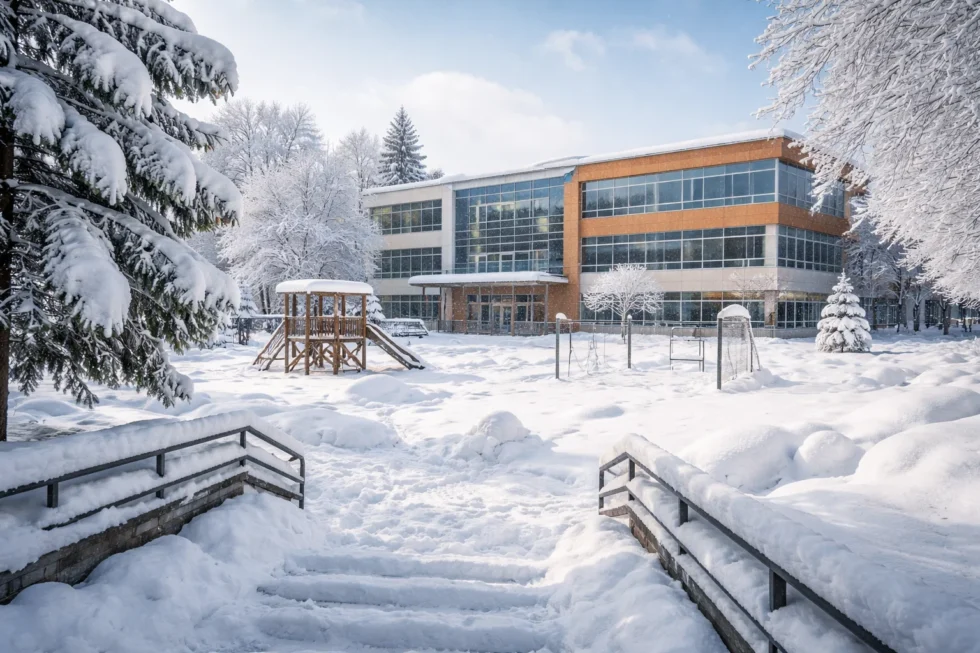
Germany is facing one of its most severe winter cold spells in recent years as winter storm “Elli” moves across the country, bringing extreme sub-zero temperatures, heavy snowfall, and widespread disruption. In Marienberg-Kühnhaide, a district in the state of Saxony, temperatures dropped to minus 27.8 degrees Celsius on Thursday morning, making it the coldest inhabited location in Germany, reports NewsToday24 citing bild.
Meteorologists warned that the cold snap is tightening its grip on large parts of the country, with icy conditions causing accidents, transport shutdowns, and school closures in several federal states. Authorities have reported fatalities linked to accidents on icy roads, while numerous businesses have temporarily halted production due to unsafe conditions. Rail services and ferry connections have also been affected, with cancellations reported in multiple regions.
As a result of the severe weather, many students across Germany will not attend school on Friday. In several federal states, schools are either fully closed or have switched to remote learning, while others are offering only emergency childcare.
Schools Closed in Multiple Federal States
Due to hazardous weather conditions, schools will remain closed on Friday in several parts of Germany. According to regional authorities, this affects both general education and vocational schools in large areas of northern Germany.
In Schleswig-Holstein, schools will be closed in the districts of Dithmarschen, Herzogtum Lauenburg, Nordfriesland, Pinneberg, Rendsburg-Eckernförde, Schleswig-Flensburg, Segeberg, Steinburg, and Stormarn. The state’s Ministry of Education confirmed that emergency care will be provided for students in grades one through six at affected schools.
Schools will also remain closed on Friday in the city-states of Hamburg and Bremen, as well as in Lower Saxony. In these regions, authorities have announced a combination of emergency childcare services and, in some cases, distance learning options.
Public Transport Disruptions and Safety Measures
The extreme weather has led to significant disruptions in public transportation. In the city of Oldenburg, which has a population of approximately 170,000, all bus services will be suspended early Friday morning. The local transport operator VWG announced that bus operations across the city would be halted until further notice due to safety concerns.
Officials cited the expected heavy snowfall and dangerous road conditions caused by winter storm “Elli,” warning that traffic routes could be severely impaired and accident risks significantly increased. The early decision to suspend services was intended to allow passengers to plan ahead.
Rail and ferry services in other parts of Germany have also been affected, with numerous cancellations reported as snow and ice continue to disrupt infrastructure.
Blizzard Conditions Expected to Intensify
Although parts of Germany and Europe are already experiencing widespread winter chaos, meteorologists say the most severe blizzard conditions are still ahead. Airports across Europe have canceled hundreds of flights, while roads have been closed in several regions due to snowdrifts and icy conditions.
Weather expert Karsten Brandt warned that outdoor physical exertion under current conditions could be life-threatening, as temperatures continue to plunge and wind chill intensifies the cold.
Cultural Events and Public Venues Affected
The extreme weather has also impacted cultural events and public attractions. “Der Graf,” the frontman of the band Unheilig, announced the cancellation of the group’s scheduled concerts in Hamburg, which were set to take place at the Inselpark Arena. The decision was communicated via social media, with the artist citing fan safety as the primary reason. The concerts are expected to be rescheduled at a later date.
In Berlin, both the Zoo and the Tierpark will remain closed on Friday. A spokesperson said the safety of animals and visitors was the top priority, noting that heavy snowfall and falling branches from old trees posed significant risks. Sensitive animals, including giraffes, will remain in their indoor enclosures as a precaution. The Berlin Aquarium, however, will remain open to the public.
Rivers Freeze and Demand for Winter Gear Surges
The severe cold has begun to affect Germany’s waterways. On Thursday, large ice floes were observed drifting along the Elbe River in Magdeburg. Further upstream in Dresden, wide sections of the river have already frozen over, with thin ice layers stretching nearly from bank to bank in some areas. Authorities warned of the danger after several pedestrians were seen attempting to step onto the ice, though no incidents have been reported so far.
Meanwhile, online retailer Otto reported a dramatic surge in demand for winter equipment. The company said orders for sleds increased twentyfold compared with previous weeks, while sales of gloves and winter boots more than doubled. Due to the storm, Otto warned of potential delivery delays, particularly in northern Germany, and advised employees to work from home or take time off where possible.
As winter storm “Elli” continues to advance, authorities are urging residents to remain cautious, limit travel where possible, and follow official safety guidance as Germany braces for further extreme weather in the coming days.
Stay connected for news that works — timely, factual, and free from opinion — and insights that matter now: Snowstorm "Elli" in Schleswig-Holstein: Blizzard conditions and 30cm of snow expected.