


Germany Strongly Rejects New Trump-Era US Security Strategy: "No Advice From Outside"
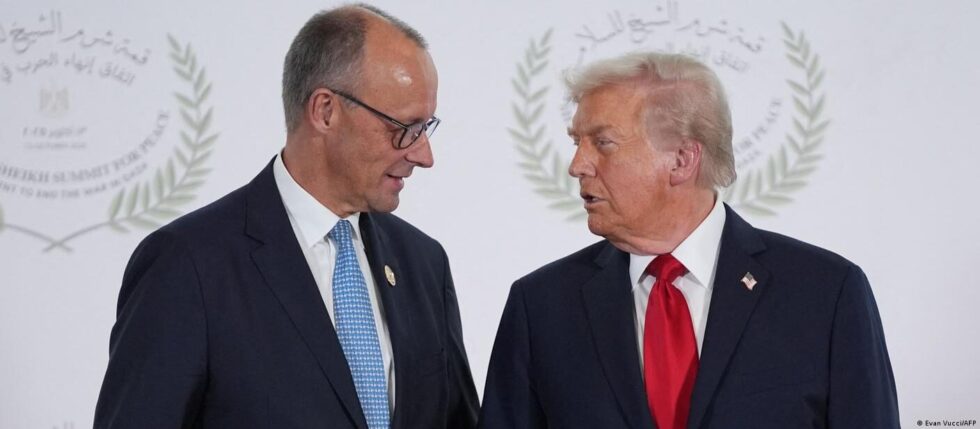
The German government has responded decisively to the release of the United States' new national security strategy, a document framed by US President Donald Trump’s “America First” doctrine. Signaling a significant departure from Washington’s historical global role and containing an unusually harsh critique of long-standing European allies, the strategy was met with particular disapproval in Berlin. Federal Foreign Minister Johann Wadephul clearly pushed back against elements of the strategy put forward by the White House, emphasizing that Germany does not require external guidance regarding freedom of expression or the organization of its democratic society. The document's aggressive tone, which questions, among other things, the European rule of law principles and supranational organizations, also found no support at the EU level. The European Commission firmly rejected the allegations made against the bloc, informs by NT24.
Speaking in Berlin alongside Iceland's Foreign Minister Thorgerdur Katrin Gunnarsdottir, Minister Wadephul elaborated that fundamental matters concerning freedom of opinion and the structure of free societies in Germany are governed by its constitutional order, citing the separation of powers and freedom of the press. While affirming that the United States remains Germany's most crucial ally within NATO, Wadephul clarified that this alliance is primarily focused on security policy issues. He asserted that topics such as freedom of expression or the structure of liberal societies do not fall within the military alliance's jurisdiction when it pertains to Germany. He concluded by stating that Germany sees itself capable of "fully and independently discussing and debating these issues in the future, and does not require any advice from the outside." Nevertheless, he announced that the new US security strategy would now be subjected to a detailed analysis. Relations between Washington and Europe have been strained since Trump’s return to the White House due to disagreements over migration policies and debates concerning freedom of speech. The US administration has recently also fostered contacts with the right-wing extremist Alternative for Germany (AfD) party, including the visit of a high-ranking AfD member of parliament to the White House in September.
Jürgen Hardt, the foreign policy spokesman for the ruling CDU/CSU party, also voiced sharp criticism. He assessed the US President's evaluation of Europe as "very one-sided" and speculated that it might be based on information he received from "the wrong sides, such as far-right parties in Europe." He noted that parts of the US President’s analysis sounded "like [Russian President Vladimir] Putin speaking about Europe." Hardt expressed concern about the strategy, suggesting that Trump "actively seeks to intervene in the politics of the European Union's member states." He stressed that Germany has not interfered in US politics and expects "that the US should not do this in German democracies either." The CDU politician further criticized the strategy document for promoting the rise of nationalist parties in Europe, cautioning against "Trojan horses of Russia or China in German or European politics, such as those posed by the AfD or by the Rassemblement National in France or also by the far-right parties in Great Britain."
The new strategy deviates significantly from previous approaches by adopting an extremely critical tone toward Europe and casting doubt on the future viability of the transatlantic alliance. While the strategy under the previous Democratic President Joe Biden described Europe as an "indispensable partner," the new document now claims it is "anything but obvious whether certain European countries will possess strong enough economies and armed forces to remain reliable allies." Further points of critique include "migration policies that are changing the continent and sowing discord," "censorship of free expression and suppression of political opposition," and an alleged "loss of national identities and self-confidence." The draft strategy warns that if current trends persist, the continent "will be unrecognizable in 20 years or less." Professor David Dunn of the University of Birmingham observed a tone of "ethno-nationalism" in the strategy and criticized the attacks on liberal values.
Stay connected for news that works — timely, factual, and free from opinion — and insights that matter now: Berlin, Ukraine, and the world: Global Aircraft Scarcity Trumps German Air Tax Cut, Forcing Budget Carrier Pullbacks