



Hypothek in Deutschland 2026: What Buyers in Berlin, Munich, Hamburg and Frankfurt Are Getting Wrong
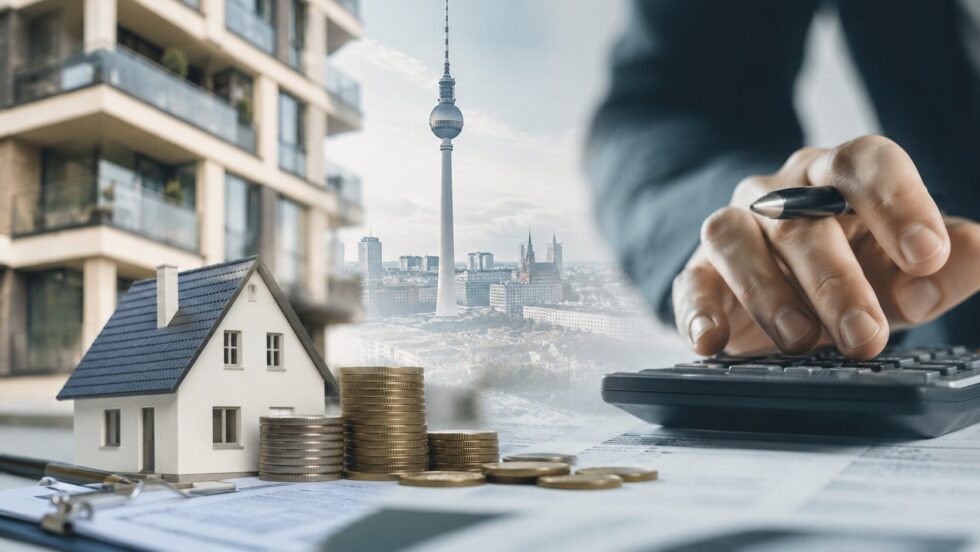
Hypothek in Deutschland 2026 is no longer simply about finding the lowest mortgage rate in Europe’s largest economy. Buyers entering the German property market now face a far more complex environment shaped by higher interest rates, stricter bank stress tests, rising energy-efficiency obligations and city-specific legal risks that can dramatically affect both financing costs and long-term resale value. In Berlin, Munich, Hamburg and Frankfurt, many purchases now fail not because buyers cannot afford the property itself, but because they underestimate additional acquisition costs, renovation liabilities, refinancing risks and local housing regulations that increasingly influence lending decisions.
German banks have tightened underwriting standards throughout 2025 and into 2026, especially for buyers with limited equity, variable income or investment-focused purchases, while construction and renovation costs remain historically elevated despite slower price growth in several metropolitan areas. The result is a housing finance market where repayment structure, fixed-rate periods, energy classification and municipal regulations matter as much as the advertised interest rate itself, according to market data from the Bundesbank, Interhyp, Dr. Klein and major German lenders, as reported by NewsToday24 editorial team, citing goldmetr.de.
For many households, the psychological shift is equally important. During the low-interest era, German property buyers often viewed residential real estate as a near-automatic wealth-building mechanism. In 2026 that assumption has weakened significantly. Buyers now calculate not only purchase prices and monthly instalments, but also future refinancing exposure, heating-system upgrades, insulation obligations and liquidity reserves for unexpected maintenance costs. In Germany’s largest cities, the financing conversation has become deeply connected to regulation, urban policy and energy transformation — and this is precisely where many first-time and even experienced buyers still make expensive mistakes.
How German Property Financing Actually Works in 2026
German mortgage financing in 2026 continues to rely primarily on annuity loans, yet the structure of these loans is being examined far more aggressively by lenders than during the ultra-low-rate period. Banks now prioritise long-term repayment sustainability over maximum borrowing capacity. This change is visible across both owner-occupied and investment properties, especially in expensive urban markets such as Munich and Frankfurt where household leverage ratios have increased sharply over the past decade.
Unlike in some Anglo-Saxon mortgage markets, German financing remains heavily documentation-driven. Banks typically analyse employment contracts, income stability, tax returns, monthly spending behaviour and even future household risks.
Self-employed applicants and freelancers often face tougher approval conditions, particularly when income fluctuates or depends on international business activity.
Another critical factor is that buyers continue to underestimate transaction costs. In Germany, ancillary acquisition expenses can reach between 9 and 15 percent of the purchase price depending on the federal state and brokerage structure. Many buyers focus only on down payments while overlooking taxes, notary fees and registration costs that are usually due immediately.
“The era of near-total leverage with minimal liquidity reserves is effectively over in Germany’s housing market”
Core components of a German mortgage
| Component | Meaning |
|---|---|
| Fixed interest rate | Locked mortgage rate during the fixed term |
| Repayment rate | Percentage of the loan repaid annually |
| Equity contribution | Buyer’s own capital |
| Loan-to-value ratio | Relationship between loan and property value |
| Ancillary costs | Tax, notary, registry and brokerage expenses |
| Refinancing | New mortgage after fixed-rate expiry |
German lenders increasingly apply internal stress testing scenarios. Many now calculate whether borrowers could still afford repayments if rates rise several percentage points at refinancing stage. This is particularly relevant because a significant portion of loans fixed during the low-rate era will require refinancing over the next several years.
Interest Rates, Repayment and Fixed Terms — the Three Levers That Matter
Mortgage rates remain the single most important variable in Germany’s property market in 2026. Even relatively small differences in interest rates produce substantial changes in total borrowing costs over long repayment horizons. On a €700,000 mortgage, a difference of 0.7 percentage points can increase total repayment costs by well over €100,000 across the financing period.
Repayment structure is equally important. During the cheap-money years, many borrowers selected very low initial repayment rates to maximise affordability. That strategy has become significantly more dangerous in a higher-rate environment because loan balances decrease more slowly, leaving households exposed to expensive refinancing risks later.
The fixed-rate period — known in Germany as the Sollzinsbindung — has therefore become a strategic decision rather than a technical formality. Ten- and fifteen-year fixed periods are increasingly common among cautious borrowers seeking planning certainty.
Why low repayment rates create long-term risk
- Slower reduction of outstanding debt
- Higher refinancing exposure
- Greater sensitivity to future rate increases
- Longer total repayment duration
- Higher cumulative interest costs
Fixed-rate structures in Germany 2026
| Fixed period | Main advantage | Main risk |
|---|---|---|
| 5 years | Lower initial rates possible | High refinancing uncertainty |
| 10 years | Balanced structure | Moderate flexibility limits |
| 15–20 years | Long-term payment stability | Higher starting interest rate |
Equity, Loan-to-Value Ratios and Creditworthiness — What Banks Really Check
German banks now examine borrower quality far more conservatively than during the pre-2022 financing cycle. Stable employment, liquidity reserves and disciplined spending behaviour are increasingly prioritised over aggressive leverage models. Applicants with short-term contracts, inconsistent earnings or significant consumer debt often receive weaker conditions or outright rejections.
Equity remains one of the strongest negotiating tools available to buyers. In many large German cities, banks effectively expect buyers to cover all ancillary purchase costs themselves while also contributing additional equity toward the property purchase price. This means realistic liquidity requirements can exceed 25 percent of total acquisition costs.
The loan-to-value ratio has become especially important in volatile urban markets. Properties with uncertain resale value, weak energy performance or legal complications may receive lower bank valuations than expected by buyers.
Factors banks analyse most closely in 2026
- Employment stability
- Net household surplus after expenses
- Existing debt obligations
- Credit history and SCHUFA score
- Energy efficiency classification
- Property liquidity and resale potential
- Future renovation liabilities
- Dependants and family expenses
Typical equity expectations by buyer profile
| Buyer type | Typical equity expectation |
|---|---|
| First-time buyer | 15–25% |
| Investor | 25–35% |
| Self-employed borrower | 30%+ |
| High-risk urban purchase | 35%+ |
Banks also increasingly differentiate between buildings constructed before and after modern energy-efficiency regulations. Poorly insulated buildings or properties requiring future heating upgrades may receive more conservative financing terms because future mandatory investments can affect borrower affordability.
Annuity Loans, Full Repayment Mortgages and Forward Loans — Which Structure Fits Which Buyer
The German mortgage market in 2026 offers several financing structures, but each serves a different borrower profile. The standard annuity mortgage remains dominant because it combines stable monthly payments with predictable repayment progression. However, rising rates have pushed more buyers to examine full repayment structures and forward-financing products.
Full repayment loans — Volltilgerdarlehen — are increasingly attractive to risk-averse households. These structures guarantee that the loan will be completely repaid by the end of the fixed-rate period, removing refinancing uncertainty entirely. The trade-off is significantly higher monthly instalments.
Forward loans are gaining popularity among borrowers whose existing low-rate mortgages expire within the next few years. These products allow households to secure future refinancing conditions in advance, reducing exposure to further rate volatility.
Main financing structures in Germany
| Mortgage type | Suitable for | Key risk |
|---|---|---|
| Annuity loan | Standard buyers | Refinancing exposure |
| Full repayment loan | High-income households | High monthly payments |
| Forward loan | Existing homeowners | Paying extra for future certainty |
Common borrower mistakes
- Choosing the lowest monthly payment instead of sustainable repayment
- Ignoring future maintenance costs
- Using all savings for the down payment
- Underestimating refinancing risk
- Failing to model higher-rate scenarios
Many financial advisers now recommend maintaining substantial emergency reserves even after property purchase. Liquidity has become strategically important because renovation obligations and energy-related upgrades can appear unexpectedly.
Additional Purchase Costs — Taxes, Notary Fees and Broker Charges by Federal State
One of the most underestimated aspects of buying property in Germany is the scale of ancillary acquisition costs. These expenses vary by federal state and can significantly affect financing needs. Buyers who fail to budget correctly often discover too late that they require additional liquidity beyond the mortgage approval itself.
Property transfer tax — Grunderwerbsteuer — differs across Germany and can range from 3.5 to 6.5 percent of the purchase price. On expensive urban apartments, this difference alone can amount to tens of thousands of euros.
Notary and land registry fees are unavoidable because German property transactions require notarised contracts. Brokerage commissions also remain substantial in many transactions despite regulatory changes in recent years.
Typical acquisition costs in Germany 2026
| Cost category | Typical range |
|---|---|
| Property transfer tax | 3.5–6.5% |
| Notary and registry | 1.5–2% |
| Brokerage fees | 3–7% |
| Renovation reserve | Variable |
Approximate transfer tax rates by city region
| Region | Tax rate |
|---|---|
| Bavaria | 3.5% |
| Berlin | 6% |
| Hamburg | 5.5% |
| Hesse | 6% |
In Berlin and Frankfurt especially, buyers frequently underestimate renovation reserves for older apartments. Buildings constructed decades ago may require façade insulation, heating modernisation or roof upgrades that become collective financial obligations for owners.
Berlin Risk Factors — Milieuschutz, Pre-emption Rights and the Legacy of the Rent Cap
Berlin remains one of Europe’s most politically sensitive housing markets. Although the controversial Mietendeckel rent cap was struck down by Germany’s Constitutional Court, its legacy still influences investor sentiment, valuation assumptions and regulatory expectations. Buyers entering the Berlin market in 2026 face a legal environment that remains unusually interventionist compared with many other German cities.
Milieuschutz areas — social preservation zones — create significant restrictions for owners and investors. These regulations can limit renovations, apartment conversions and certain modernisation projects. In some districts, authorities retain pre-emption mechanisms or strong influence over transaction structures.
The complexity lies in the fact that many international buyers still underestimate how deeply urban policy can affect asset value and financing flexibility in Berlin.
Berlin risks buyers often overlook
- Restrictions in Milieuschutz districts
- Delayed renovation approvals
- Tenant protection disputes
- Political pressure on rental housing
- High maintenance costs in older buildings
Munich Risk Factors — Preservation Rules and Speculation Tax Exposure
Munich remains Germany’s most expensive major residential market and one of Europe’s least affordable cities relative to local income levels. Financing pressure is therefore significantly higher than in most other German urban centres. Buyers frequently stretch borrowing capacity to secure limited inventory, especially in central districts.
However, Munich also presents complex legal and tax-related challenges. Preservation statutes — Erhaltungssatzungen — can affect redevelopment flexibility and renovation planning. In premium districts, these restrictions influence both cost structures and exit strategies.
Speculation tax rules also continue to surprise many investors. Properties sold within certain holding periods may trigger taxable gains depending on occupancy structure and ownership history.
Why Munich financing remains uniquely difficult
| Risk factor | Financial impact |
|---|---|
| Extremely high entry prices | Larger financing burden |
| Preservation rules | Restricted renovations |
| Low rental yields | Reduced cash flow |
| High equity expectations | Greater liquidity needs |
The mismatch between rental income and acquisition prices remains particularly pronounced in Munich. Buyers relying heavily on rental yields often discover that financing costs significantly outweigh operating income unless substantial equity is used.

Hamburg and Frankfurt — The Risks Many Buyers Still Ignore
Hamburg and Frankfurt appear more stable than Berlin politically and less overheated than Munich psychologically, yet both cities contain hidden financing risks that many households fail to recognise. In Hamburg, flood-zone exposure and building insurance costs are becoming increasingly relevant in certain districts. Climate-related risks now influence both insurance pricing and long-term property assessments.
Frankfurt faces a different challenge. The city’s property market remains heavily connected to finance-sector employment, international capital flows and corporate demand. Luxury and investment-driven segments can therefore react quickly to macroeconomic shifts.
Overlooked risks in Hamburg and Frankfurt
- Insurance cost inflation
- Flood-risk reassessments
- High condominium maintenance obligations
- Office-market weakness affecting mixed-use areas
- Dependence on international financial-sector employment
Comparative city risks
| City | Main hidden risk |
|---|---|
| Berlin | Regulation and tenant law |
| Munich | Affordability and tax exposure |
| Hamburg | Climate and insurance risk |
| Frankfurt | Financial-sector dependency |
KfW Subsidies and Energy Renovation in Germany 2026
Energy efficiency has become inseparable from mortgage financing in Germany. KfW subsidy programmes continue to influence buyer decisions because energy performance directly affects borrowing costs, long-term operating expenses and future resale value.
Properties with poor energy ratings increasingly face financing disadvantages. Some banks already apply differentiated lending conditions depending on EPC classification and expected renovation liabilities.
Key renovation areas banks now monitor
- Heating-system modernisation
- Roof insulation
- Window replacement
- Solar integration potential
- Building energy certificates
KfW-related financing advantages
| Measure | Possible benefit |
|---|---|
| Energy-efficient renovation | Lower financing costs |
| Heat-pump installation | Subsidy eligibility |
| Efficient new construction | Better long-term valuation |
The transition toward stricter European energy rules is expected to remain a defining issue for German residential property throughout the second half of the decade.
Checklist Before Signing a German Property Contract — 15 Points That Protect Buyers
Before signing a German property purchase agreement in 2026, buyers increasingly need legal, technical and financial due diligence beyond the standard mortgage approval process. Many costly problems emerge only after ownership transfer.
15 critical checks before purchase
- Verify energy-efficiency classification
- Review building maintenance reserves
- Analyse homeowners’ association protocols
- Check future renovation obligations
- Confirm Milieuschutz or preservation restrictions
- Review land registry entries
- Calculate realistic refinancing scenarios
- Stress-test repayments at higher rates
- Analyse neighbourhood infrastructure plans
- Verify insurance exposure
- Assess rental restrictions
- Confirm brokerage obligations
- Review tax implications
- Keep post-purchase liquidity reserves
- Obtain independent legal review
The German housing market in 2026 is no longer a simple borrowing exercise built around cheap money and rising prices. Financing has become a multidimensional risk-management process shaped by regulation, energy policy, refinancing exposure and city-specific legal frameworks. Buyers who focus exclusively on headline mortgage rates increasingly overlook the factors that determine whether a property remains financially sustainable over the next decade.
Stay connected for news that works — timely, factual, and free from opinion — and insights that matter now: How to sell an apartment in Germany: Remote Jobs in Germany: Work From Home Professions, Weekly Payments and Where to Find Online Work