



One extra working hour? Germany debates productivity, fairness and motivation
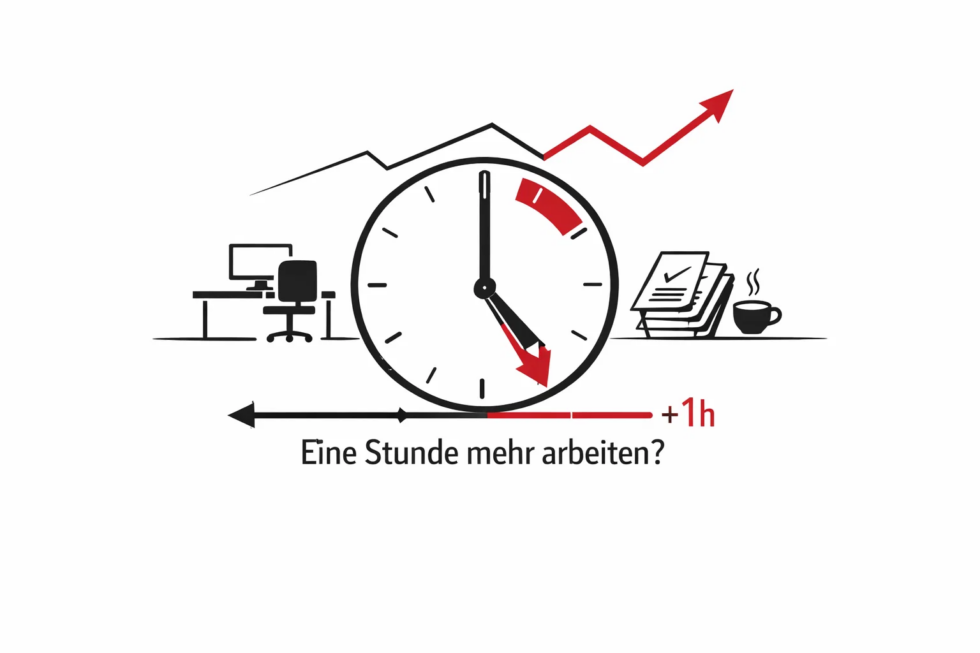
A proposal suggesting that Germans should work one additional hour per week to stimulate economic growth has sparked a wide public debate, exposing deep divisions over productivity, public spending and social fairness, reports NewsToday24 with reference to BILD. The discussion comes amid concerns about sluggish economic performance, pressure on social security systems and rising government expenditure, prompting readers to question whether longer working hours would deliver real economic benefits or merely shift the burden onto employees.
Supporters: work ethic, responsibility and rebuilding prosperity
Several readers expressed strong support for the idea, framing it as a question of personal responsibility and historical perspective. Rolf Röhling argued that complaints about one additional working hour overlook how earlier generations rebuilt Germany after the war through long hours and overtime, suggesting that today’s reluctance reflects declining resilience. Jens Neddermeier echoed this view, questioning how a country once associated with diligence could hesitate over such a proposal and stating he would accept even two or three extra hours if it contributed to national recovery.
Conditional support: only if effort pays off
Some readers backed the proposal in principle but stressed that motivation depends on visible rewards. Harald Hotz said additional work only makes sense if it leads to tangible improvements such as the realistic chance of home ownership or a better quality of life. Michael März also signaled willingness to work more, but warned that extra effort must be financially worthwhile, arguing that motivation disappears when additional income is largely absorbed by taxes and contributions rather than reflected in take-home pay.
Critics: wrong solution to deeper problems
A larger group of readers rejected the proposal, arguing that longer working hours would not address Germany’s structural challenges. Daniel Springer stated that economic growth depends on innovation, productivity, demand and stable framework conditions — including infrastructure, education, energy costs and geopolitical stability — rather than marginal increases in working time. Michael Köhle said he was unwilling to give up more personal time while facing declining purchasing power, blaming inefficient public spending and large-scale financial transfers abroad.
Focus on politics, spending and incentives
Others redirected the debate toward political responsibility. Anne Siegfried called for strict spending discipline before asking workers to do more, including freezing parliamentary pay, enforcing consequences for misuse of public funds, mandatory community work for employable benefit recipients and a review of foreign aid and NGO funding. Hendrik Schmiedefeld argued that neither employees nor employers would benefit from an extra hour, claiming that the primary beneficiary would be the state through higher tax revenues rather than productive investment.
Practical limits and alternative incentives
Christina Gomes opposed the proposal on practical grounds, explaining that she already works around ten hours a day and cannot legally or physically extend her working time. She suggested instead that tax-free overtime bonuses could act as a genuine incentive, potentially encouraging voluntary additional work if the financial reward were clear. Bernd Breitwieser, with more than four decades of work experience including long shifts, rejected further demands on full-time workers and argued that policy should instead focus on mobilising those able to work but currently outside employment.
Key positions voiced by readers
- Supporters see an extra hour as a question of work ethic and national responsibility
- Conditional supporters demand visible rewards such as higher net income or prospects
- Critics argue growth comes from innovation, not longer hours
- Several readers call for spending cuts and political accountability first
- Others highlight legal, physical and motivational limits to longer working days
Stay connected for news that works — timely, factual, and free from opinion — and insights that matter now: Extreme Cold Brings School Closures Across Germany as Winter Storm “Elli” Advances.