



Vagabonding Planets 2026: Sensational Mass Determination of a Dark Wanderer
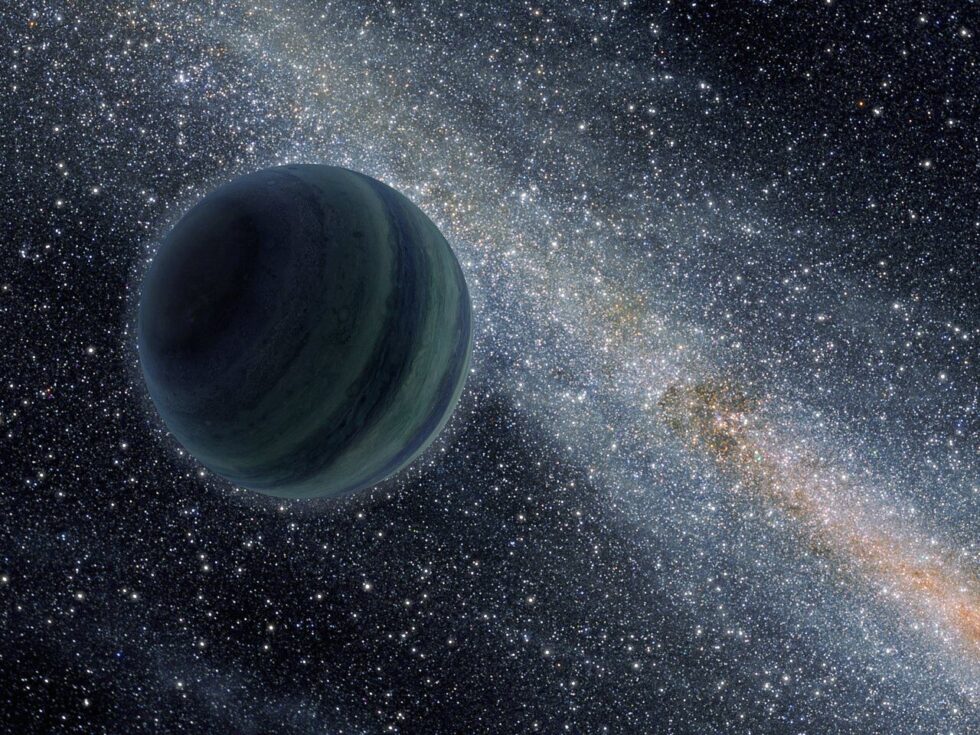
Vagabonding planets without a host star have presented astronomers with major puzzles for years, but a recent discovery is now breaking the silence of the dark cosmos. The scientific year 2026 began with a sensation when an international research team announced the identification of a lonely celestial body the size of Saturn in the journal Science. This discovery marks a historical turning point, as it was the first time that the mass and distance of such an object could be precisely measured. Without the protective warmth and light of a sun, these cosmic mavericks drift through the Milky Way, often invisible to conventional observation methods. By using the most modern analytical techniques and linking global telescope data, this dark wanderer has now been pulled out of anonymity. The results provide fundamental insights into how planets are formed and under what conditions they are forced to leave their original systems. This is reported by the editorial team of NewsToday24.
Microlensing as the Key to Discovering Homeless Planets
The search for objects that do not emit their own light and do not reflect any nearby light source required a highly sophisticated method based on the General Theory of Relativity. Since vagabonding planets remain invisible to conventional telescopes, astronomers use the gravitational lens effect, where the mass of the planet curves space and amplifies the light of a star located behind it. This phenomenon, known as microlensing, acts like a natural magnifying glass in space, creating short-term brightness fluctuations as soon as the planet passes exactly in front of a background star. To resolve the ambiguity between distance and mass, the team led by Subo Dong combined data from the ESA space telescope Gaia with observations from ground-based stations. Due to the parallax—the slightly different perspective between Gaia and Earth—the event could be registered with a time delay and thus spatially localized. This precise coordination enabled the first exact determination of the physical properties of an object in this class. The technological effort illustrates why such discoveries have previously been among the rarest events in astronomy.
Technical details of the observation event KMT-2024-BLG-0792:
- Event Name: KMT-2024-BLG-0792 / OGLE-2024-BLG-0516
- Participating Organizations: Peking University, European Space Agency (ESA)
- Instruments Used: Gaia space telescope and various terrestrial observatories
- Time Delay in Perception: Approximately two hours between space and Earth
- Methodology: Simultaneous observation of the microlensing effect from different distances
- Target Object: A vagabonding planet without gravitational binding to a star
- Relevance: First-ever mass determination of a homeless planet through direct measurement
- Publication: Science Journal, issue from January 1, 2026
Physical Composition and Mass of the New Planet
Analysis of the data revealed that the newly discovered planet possesses about a quarter of the mass of Jupiter, placing it in direct comparison with Saturn. This classification is of crucial importance as it clearly defines the boundary between planets and so-called brown dwarfs—stunted stars. An object with this comparatively low mass must necessarily have originated in a disk of dust and gas around a young star before being catapulted into space by gravitational instabilities. Such processes often occur in the early stages of solar systems when large planets interact with each other and throw smaller siblings out of their orbits. The discovery confirms the theoretical assumption that the majority of vagabonding objects in the cosmos are of a lighter nature and do not reach the mass of massive gas giants. However, a small uncertainty remains, as the planet could theoretically be on an extremely wide orbit that is not currently recognizable to us as such. Statistical probability, however, points to a genuine homeless wanderer traveling lonely through the galaxy.
Comparison of mass ratios and classifications:
| Object Designation | Mass compared to Jupiter | Formation Type |
| New vagabonding planet | approx. 25 percent (Saturn-like) | Planet formation (dust disk) |
| Jupiter | 100 percent (Reference value) | Gas giant in a stable system |
| Brown Dwarf | over 1,300 percent | Star-like contraction |
| Earth | approx. 0.3 percent | Terrestrial planet |
| Typical microlensing candidate | mostly under 100 percent | Vagabonding planet |
| Saturn | approx. 30 percent | Gas giant in a stable system |
Future Missions to Research Cosmic Mavericks
Although the Gaia space telescope has since been decommissioned, astronomy is only at the beginning of a new era of discovering these dark celestial bodies. The success of the current study has shown how valuable coordinated observations from different positions in the solar system are for measuring the universe. Already in September of this year, NASA plans to launch the Nancy Grace Roman Space Telescope, which was specifically designed for the detection of microlensing events. This instrument will be able to identify thousands of such vagabonding planets and systematically record their masses. Scientists expect the number of known homeless planets to increase exponentially in the coming years, which could fundamentally change our image of the Milky Way. Estimates suggest that there are more of these lonely wanderers in our galaxy than stars themselves. Research thus faces the massive task of cataloging this previously invisible population of the cosmos and decoding its origin.
Planned steps and instruments for the next research phase:
- Launch of the Nancy Grace Roman Space Telescope: Planned for September 2026
- Main Task: Systematic survey of the galactic center for microlensing
- Objective: Creation of a statistical database of vagabonding planets
- Expected Discoveries: Several thousand new objects within the mission duration
- Technology: High-resolution infrared optics for deeper insights into dark regions
- Cooperation: International data exchange to validate mass measurements
- Mission Duration: Designed for at least five years of intensive sky observation
- Significance: Decoding the frequency of planetary system collapses in space
The measurement of the Saturn-sized wanderer marks the beginning of a new chapter in space exploration, in which what was previously invisible finally becomes measurable. It is an impressive example of how mathematical precision and international cooperation can illuminate the darkest corners of our universe.
Stay connected for news that works — timely, factual, and free from opinion — and insights that matter now: Berlin, Ukraine, and the world: Black Moon 2026 in Germany: When it arrives and how it affects you