


Bundestag Approves Tax Relief: Higher Commuter Allowance and VAT Cut for Gastronomy

The German Bundestag has successfully passed a comprehensive legislative package designed to provide substantial tax relief, significantly benefiting commuters, the hospitality sector, and volunteers. This extensive bundle of measures received approval with the votes of the coalition factions, comprising the Union and the SPD. Conversely, the Green and AfD parties voted against the proposal, while The Left abstained from the vote altogether. For the legislation to officially take effect, it still requires ratification by the Bundesrat, the upper house of the German parliament, informs by NT24.
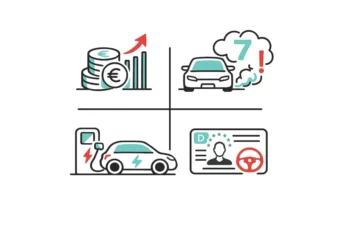
A fundamental component of the newly enacted tax package is the modification and increase of the travel allowance, commonly known as the Pendlerpauschale. Going forward, employees will be permitted to claim 38 cents per kilometer for the first 20 kilometers of their commute to their workplace for tax purposes, marking an increase from the previous rate of 30 cents. The Pendlerpauschale is a crucial fiscal instrument intended to alleviate the financial burden on workers who travel long distances, allowing them to deduct travel expenses. Furthermore, for low-income earners who have a minimal taxable income, the Mobility Premium (Mobilitätsprämie) has been available since 2021. However, in 2021, this premium was only disbursed to approximately 149,000 individuals, which fell short of initial governmental forecasts. The recently approved adjustment aims to enhance the appeal of the lump-sum allowance and provide more significant financial relief, particularly for long-distance commuters.
In a move aimed at bolstering the struggling hospitality industry, the value-added tax (VAT) on food served in restaurants is slated to be permanently reduced from 19 percent to the lower rate of seven percent, effective from January 1, 2026. While this measure provides considerable relief to restaurant operators, they are not legally obligated to directly pass on this tax reduction to consumers by offering lower prices. Industry associations have already indicated that any additional revenue generated from this tax cut is unlikely to be used for price reductions but will instead be reserved, at best, to absorb potential future cost increases within the sector. The legislation, championed by the political factions, reflects a continued effort to balance fiscal responsibility with targeted economic stimulation across key areas of the German economy.
Stay connected for news that works — timely, factual, and free from opinion — and insights that matter now: Berlin, Ukraine, and the world: 20,000 Rounds of Bundeswehr Ammunition Stolen from Unsecured Truck in Major Security Breach