



Germany Transit Strike Thursday: Massive Disruptions in Bavaria, NRW and Hamburg
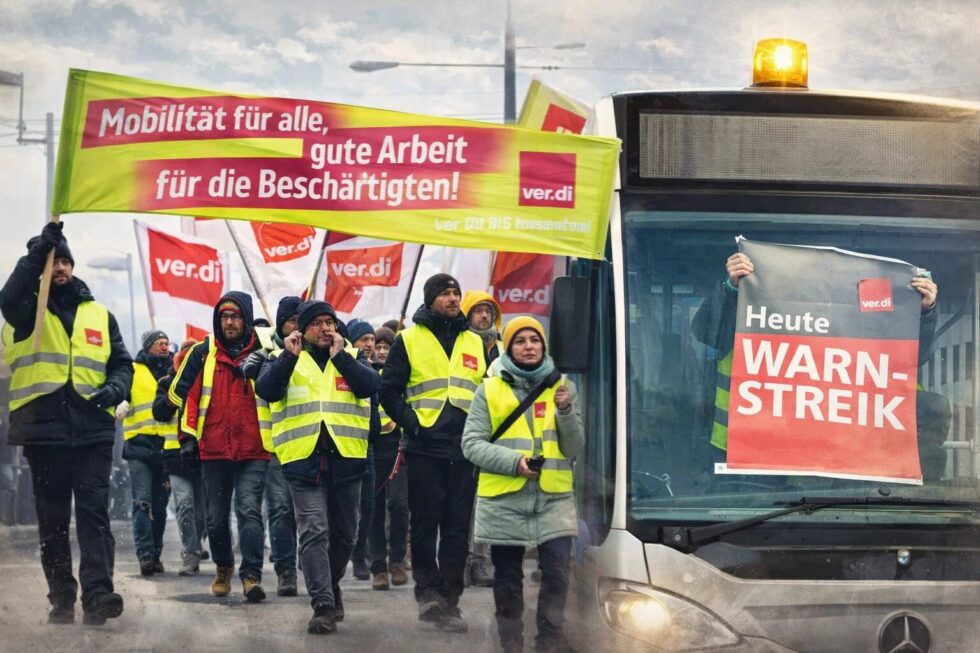
Germany’s public transport infrastructure faces a critical standstill as the trade union Verdi escalates its industrial action, calling for widespread warning strikes on Thursday, March 19, 2026. This strategic maneuver targets several federal states, including North Rhine-Westphalia, Bavaria, and Hamburg, where buses and trains are expected to remain in depots for the entire day. For millions of commuters, students, and businesses, this represents a significant disruption to daily logistics, forcing a massive shift toward private vehicles and digital remote work. The timing is crucial as the union seeks to break a four-month deadlock in negotiations over framework collective agreements, emphasizing that the future of public mobility depends on drastically improved working conditions to combat a chronic shortage of skilled labor.
This situation is reported by NewsToday24, citing the Verdi, which notes that the German transport crisis is being closely monitored across Europe as a barometer for labor relations in the green energy sector. The ripple effects of these strikes extend beyond local borders, impacting international travel hubs and the broader economic stability of the Eurozone’s largest economy.
Strategic Stalemate: Why Verdi is Escalating the Conflict Now
The current wave of industrial action is the third coordinated strike in a tense bargaining round involving roughly 100,000 employees across 150 municipal transport companies. Unlike previous years where wage increases were the sole focus, the 2026 negotiations center heavily on the "Manteltarifverträge" (framework agreements) which govern the quality of life for transit workers. Verdi is demanding shorter weekly working hours, increased rest periods between shifts, and higher bonuses for night and weekend work to make the profession viable again. Without these changes, the union argues that high fluctuation rates will lead to a total collapse of public service reliability by 2027.
While states like Baden-Württemberg and Schleswig-Holstein have already reached settlements, the rest of the country remains in a precarious tug-of-war. Employers cite massive budgetary constraints and the high cost of the "Deutschlandticket" as reasons for their hesitance, claiming that fulfilling all union demands would lead to a reduction in services due to lack of funding. This fundamental disagreement has led to the current escalation, with union leaders insisting that "hesitancy at the negotiating table" is no longer an option if the transport transition is to succeed.
Regional Breakdown: Where the Strikes Will Hit Hardest
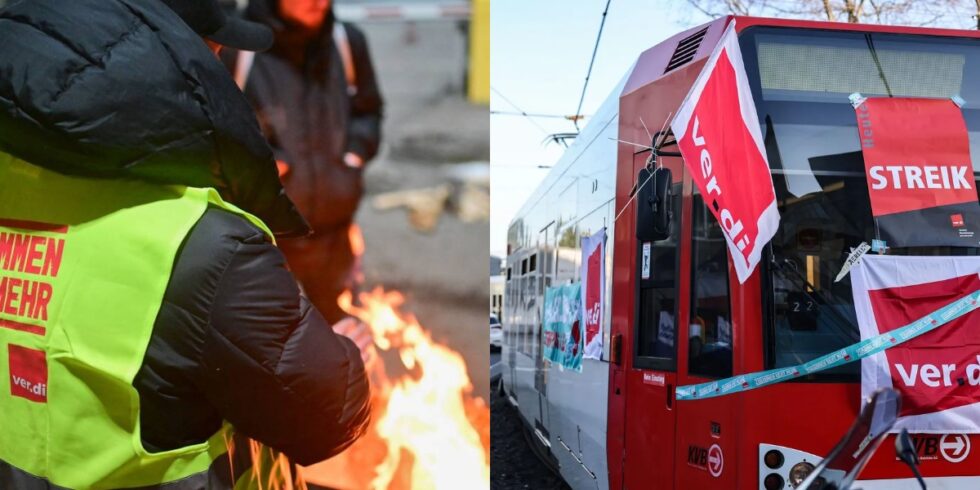
The impact of the strike on Thursday, March 19, varies significantly by region, with some states already confirmed and others remaining in a state of high-stakes deliberation. In North Rhine-Westphalia (NRW), the action is particularly intense, with additional strikes occurring as early as Tuesday in most regions to maximize pressure on municipal employers. Hamburg and Bavaria will see a total cessation of municipal bus and subway services, while other states like Hesse and Brandenburg are deciding their participation based on the progress of last-minute talks held this Monday.
| Federal State | Strike Status (March 19, 2026) | Primary Impacted Services | Key Demands |
| Bavaria | Confirmed (Full Day) | Municipal buses, Trams, U-Bahn | Wages & Working Conditions |
| NRW | Confirmed (Full Day) | All municipal transport, Admin | Working Conditions (Mantel) |
| Hamburg | Confirmed (Hochbahn) | U-Bahn, Buses | Wages & Shift Structures |
| Hesse | Decision Pending (Monday) | Local city transport | Shift length reductions |
| Brandenburg | Decision Pending (Monday) | Regional & City buses | Wages & Rest periods |
| Bremen | Decision Wednesday | Local transit network | Working conditions |
| Lower Saxony | No Strike (Peace Obligation) | None (Services normal) | N/A until April |
Operational Reality: Practical Survival Guide for Commuters
For those residing in strike-affected areas, the primary challenge is navigating a day where the "Wegerisiko" (commute risk) lies entirely with the employee. Under German labor law, a strike is not considered "force majeure" that justifies absence from work without loss of pay; employees must find alternative means to reach their workplace or utilize vacation days. Experts recommend shifting to "Home Office" where possible, or utilizing car-sharing platforms and bicycle lanes, which are expected to experience record-breaking volume. It is also important to note that S-Bahn services operated by Deutsche Bahn (DB) are generally not affected by this specific Verdi strike, though they will be severely overcrowded.
To mitigate the impact of the disruption, transit users should implement the following steps:
- Verify Service Operators: Check if your local line is municipal (Verdi) or private/DB-operated; private contractors sometimes continue to run limited services.
- Remote Work Coordination: Finalize Home Office arrangements with employers by Wednesday afternoon to avoid a Thursday morning traffic collapse.
- Digital Updates: Utilize the "Fahrplanauskunft" apps of local providers (like MVV, HVV, or VRR) which will show canceled connections in real-time.
- Carpooling: Use platforms like BlaBlaCar or internal company boards to coordinate group travel, as city parking will be at a premium.
- Bicycle Readiness: For urban distances under 10km, cycling remains the most reliable alternative to avoid the gridlock of diverted car traffic.
The Recruitment Crisis: Labor Shortages and the Transport Transition
At the heart of Verdi’s push is a sobering statistic: the German transport sector needs to recruit at least 15,000 new drivers annually to replace retiring staff and meet expansion goals. Currently, the industry is falling short of this target by nearly 30%, largely due to unattractive shift patterns and high stress levels. Union deputy chair Christine Behle has emphasized that if the work remains unattractive, the "ÖPNV" (Public Transport) as a guarantor of participation and quality of life is at massive risk. The goal is to reduce the burden on employees caused by extremely unfavorable working hours and constant time pressure.
The demands for 2026 include a reduction in weekly working hours to 35 hours in some regions and the extension of daily rest periods to a minimum of 12 hours. Employers, however, argue that these changes would require even more staff—staff that currently does not exist. This creates a "catch-22" situation where the service cannot be improved without more people, but more people cannot be hired without improving the service. This stalemate is why the 2026 bargaining round has become one of the most contentious in recent history, reflecting a broader struggle over the value of essential service work in a modern economy.
Economic and Legal Consequences: What You Need to Know
A nationwide strike day in the transport sector incurs an estimated economic loss of approximately €35 million to €50 million due to lost productivity and logistical delays. Legally, passengers have limited rights during a warning strike; unlike delays caused by technical faults, strikes generally do not trigger a right to taxi reimbursement or hotel stays unless specifically guaranteed by the local transport association’s "Mobilitätsgarantie." Most municipal providers exclude strikes from these guarantees, meaning passengers must bear the additional costs of alternative transport themselves.
To protect your rights and wallet during this period, keep the following in mind:
- Employer Communication: Inform your supervisor as soon as a strike is confirmed in your area to avoid disciplinary "Abmahnungen" for tardiness.
- Refund Requests: While taxis aren't usually covered, you may be eligible for a pro-rata refund on monthly passes if the service is completely suspended for a specific period.
- School Attendance: Education laws vary by state, but usually, a transport strike allows for excused absence if no alternative transport is available, though schools generally remain open.
- Peace Obligations: Note that Lower Saxony remains strike-free until the end of March due to a "Friedenspflicht," a legal cooling-off period where strikes are prohibited.
Outlook: Is a General Strike Looming
The current warning strikes are designed to be short-term "warning shots," but if negotiations do not show progress following the March 19 actions, the threat of an indefinite strike looms. Verdi has signaled that its members are prepared for a "ballot for industrial action" (Urabstimmung), which could lead to weeks of disruption. The next few days of negotiations in Hesse, Brandenburg, and Bremen will be decisive. If these talks fail, the transport landscape of Germany could face a prolonged period of instability that challenges the very foundation of the nation's climate-neutral mobility goals.
Political pressure is also mounting on the Federal Government to provide more subsidies for local transport. While the federal government funds the infrastructure, the operating costs and personnel expenses are largely a municipal burden. As cities face declining revenues and rising social costs, the ability to fund the union’s demands without raising ticket prices or cutting routes is diminishing. This makes the 2026 strikes not just a labor dispute, but a fundamental debate about how public services should be financed in the mid-2020s.
Stay connected for news that matters — timely, factual, and free from bias. Read trusted updates from Berlin, Ukraine, and around the world: Who Is Banksy and Is He Really Robin Gunningham? What Is Known About the Mysterious Street Artist