



AfD Leads CDU by Five Points in Germany as Insa Poll Shakes Berlin Before Key Elections
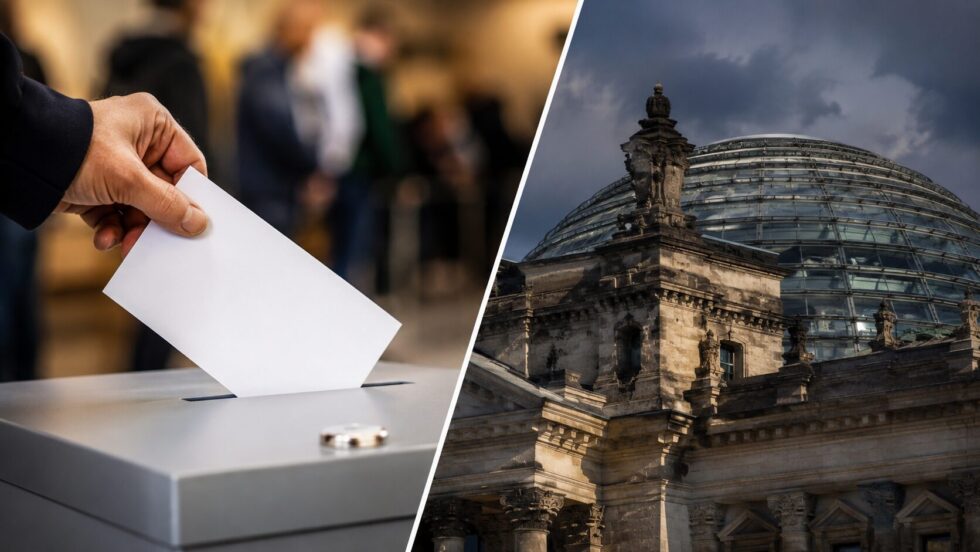
AfD has moved five percentage points ahead of CDU/CSU for the first time in a nationwide Insa poll, marking one of the most dramatic shifts in Germany’s modern political landscape. The survey, conducted between 4 and 8 May 2026 among approximately 1,200 eligible voters, shows the AfD at 28 per cent while the conservative Union bloc falls to just 23 per cent amid growing frustration over inflation, migration, energy costs and economic uncertainty, as reports NewsToday24, citing the TAZ.
The figures are being treated in Berlin not as a routine polling fluctuation but as a warning signal about a deeper structural transformation inside German politics. SPD and Greens continue to lose momentum, smaller parties remain below the five-per-cent threshold and political strategists are increasingly debating whether Germany is entering a new era of fragmentation similar to developments already seen in several other European democracies.
Why the new Insa poll is being viewed as a political warning signal
The latest Insa figures have triggered unusually intense reactions across Germany’s political establishment because the AfD is no longer merely level with the Union bloc — it is now clearly ahead. Previous polls occasionally placed the party first, but usually within the margin of error. A five-point lead represents a completely different political reality and raises new questions about voter behaviour ahead of future regional and federal elections.
Several analysts in Berlin describe the numbers as historically significant because they suggest a continued weakening of Germany’s traditional “Volksparteien”, the large mainstream parties that dominated the post-war political system for decades. CDU/CSU and SPD once regularly secured more than half of all votes combined. According to the new figures, together they now command only 36 per cent support.
The long-term trajectory is what worries strategists most. Political loyalty in Germany is becoming weaker and more volatile, with voters switching parties faster than in previous decades. Economic pressure, distrust in institutions and emotional digital campaigning are increasingly shaping electoral behaviour.
International observers are also paying attention. Germany was long viewed as one of Europe’s most politically stable democracies. The current polling trend challenges that assumption and has intensified debates about whether the country’s political centre is losing its dominance permanently.
| Party | Insa Poll May 2026 |
|---|---|
| AfD | 28% |
| CDU/CSU | 23% |
| SPD | 13% |
| Greens | 13% |
| Left Party | 11% |
| FDP | 3% |
| BSW | 3% |
The margin of error in the survey stands at approximately plus or minus 2.9 percentage points, according to Insa. Even so, political observers argue that the direction of travel has now become unmistakably clear.

CDU and CSU face mounting strategic pressure
Inside the Union bloc, the poll has intensified internal arguments over the party’s future direction. Several regional CDU branches are demanding a harder conservative stance on migration, domestic security and economic policy, while others warn that adopting rhetoric too close to the AfD could alienate moderate urban voters and business-oriented centrists.
The strategic dilemma is becoming increasingly difficult. CDU and CSU are losing support simultaneously from both sides of the political spectrum. Conservative voters frustrated by migration policy and inflation are drifting towards the AfD, while some centrist voters believe the Union lacks a coherent modern economic message. That double pressure is now visible in national polling.
Party insiders also acknowledge a growing communication problem. Many voters no longer clearly understand what the Union stands for strategically. Several analysts argue that the issue is not simply policy detail but credibility and political identity.
Regional patterns are especially concerning for CDU and CSU. In eastern Germany, the AfD has steadily expanded support over recent years and now possesses increasingly stable voter structures. More worrying for Union strategists is that polling shifts are now becoming more visible in western states as well.
Main challenges facing the Union bloc
- Lack of a clear economic strategy
- Growing competition from AfD
- Weakening loyalty among traditional conservative voters
- Internal disagreements over future positioning
- Falling mobilisation among younger voters
- Unclear messaging on migration and industry policy
- Reduced emotional connection with voters
Why the Union’s decline matters nationally
For decades, CDU and CSU were widely viewed as Germany’s default governing force. Even during periods of crisis, the bloc generally remained comfortably above 25 per cent nationally. Falling to 23 per cent while the AfD rises further changes coalition calculations and reshapes the broader political balance in Berlin.
AfD benefits from protest sentiment and economic insecurity
Political researchers increasingly argue that the AfD’s support can no longer be explained only through temporary protest voting. Instead, many analysts believe the party has developed a more stable and durable voter base centred around migration, energy prices, inflation and distrust towards established institutions.
Economic concerns remain particularly influential. Many German households continue to feel pressure from higher living costs, uncertainty surrounding industrial jobs and debates over energy transition policies. Those anxieties have become deeply connected to broader dissatisfaction with the federal government and mainstream parties.
The AfD has also become more effective in digital communication. The party performs strongly on social media platforms where emotionally charged messaging spreads quickly. Analysts say this allows the AfD to shape debates faster than traditional parties relying on more conventional communication structures.
Several studies indicate that the AfD is increasingly attracting former CDU/CSU voters, especially among economically insecure and culturally conservative groups. This shift is politically significant because it weakens the Union while simultaneously strengthening its strongest challenger.
| Factor | Political Impact |
|---|---|
| Migration | Very high |
| Inflation | High |
| Energy prices | High |
| Anti-government sentiment | Very high |
| Social media reach | Increasingly important |
| Economic insecurity | High |
| Distrust in institutions | Very high |
Political scientists note that the AfD’s appeal now extends beyond short-term anger. The party is increasingly benefiting from structural dissatisfaction rather than isolated protest moods.
“The traditional party landscape in Germany is becoming increasingly fragmented and volatile.” (Political scientist Karl-Rudolf Korte in earlier analyses of the German party system)
SPD and Greens continue losing stability
Germany’s governing parties are also under growing pressure. SPD falls to 13 per cent in the latest Insa poll, equal with the Greens and far below previous federal election results. The numbers reinforce concerns within the governing coalition that economic dissatisfaction is overshadowing much of its political agenda.
Inside SPD, fears are growing that the party is steadily losing support among traditional working-class and industrial voters. Many people now associate economic insecurity directly with the current government. At the same time, SPD has struggled to energise younger urban voters consistently.
The Greens remain relatively stable but are failing to gain additional political momentum from climate and energy transition issues. Instead, public debate is currently dominated by inflation, migration, security concerns and industrial competitiveness. Those themes tend to disadvantage parties associated primarily with environmental policy.
Another important factor is the fragmentation of the wider political system. Smaller parties are competing aggressively for highly specific voter groups, making stable parliamentary majorities increasingly difficult to achieve. Coalition arithmetic in Germany is becoming more complicated with every election cycle.
Why governing parties are struggling
- Economic concerns dominate public debate
- High energy and living costs continue pressuring households
- Declining trust in government competence
- Difficulty communicating complex reforms
- Increasing political polarisation
- Weakening loyalty among traditional voter groups
Several analysts describe the current situation as a slow erosion of the traditional political centre, rather than a short-term reaction to individual policy failures.
Germany’s political centre is losing dominance
Perhaps the most striking aspect of the new polling is the weakness of Germany’s traditional mainstream parties. CDU/CSU and SPD together now attract only 36 per cent support — a dramatic contrast to previous decades when they regularly dominated national elections.
The reasons extend far beyond one political issue. Social polarisation, digital campaigning, economic uncertainty and declining trust in institutions are reshaping political behaviour throughout Europe. Germany increasingly appears vulnerable to the same pressures already visible in France, Italy, the Netherlands and several Nordic countries.
Political identity itself is changing. Voters are becoming less loyal to parties and more reactive to emotional debates, economic fears and short-term political developments. That creates a far more unstable environment for coalition building and long-term governance.
Several German political scientists now openly discuss whether the country’s post-war party structure is entering a fundamentally different phase. If the current trends continue, coalition negotiations could become considerably more difficult after future elections.
| Trend | Political Consequence |
|---|---|
| Weaker mainstream parties | Less stable coalitions |
| More fragmented parliament | Harder government formation |
| Higher voter volatility | Faster political swings |
| Emotional digital campaigns | More polarised debate |
| Declining party loyalty | Shorter political cycles |
How Germany’s party system is changing
In previous decades, a small number of large parties dominated national politics. Today, support is distributed across more political forces, creating instability and increasing the likelihood of complicated coalition arrangements. Berlin’s political leadership is watching those developments closely.
What the numbers could mean for future elections
Although individual polls do not predict election outcomes directly, long-term trends are treated as major indicators inside German politics. The latest Insa figures are therefore being studied carefully ahead of upcoming regional elections, particularly in eastern Germany where AfD could emerge as the strongest party in multiple states.
Coalition politics may become increasingly difficult if fragmentation continues. Several parties remain unwilling to cooperate with AfD, yet the party’s rising support complicates parliamentary mathematics significantly. That debate is already intensifying inside Berlin.
FDP faces a particularly difficult situation. With only three per cent support, the liberal party would currently fail to enter parliament under Germany’s five-per-cent threshold. BSW also remains below that level, raising further uncertainty about future coalition structures.
Economic policy is expected to dominate the coming political cycle. Industry strategy, migration, housing costs, inflation and energy prices are likely to become central election themes over the next several months.
Issues likely to dominate German politics in 2026
- Inflation and living costs
- Energy prices and industrial competitiveness
- Migration and border policy
- Housing shortages in cities
- Economic growth and job security
- Distrust towards established parties
- Social cohesion and political polarisation
Berlin faces an increasingly volatile political landscape
The latest Insa poll illustrates how dramatically Germany’s political environment has changed. Voters are switching allegiances more frequently, mainstream parties are weakening and political debates are becoming more emotionally driven. Those trends are creating growing anxiety inside Berlin’s political establishment.
CDU and CSU now face difficult strategic choices between sharper conservative positioning and maintaining centrist appeal. SPD and Greens, meanwhile, are attempting to emphasise economic competence more aggressively, though so far without significant success in national polling.
Political observers stress that Germany still retains strong democratic institutions and that polling trends can change quickly. Nevertheless, many analysts now view the broader direction as unmistakable. The stability that once defined German politics appears increasingly fragile.
Berlin’s political leadership is therefore entering one of the most uncertain periods in recent German political history, with future elections likely to test not only parties themselves but the resilience of the country’s entire political centre.
Stay connected for news that matters — timely, factual, and free from bias. Read trusted updates from Berlin, Ukraine, and around the world: What’s So Great About the Tomahawk? Trump’s Rejection is a Gold Mine for Putin