


What’s So Great About the Tomahawk? Trump’s Rejection is a Gold Mine for Putin
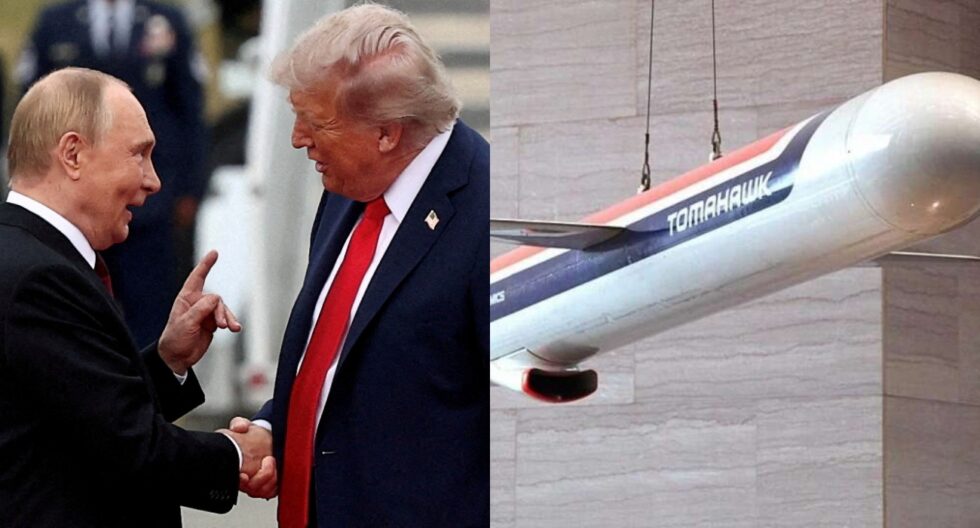
The European security landscape is facing a profound crisis in May 2026 following a seismic shift in American defense policy. While Germany and its continental partners had based their long-term deterrence strategies on the promised deployment of U.S. intermediate-range missiles, a sudden reversal from the White House has left those plans in tatters.
The decision to cancel the deployment of "Tomahawk" cruise missiles represents more than just a logistical change; it is a fundamental rupture in the "deterrence by punishment" logic that has stabilized the region for decades. For European citizens, this development marks the beginning of a period of heightened vulnerability, as the "capability gap" between NATO's European wing and the Russian Federation threatens to become an unbridgeable chasm. This situation is reported by NewsToday24, citing the n-tv.
The Tomahawk Shock: Why Europe is Vulnerable Without Long-Range Strikes
The "Tomahawk" cruise missile is not merely another weapon in the arsenal; it is a high-precision instrument of strategic leverage. Unlike the Patriot defense system, which is designed to intercept incoming threats, the Tomahawk is an offensive weapon meant to strike deep within enemy territory.
By canceling this deployment, the U.S. has effectively stripped Germany of its ability to threaten retaliatory strikes against Russian command centers and critical infrastructure. Security experts argue that this leaves Europe in a "defense-only" trap. Without the threat of "punishment," a potential aggressor may find the cost of an invasion or a missile strike acceptable, provided they can overwhelm local defenses.
The Strategic Value of the Tomahawk System Includes:
- Massive Range: It is capable of reaching targets up to 2,500 kilometers away with high precision.
- Deterrence by Punishment: It shifts the calculus of an aggressor by ensuring their own territory is not a sanctuary.
- Capability Gap Filler: It was intended to protect Europe until the mid-2030s, when domestic European systems were expected to be ready.
- Psychological Impact: Its presence served as a visible commitment of the U.S. security umbrella over Europe.
- Operational Depth: It allows NATO to target high-value assets deep within the Russian interior.
Russia’s Escalation: The Reality of Iskander and Kinzhal Threats
Since 2017, the Kremlin has systematically dismantled the post-Cold War security order by deploying weapons that violate the spirit of previous disarmament treaties. In the Kaliningrad exclave, Russia has stationed Iskander-M missile systems that can reach Berlin in approximately five minutes. This near-zero warning time leaves European leaders with almost no window for crisis management or de-escalation.
Furthermore, the introduction of the "Kinzhal" hypersonic missile has added a new layer of complexity. Launched from specialized aircraft, these missiles can strike London, Paris, or Rome within 10 to 20 minutes. Europe currently possesses no reliable defense mechanism that can stop a massed salvo of these high-speed threats.
Strategic Threats from Russian Arsenals:
- Iskander-M: These systems have a range of ~500 km and are capable of tactical strikes and nuclear intimidation.
- SSC-8 (9M729): These long-range precision missiles have a range up to 2,000 km.
- Kinzhal: These hypersonic missiles travel at extreme speeds and can reach targets like London in 15–20 minutes.
- Proximity: The Russian base in Kaliningrad is only 500 kilometers from Berlin, making the threat immediate.
- Maneuverability: Modern Russian missiles are designed to evade current NATO radar and interception systems.
The Limits of Defense: Why "Patriot" is Only Half the Solution
While the Patriot missile system has proven its worth in high-intensity conflicts, it is not a panacea. Military analysts point to three critical flaws: cost, scarcity, and saturation. A single Patriot interceptor costs millions of dollars, often far exceeding the price of the weapon it is destroying. Moreover, the global demand is so high that new orders placed by Germany are not expected for delivery until 2029 at the earliest.
The most significant danger is "saturation"—if an adversary launches fifty missiles at once, even the most advanced defense system will eventually run out of interceptors. This is why offensive deterrence is essential; it forces the enemy to hold back their own missiles to defend their territory.
Critical Drawbacks of a Purely Defensive Strategy:
- Economic Asymmetry: It is far cheaper to build offensive missiles than the high-tech interceptors needed to stop them.
- Limited Magazine Depth: Once the initial battery of interceptors is fired, a base remains unprotected until a complex reload occurs.
- Saturation Risk: Defensive systems reach a point where they are no longer operationally or economically feasible.
- Lack of Initiative: In a conflict, the defender must be right 100% of the time, while the attacker only needs to be right once.
- Supply Chains: Germany currently has only nine Patriot systems, with more on order but delayed by years.
ELSA and the European Response: A Race Against Time
In the wake of Trump’s decision, the "European Long-Range Strike Approach" (ELSA) has moved from a secondary project to a survival necessity. This initiative, involving nations like France, Germany, the UK, Poland, and Italy, seeks to develop a sovereign European cruise missile. However, progress has been agonizingly slow.
Since its inception, the project has been bogged down in bureaucratic squabbles over workshare and specifications. Experts warn that it takes between five to seven years to develop and deploy such systems—years that Europe now has to navigate without the promised American "bridge" of Tomahawk missiles. The political pressure to accelerate this timeline is immense.
Practical Steps for European Defense Autonomy:
- Funding Increases: Moving beyond the 2% GDP target to accommodate massive R&D costs.
- Streamlined Procurement: Fast-tracking bilateral projects, such as the German-British missile accord.
- Industrial Mobilization: Shifting European aerospace companies toward high-volume production of precision munitions.
- Technological Sovereignty: Investing in domestic guidance alternatives to ensure missiles work independently of U.S. systems.
- Unified Command: Establishing a shared European protocol for the use of long-range weapons.
Putin’s Win: The Symbolic Weight of U.S. Disengagement
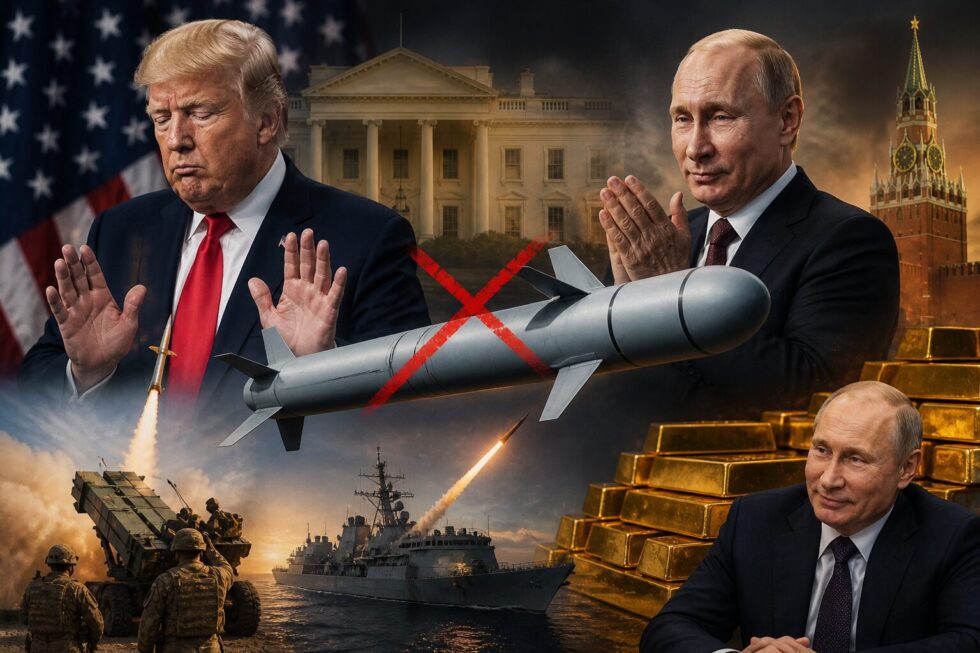
For Vladimir Putin, the decision to withhold Tomahawks is "worth its weight in gold". It serves as a powerful validation of the Kremlin’s long-term strategy of waiting for American political willpower to fatigue. By retreating from these defense commitments, the U.S. sends a message that Europe is no longer a core national security priority for Washington.
This creates a "security vacuum" in Eastern Europe that Russia may feel emboldened to fill. The symbolic damage to the NATO alliance is significant, as it signals a lack of shared risk-taking. If the U.S. is unwilling to station conventional missiles in Germany, doubt arises regarding their commitment to defend other NATO members.
Consequences of the NATO Credibility Gap:
- Encouraged Aggression: Moscow may perceive a lower risk in testing the borders of NATO members.
- Fragmented Alliances: Individual European nations may seek their own "deals" with Russia or the U.S..
- Political Destabilization: European governments face pressure to explain their reliance on an alliance that appears to be retracting.
- Arms Race Escalation: The lack of U.S. deterrence may force a disorganized and rapid rearmament across Europe.
- Loss of Leverage: The West has fewer diplomatic "sticks" to offer if its military presence is perceived as hollow.
Frequently Asked Questions
Why are Tomahawks specifically mentioned in the 2026 debate? They were seen as the only "stop-gap" solution capable of balancing Russia's missile advantage until Europe builds its own.
What is the "Capability Gap"? It refers to the fact that Russia possesses many land-based missiles with a range of 1,000–5,000 km, while European NATO members currently possess almost none.
Can't Europe just use its air force for these strikes? Air-launched missiles are effective but require aircraft to fly through dense Russian air defenses, making them riskier than ground-launched missiles.
How did Russia violate the INF Treaty? By developing the 9M729 missile system, which exceeded the range limits agreed upon in the 1980s.
Is Trump’s decision final? In the 2026 context, the decision has been enacted as part of a broader withdrawal, forcing European planners to look elsewhere.
Stay connected for news that matters — timely, factual, and free from bias. Read trusted updates from Berlin, Ukraine, and around the world: New German Military Law 2026: Do Men Aged 17–45 Need Permission for Long Stays Abroad