



Where to go in Frankfurt in summer 2026: best playgrounds, parks, sports zones and family spots
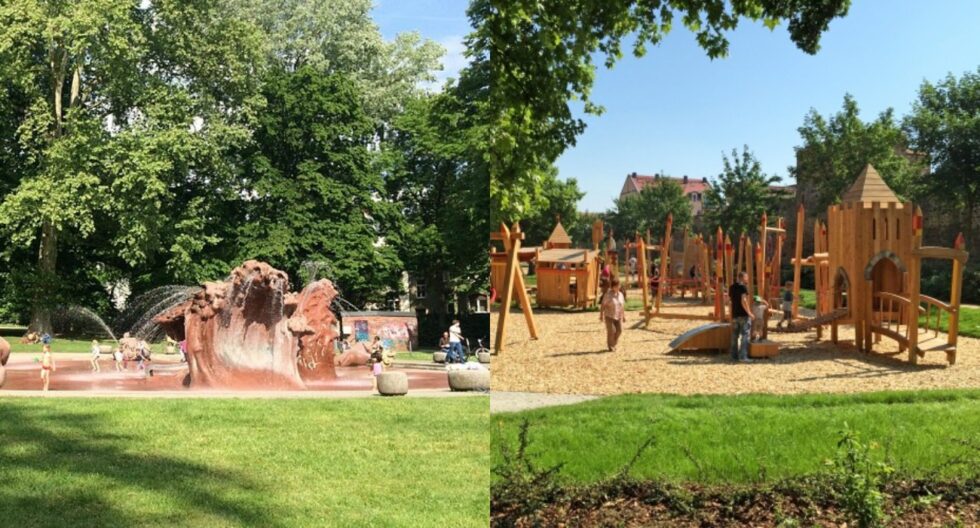
Frankfurt am Main is transforming into one of Germany’s most ambitious urban leisure destinations this summer as the city expands sports infrastructure, modern playgrounds, cooling zones and inclusive public spaces across dozens of districts, reported NewsToday24. New investment programs focused on climate adaptation, family recreation and outdoor fitness are reshaping parks, waterfront areas and neighborhood playgrounds throughout the Main metropolis in response to rising temperatures and growing demand for accessible public activity zones.
City officials and urban planners have prioritized multifunctional spaces that combine water play, outdoor sports, shaded relaxation areas and digital services for families. The result is a citywide network of upgraded parks, skate areas, padel courts and forest playgrounds designed for both children and adults. Frankfurt’s 2026 summer strategy reflects a broader European trend toward climate-adapted urban living, where public space increasingly serves health, recreation and social integration simultaneously. The city’s investment in outdoor infrastructure now positions Frankfurt among Germany’s most active metropolitan regions for family-oriented recreation.
Why Frankfurt is investing heavily in outdoor recreation in 2026
Frankfurt authorities have significantly expanded public investment into urban recreation zones due to rising summer temperatures and changing demographic demands. City planners increasingly view parks and sports infrastructure as essential public health systems rather than optional leisure projects. The combination of heatwaves, population growth and limited private outdoor space in dense districts has accelerated the need for accessible cooling and recreation areas. According to local planning departments, millions of euros have already been allocated toward playground modernization, water systems and inclusive sports infrastructure.
The strategy also focuses on reducing inequality between districts by ensuring that families across all neighborhoods have access to safe and modern outdoor facilities. Many projects specifically prioritize free public access instead of commercial leisure models. Urban planners now consider shaded green zones and sports parks to be part of Frankfurt’s long-term climate resilience strategy.
Main goals of Frankfurt’s 2026 summer projects
| Focus Area | Objective |
|---|---|
| Climate adaptation | Cooler public areas |
| Family recreation | Free outdoor activities |
| Inclusion | Barrier-free access |
| Youth sports | Safer urban fitness zones |
| Sustainability | Eco-friendly infrastructure |
| Public health | Outdoor movement and activity |
Hafenpark becomes one of Frankfurt’s most modern sports destinations
Hafenpark in Frankfurt’s Ostend district has evolved into one of Germany’s leading examples of multifunctional urban sports design. The redesigned area combines basketball courts, skate facilities, calisthenics stations and family recreation zones within a former industrial riverside environment. During summer 2026 the park attracts both professional athletes and families due to its mix of active and passive recreational spaces. Large sections include mist-cooling systems and shaded seating areas to reduce heat stress during warmer afternoons.
The city intentionally separated children’s play zones from high-intensity sports areas using natural landscape barriers and green elevation structures. This approach minimizes conflict between different user groups while maintaining visual openness across the site. Hafenpark demonstrates how former industrial waterfronts can be transformed into high-density public recreation infrastructure.
Main attractions inside Hafenpark
- skate bowl areas;
- basketball courts;
- calisthenics stations;
- children’s playgrounds;
- riverside seating zones;
- mist cooling systems;
- urban running paths.
Frankfurt’s water playgrounds are becoming critical summer infrastructure
Water playgrounds and splash zones have become increasingly important in Frankfurt due to hotter summers and growing concern about urban heat exposure for children. Parks such as Niddapark and Günthersburgpark now include interactive water systems designed to cool public areas naturally without relying solely on artificial climate control. New biological filtration systems reduce chemical usage while improving sustainability standards. Families increasingly choose these parks during midday hours because shaded water zones remain significantly cooler than surrounding streets.
The city also redesigned many splash systems to encourage educational and sensory play rather than simple water entertainment. Children interact with manual pumps, artificial streams and movable water channels that support motor development and cooperative play. Urban recreation experts increasingly describe water playgrounds as essential public cooling infrastructure rather than luxury amenities.
Most popular water playgrounds in Frankfurt
| Playground | Key Features |
|---|---|
| Niddapark | Interactive water channels |
| Günthersburgpark | Cooling mist systems |
| Tannenwald | Large splash pools |
| Rebstockpark | Water recreation areas |
| Scheerwald | Mud and pump zones |
Padel tennis is rapidly expanding across Frankfurt
Padel tennis has become one of Frankfurt’s fastest-growing recreational sports during 2026. The city has significantly increased the number of public and semi-public courts in response to rising demand from families, younger professionals and amateur athletes. Unlike traditional tennis, padel requires less space and is generally easier for beginners to learn, making it especially attractive for mixed-age participation. New courts inside Rebstockpark and other green zones now host free introductory programs during weekends.
Urban sports planners consider padel ideal for dense metropolitan environments because courts integrate efficiently into existing parks and sports facilities. The sport’s social structure also encourages group participation and recurring community activity. Frankfurt increasingly sees padel infrastructure not only as recreation but also as part of broader social and wellness policy.
“Frankfurt has developed a strong instinct for modern and inclusive sports trends,” said Stefan Berger from Sportbund Frankfurt while discussing the city’s expanding padel infrastructure.
Why padel is growing quickly in Frankfurt
- easier learning curve;
- compact court size;
- family-friendly format;
- social gameplay structure;
- lower entry barriers;
- integration into parks;
- strong demand among young adults.
The new skate infrastructure in Osthafen is attracting international attention
Frankfurt’s skate scene reached a new level in summer 2026 with the completion of the “Deep Bowl” project near Osthafen. The new facility was designed not only for advanced skaters but also for children and beginners through separate learning areas and protected training zones. Architects incorporated recycled industrial materials from the harbor area into the construction process, linking Frankfurt’s industrial heritage with modern sports infrastructure. The skatepark also uses noise-reducing concrete technology to minimize impact on nearby residential neighborhoods.
QR-coded training stations provide digital tutorials for different skill levels, reflecting Frankfurt’s broader integration of technology into public recreation. Smart LED systems activate automatically based on movement and time of day to improve energy efficiency. The Osthafen skatepark now functions as both sports infrastructure and social gathering space for younger residents across the city.
Features of the Osthafen skatepark
| Feature | Purpose |
|---|---|
| Beginner zones | Safer learning |
| Advanced bowl | Professional skating |
| Smart lighting | Energy efficiency |
| QR tutorials | Digital coaching |
| Noise-reducing concrete | Lower sound impact |
| Hydration stations | Summer heat support |
Frankfurt’s forest playgrounds offer natural cooling during heatwaves
The city’s Waldspielparks inside Frankfurt’s forest zones are becoming increasingly important during extreme summer temperatures. These parks benefit from significantly cooler microclimates created by dense tree cover and natural shade systems. Families often move toward forest playgrounds during peak afternoon heat because temperatures can remain several degrees lower than inside central districts. Parks such as Tannenwald and Louisa combine traditional forest environments with modern play infrastructure and water management systems.
New ecological filtration technology allows splash areas to function with reduced chemical treatment while preserving hygiene standards. Educational programs focusing on wildlife and local ecosystems are also integrated into many forest recreation areas during school holidays. Frankfurt’s forest playgrounds increasingly serve as climate refuges for families during summer heatwaves.
Most visited forest playgrounds
- Waldspielpark Tannenwald;
- Waldspielpark Louisa;
- Waldspielpark Scheerwald;
- Waldspielpark Goetheturm;
- Waldspielpark Heinrich-Kraft.
The FFM-Play app is changing how families use public parks
Frankfurt introduced the new FFM-Play digital platform to help families navigate playgrounds and sports areas more efficiently during summer 2026. The app provides real-time information about occupancy levels, UV intensity, shade availability and water access at parks throughout the city. Parents can also report damaged equipment or hygiene concerns directly through the platform. City officials believe this system reduces overcrowding and improves safety management during peak summer periods.
Sensors placed around recreation zones provide automated updates that help distribute visitor traffic more evenly across districts. Families with younger children increasingly rely on the app to avoid overheated or overcrowded playgrounds during afternoons. Frankfurt’s approach reflects the growing integration of smart-city systems into everyday urban recreation management.
Main features of FFM-Play
| Feature | Benefit |
|---|---|
| Occupancy tracking | Avoid crowds |
| UV alerts | Heat protection |
| Shade filters | Safer visits |
| Water station maps | Hydration access |
| Equipment reports | Faster repairs |
| Temperature monitoring | Better planning |
Grüneburgpark remains one of Frankfurt’s most important summer escape zones
Grüneburgpark continues to attract families, runners and students during summer 2026 because of its large shaded lawns and central location near Westend and Bockenheim. The park combines historical landscaping with modern recreational infrastructure including jogging paths, yoga platforms and upgraded children’s areas. During hotter weeks, tree coverage inside the park significantly reduces surface temperatures compared with dense urban streets nearby. Families increasingly use the park for full-day outdoor stays thanks to expanded seating zones and drinking water stations.
The nearby Palmengarten additionally strengthens the area’s reputation as one of Frankfurt’s greenest urban districts. Visitors often combine museum trips, botanical walks and sports activities within the same area. Grüneburgpark has evolved into a multifunctional urban cooling space rather than only a traditional city park.
Main activities inside Grüneburgpark
- jogging routes;
- outdoor yoga;
- picnic lawns;
- family recreation;
- botanical walks;
- shaded relaxation areas;
- children’s playgrounds.
Frankfurt’s outdoor gyms are changing urban fitness culture
The rapid growth of outdoor gyms across Frankfurt reflects broader European trends toward free-access public fitness infrastructure. Unlike older exercise stations, the new 2026 generation of outdoor gyms includes professional-grade calisthenics systems, bodyweight training zones and scientifically designed workout layouts. Areas near Friedberger Platz, Hafenpark and Stadtwald now attract regular training communities throughout the day. Many facilities remain active until late evening because of smart lighting systems and improved safety design.
Urban sports planners increasingly see these facilities as tools for preventive healthcare and social integration. Younger residents especially use outdoor gyms as alternatives to expensive commercial fitness studios. Frankfurt’s approach shows how public sports infrastructure is becoming part of long-term health and urban planning policy.
Most popular outdoor fitness zones
| Location | Main focus |
|---|---|
| Hafenpark | Calisthenics |
| Stadtwald | Functional training |
| Friedberger Platz | Street workout |
| Rebstockpark | Mixed fitness |
| Mainufer | Running and mobility |
Main River cycling routes are becoming central to family recreation
Frankfurt’s Main River cycling infrastructure has expanded considerably in 2026, making bicycle access to parks and sports zones easier for families. Wider bike lanes now connect central districts directly with recreation areas such as Niddapark, Hafenpark and Rebstockpark. Families using cargo bikes and trailers increasingly rely on these protected routes during weekends. The city also added new bicycle repair stations, water refill points and charging zones for e-bikes along the river.
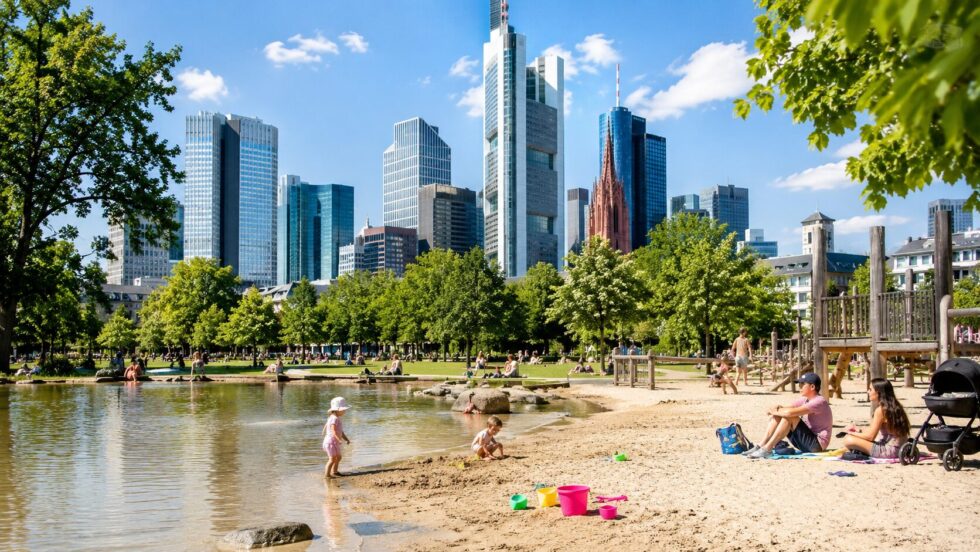
Urban mobility experts consider this integration between recreation and cycling infrastructure critical for reducing traffic congestion during summer months. The Main riverbanks have therefore become both transportation corridors and leisure destinations simultaneously. Frankfurt’s recreational cycling network now functions as a major component of sustainable urban mobility policy.
New cycling infrastructure features
- cargo bike parking;
- e-bike charging stations;
- free repair tools;
- water refill stations;
- protected bike lanes;
- family navigation routes.
Inclusive playgrounds are becoming a major priority in Frankfurt
Frankfurt significantly expanded accessible playground infrastructure during summer 2026 as part of its inclusion strategy. New facilities in districts such as Gallus and Bockenheim now include wheelchair-accessible trampolines, tactile navigation systems and sensory play stations for children with disabilities. Urban planners intentionally designed these spaces for mixed use rather than separating children based on physical limitations. Families increasingly praise the city for integrating inclusive design directly into mainstream recreation zones.
Special flooring systems improve mobility for wheelchairs while color-contrasted paths assist visually impaired visitors. Audio-based digital instructions are also available at several sports and play areas through QR technology. Frankfurt’s recreation strategy increasingly treats accessibility not as a separate category but as a standard urban requirement.
Inclusive infrastructure now available
| Feature | Purpose |
|---|---|
| Wheelchair trampolines | Inclusive movement |
| Sensory stations | Cognitive development |
| Audio QR systems | Accessible guidance |
| Tactile pathways | Safer navigation |
| Low-entry equipment | Easier access |
The Skyline Playground in Gallus is attracting architecture-focused tourism
One of Frankfurt’s most unusual family attractions in 2026 is the Skyline Playground in the Gallus district. The site was designed around Frankfurt’s famous high-rise skyline and introduces children to architecture through interactive play structures shaped like office towers and bridges. Observation decks and climbing frames imitate parts of the city’s financial district while maintaining child-safe design standards. The playground has become especially popular among families visiting from other German cities.
Urban planners describe the concept as “educational recreation,” combining movement with local identity and urban storytelling. The project also reflects Frankfurt’s effort to strengthen district-level tourism beyond the traditional city center. The Skyline Playground demonstrates how modern urban design increasingly combines culture, architecture and public recreation.
Evening lighting systems are extending park activity after sunset
Frankfurt introduced advanced evening lighting concepts across sports zones and recreation areas during 2026 to improve safety and usability during warmer evenings. Motion-sensitive LED systems now illuminate skateparks, basketball courts and running routes along the Main River without creating excessive light pollution. Areas such as Hafenpark remain active until late evening due to high youth demand and organized community sports activity. Residents have generally responded positively because targeted lighting improves perceived neighborhood safety.
The city specifically chose warmer light tones that reduce environmental impact on insects and wildlife. Sports planners believe this strategy allows recreation zones to remain functional during heatwaves when daytime activity becomes less comfortable. Frankfurt’s evening park infrastructure increasingly reflects climate-adapted urban planning rather than simple beautification.
Evening recreation zones with smart lighting
- Hafenpark;
- Main river paths;
- Gallus sports fields;
- basketball courts;
- skateparks;
- jogging tracks.
Nature playgrounds are replacing traditional plastic structures
A growing number of Frankfurt playgrounds now emphasize natural materials instead of brightly colored plastic structures. These “nature playgrounds” use wood, stone, water and living vegetation to create more open-ended forms of play. Children are encouraged to interact creatively with logs, climbing landscapes, streams and sensory gardens rather than standardized equipment. The redesigned areas inside Niddapark and Riedberg especially reflect this trend.
Educational specialists believe natural playgrounds improve resilience, coordination and environmental awareness more effectively than conventional fixed structures. Local residents also increasingly support these projects because they visually integrate better into surrounding green areas. Frankfurt’s shift toward nature-based playgrounds reflects a wider European movement in child-focused urban design.
Typical features of nature playgrounds
| Element | Function |
|---|---|
| Wooden climbing zones | Motor skills |
| Water streams | Sensory interaction |
| Stone pathways | Balance training |
| Willow tunnels | Natural shade |
| Sand landscapes | Creative play |
Frankfurt’s summer gastronomy is becoming healthier and more local
Food concepts around parks and recreation zones have changed significantly in Frankfurt during summer 2026. Traditional fast-food kiosks are increasingly replaced by smaller cafés focused on regional products, organic drinks and healthier meals for families. Smoothie stations, fruit ice bars and reusable cup systems are now common inside larger recreation parks. Public water refill systems also encourage visitors to avoid disposable plastic bottles.
Several parks introduced “activity cafés” that combine outdoor seating with family-focused menus and shaded relaxation zones. Nutrition experts involved in city planning increasingly support this model because it connects public health policy with recreation infrastructure. Frankfurt’s summer park economy now reflects broader shifts toward sustainability and wellness culture.
Rebstockpark is emerging as a major multisport destination
Rebstockpark has become one of Frankfurt’s most dynamic sports-oriented parks due to the addition of padel courts, parkour infrastructure and flexible event zones. The area attracts both organized sports groups and casual visitors seeking outdoor activity space away from denser inner-city districts. Families particularly value the combination of water access, open lawns and active sports infrastructure within one connected landscape.
The park’s modern all-weather surfaces also allow continuous use during unstable weather conditions. Urban recreation planners increasingly view Rebstockpark as a model for balancing competitive sports, public access and environmental design. Its rapid popularity growth reflects Frankfurt’s increasing demand for large multifunctional recreation zones.
Sports available at Rebstockpark
- padel tennis;
- football;
- volleyball;
- parkour;
- jogging;
- outdoor fitness;
- family cycling.
Frankfurt’s parks are adapting directly to climate change
Climate adaptation has become one of the most important planning priorities behind Frankfurt’s new generation of parks and playgrounds. Shade systems, cooling mist stations and reflective surfaces are now integrated into many recreation zones to reduce heat accumulation during summer. The city also increased tree planting programs in areas previously lacking sufficient shade coverage. Urban climate experts estimate that some redesigned playgrounds now remain up to 10–15 degrees cooler than older asphalt-based recreation areas.
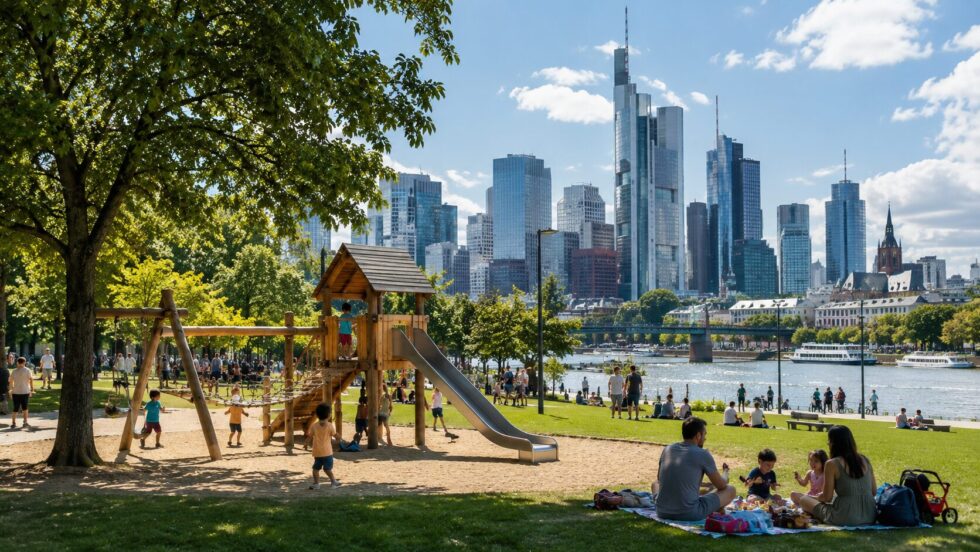
Special UV-protective sail structures automatically adjust based on sunlight intensity in some districts. These systems are especially important for younger children and elderly visitors during extreme heat periods. Frankfurt increasingly treats recreation infrastructure as part of broader climate resilience policy.
New climate-adapted park technologies
| Technology | Benefit |
|---|---|
| Mist cooling systems | Lower temperatures |
| UV-protective sails | Sun protection |
| Reflective surfaces | Reduced heat |
| Shade tree programs | Natural cooling |
| Smart irrigation | Water efficiency |
Goetheturm remains one of Frankfurt’s most underrated family destinations
The Goetheturm area inside Frankfurt’s city forest combines panoramic observation, woodland recreation and family playground infrastructure within one destination. The reconstructed wooden tower attracts both tourists and local families because of its skyline views and surrounding forest atmosphere. Nearby adventure playgrounds allow children to combine active play with nature exploration. During summer weekends the area becomes particularly popular for picnics and cycling excursions.
Unlike central urban parks, Goetheturm offers a quieter and more natural environment with significantly lower visitor density. Forest shade also creates more comfortable conditions during heatwaves. Many families now treat Goetheturm as a full-day outdoor escape from Frankfurt’s denser districts.
Parkour culture is expanding rapidly among Frankfurt teenagers
Parkour and freerunning continue growing in popularity among younger residents, especially in Gallus and Ostend districts. Frankfurt responded by building specially designed parkour parks using shock-absorbing surfaces and modular climbing systems. These areas are intentionally separated from children’s playgrounds to improve safety while still encouraging open urban movement. Trainers and youth organizations increasingly use these spaces for free workshops and organized activity sessions.
Urban sociologists view parkour infrastructure as important because it channels youth activity into supervised and safer public environments. The design philosophy also emphasizes creativity and body coordination rather than competition alone. Frankfurt’s parkour zones reflect how urban sports culture is evolving beyond traditional team-based athletics.
Features of Frankfurt’s parkour parks
- modular obstacles;
- soft landing surfaces;
- climbing walls;
- beginner training areas;
- evening lighting;
- digital tutorials.
Palmengarten remains one of Frankfurt’s most relaxing summer attractions
Palmengarten continues attracting large visitor numbers during summer because of its tropical greenhouses, botanical landscapes and calm atmosphere near central Frankfurt. Families often combine Palmengarten visits with nearby Grüneburgpark recreation areas for full-day outdoor activities. Seasonal flower displays and educational exhibitions intensify during late spring and summer months. International tourists also visit the garden as part of broader cultural itineraries across the city.
Unlike highly active sports parks, Palmengarten focuses more on relaxation, environmental education and scenic walking experiences. The combination of exotic plants and historic greenhouse architecture creates one of the city’s most visually distinctive environments. Palmengarten remains one of Frankfurt’s strongest examples of combining urban density with large-scale botanical preservation.
Frankfurt’s public safety model in parks is becoming more visible
To maintain safety and cleanliness during the busy summer season, Frankfurt expanded park ranger teams and introduced additional public hygiene infrastructure across major recreation zones. Rangers now assist with first aid situations, rule enforcement and family support while also monitoring overcrowding during large events. Smart waste-compacting systems powered by solar energy have reduced visible garbage accumulation in several parks.
Public authorities increasingly combine physical maintenance with digital awareness campaigns encouraging environmental responsibility. Families consistently rank park cleanliness and safety among the most important factors influencing recreational choices. Frankfurt’s park management strategy increasingly blends technology, environmental policy and public service into one operational model.
Main park safety measures in 2026
| Measure | Purpose |
|---|---|
| Park ranger patrols | Safety monitoring |
| Solar trash systems | Cleaner parks |
| Hygiene stations | Public health |
| Smart lighting | Evening security |
| Emergency QR points | Faster response |
Frankfurt is positioning itself as a model for urban family life
Urban planners increasingly describe Frankfurt as one of Germany’s emerging benchmarks for family-oriented public infrastructure. The city’s 2026 strategy combines sports, inclusion, climate adaptation, digital services and mobility planning into one integrated recreation system. Rather than focusing only on isolated playground projects, Frankfurt is redesigning entire districts around outdoor accessibility and public well-being. Experts believe this model could influence future urban development strategies across other European metropolitan regions.
The combination of smart-city technology, ecological planning and accessible recreation spaces reflects a broader shift in how modern cities define quality of life. Frankfurt is no longer investing in parks merely as decorative public areas — it is building interconnected urban ecosystems designed for long-term social and environmental resilience.
Stay connected for news that works — timely, factual, and free from opinion — and insights that matter now: Berlin, Ukraine, and the world: What to see in Basel, Switzerland: top attractions, costs, addresses and travel tips for visitors