


Germany Residence Permit 2026: Types of Aufenthaltstitel and How to Get Legal Residency
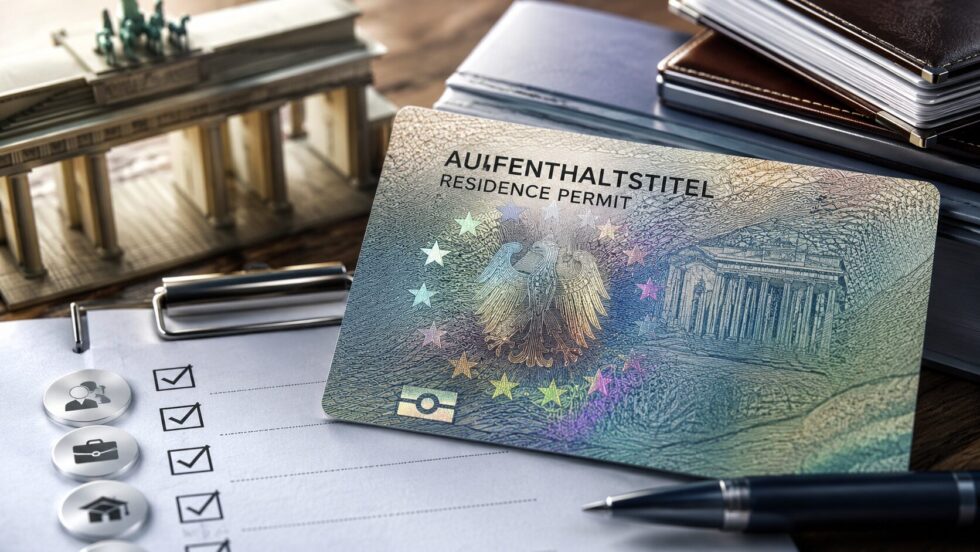
Germany Residence Permit 2026 has become one of the most searched immigration topics in Europe as thousands of skilled workers, students, freelancers and families continue moving to the country under new migration rules. Germany’s immigration framework changed significantly after reforms linked to labor shortages, skilled worker recruitment and the expansion of the Chancenkarte system. In 2026, foreigners applying for legal residency face stricter document verification, rising salary thresholds for some work permits and increasing pressure at immigration offices in major cities such as Berlin, Munich, Hamburg and Frankfurt. At the same time, Germany continues simplifying pathways for qualified professionals, IT specialists and university graduates through updated work and residence programs. Immigration lawyers say many applicants still misunderstand the difference between a visa, temporary residence permit and permanent residency status, which often leads to rejected applications or major delays. NewsToday24 reports that demand for German residence permits remains especially high among non-EU citizens looking for long-term work stability, EU mobility and access to Germany’s labor market under the updated Skilled Immigration Act.
Germany does not operate a single universal residency system. Instead, every Aufenthaltstitel is connected to a specific legal purpose under German immigration law. Some permits are designed for employment, others for study, vocational training, self-employment, humanitarian protection or family reunification. Each category carries different rights, renewal rules, work permissions and timelines toward permanent residence. In 2026, immigration authorities also continue expanding digital administration through electronic residence permits known as eAT cards, although waiting times for appointments remain one of the country’s biggest bureaucratic problems. For many foreigners, choosing the correct residence pathway at the beginning is now strategically important because certain permits offer faster access to permanent residency and citizenship than others.
What is a Germany residence permit and how does Aufenthaltstitel work
A Germany residence permit — officially called an Aufenthaltstitel — is the legal authorization allowing non-EU citizens to remain in Germany for more than short-term tourism or business visits. Under German law, most foreigners require a valid residence title to work, study, live with family members or run a business inside the country. The legal basis is regulated through the German Residence Act (Aufenthaltsgesetz).
The residence permit determines several critical rights:
- whether the person may legally work
- whether employer changes are allowed
- how long the stay is valid
- whether family reunification is possible
- whether freelance activity is permitted
- when permanent residency becomes available
- whether citizenship may later be requested
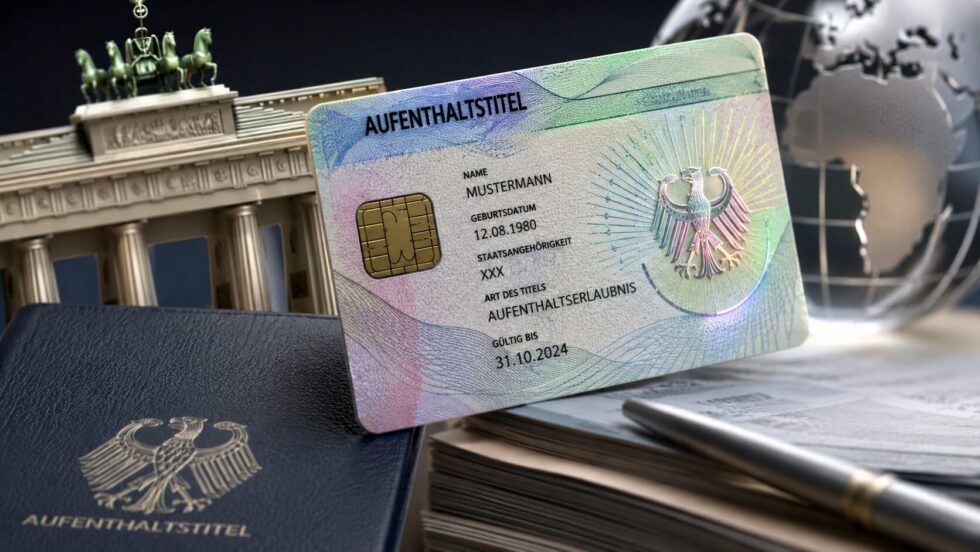
Germany now issues most permits in electronic biometric format known as the electronic Aufenthaltstitel (eAT). The card contains fingerprints, residency data and work authorization details. Immigration experts note that many foreigners still incorrectly assume that a visa automatically grants long-term residency rights, although in reality many visas only function as entry documents that must later be converted into residence permits after arrival.
Visa vs residence permit in Germany
The difference between a visa and a residence permit remains one of the biggest sources of confusion in 2026.
| Document | Purpose | Typical Validity |
|---|---|---|
| Schengen Visa | Tourism or short visits | Up to 90 days |
| National D Visa | Entry for work/study | 3–12 months |
| Aufenthaltserlaubnis | Temporary residence permit | 1–4 years |
| Niederlassungserlaubnis | Permanent residence | Unlimited |
A national visa normally allows entry into Germany for a specific reason such as work or university studies. After arrival, the foreigner often must apply for a residence permit through the local immigration office called the Ausländerbehörde.
Some nationalities may apply for residence permits directly after entering Germany visa-free, but this rule does not apply equally to all countries.
EU Blue Card Germany 2026: salary requirements and benefits
The EU Blue Card remains Germany’s flagship immigration route for highly qualified specialists. It is aimed at non-EU professionals with university qualifications and a qualified job offer from a German employer. The permit became even more important after Germany expanded skilled migration reforms to address labor shortages in engineering, IT, medicine and technical sectors.
In 2026, the standard minimum salary threshold for the EU Blue Card in Germany is €50,700 gross annually. For shortage occupations and some young professionals, the lower threshold is approximately €45,934.20.
Key advantages of the EU Blue Card include:
- accelerated permanent residency
- simplified family reunification
- easier labor market access
- broader EU mobility options
- long-term employment stability
- favorable conditions for spouses
According to official BAMF information, Blue Card holders may qualify for permanent residence after 27 months with basic German language knowledge or after only 21 months with stronger language proficiency.
Why the EU Blue Card is strategically important in 2026
Germany’s labor market continues facing shortages in several sectors:
| Sector | Demand Level |
|---|---|
| IT specialists | Very high |
| Healthcare workers | Very high |
| Engineers | High |
| Skilled trades | High |
| Logistics | Medium |
| Hospitality | Medium |
Immigration analysts increasingly describe the Blue Card as Germany’s fastest stable migration pathway for qualified professionals because it combines employment rights, permanent residency acceleration and simplified family migration rules.
“The EU Blue Card remains Germany’s premium pathway for highly qualified professionals,” immigration experts at legal and migration platforms noted during 2026 labor migration analysis.
Chancenkarte Germany 2026: how the Opportunity Card works
The Chancenkarte — also known as the Opportunity Card — became one of Germany’s biggest immigration reforms in recent years. The system allows many non-EU nationals to enter Germany even without a job contract in advance. Instead, applicants qualify through either recognized education credentials or a points-based evaluation system.
The Opportunity Card was designed mainly for skilled workers who want to search for employment directly inside Germany. Holders can legally remain in the country for up to 12 months while searching for qualified work.
The points system evaluates:
- education
- professional experience
- German language level
- English proficiency
- age
- connections to Germany
- previous residence history
In most cases, applicants must also demonstrate sufficient financial resources for living expenses. Some pathways require blocked bank accounts or proof of income support.
What makes the Chancenkarte different from traditional work visas
Unlike traditional employment visas, the Chancenkarte does not always require a signed employment contract before arrival.
This changed Germany’s immigration strategy significantly because it shifted part of the recruitment process into the country itself.
Under current rules, Opportunity Card holders may:
- work part-time up to 20 hours weekly
- complete trial employment periods
- search for long-term jobs
- transition into another residence permit later
| Chancenkarte Feature | Status |
|---|---|
| Job offer required before arrival | No |
| Part-time work allowed | Yes |
| Trial work allowed | Yes |
| Permanent residency possible later | Yes |
| Maximum initial duration | 12 months |
Migration experts say the Opportunity Card is especially attractive for IT workers, engineers, logistics specialists and technical employees who may not yet have direct German employer contacts before moving.
Student residence permits and vocational training visas
Germany remains one of Europe’s most popular destinations for international students because public universities often charge low tuition fees compared with countries such as the United States or the United Kingdom.
Foreign students usually receive residence permits tied to university enrollment. These permits typically allow limited employment rights during studies and may later transition into work permits after graduation.
International graduates in Germany often receive advantages because:
- German diplomas are recognized locally
- employers prefer domestic qualifications
- transition into work permits is easier
- labor shortages increase hiring opportunities
Vocational training permits are also increasingly important under Germany’s skilled labor reforms. These permits allow foreigners to complete professional Ausbildung programs in sectors facing shortages such as healthcare, construction and technical trades.
Financial requirements for students in Germany
Most student applicants must demonstrate financial resources.
Typical proof includes:
- blocked bank accounts
- scholarship documentation
- parental guarantees
- sponsorship evidence
Immigration authorities also require valid health insurance coverage and university admission confirmation before approval.
Family reunification residence permits in Germany
Family reunification remains one of Germany’s most sensitive migration categories because approval depends heavily on the sponsor’s legal status and income stability.
Spouses, minor children and in some cases parents may qualify for family reunification permits. However, requirements vary substantially depending on the primary permit holder.
Blue Card holders currently receive some of the most favorable conditions.
Important 2026 advantages include:
- simplified spouse employment rights
- easier processing
- fewer housing restrictions
- broader reunification rights for parents
Family reunification applicants generally must demonstrate:
| Requirement | Usually Needed |
|---|---|
| Valid passport | Yes |
| Marriage or birth certificate | Yes |
| Health insurance | Yes |
| Proof of accommodation | Often |
| Financial stability | Usually |
| German language skills | Depends on category |
Immigration specialists warn that document legalization and translation issues remain one of the most common reasons for delays in family migration cases.
Permanent residence in Germany: Niederlassungserlaubnis explained
The Niederlassungserlaubnis is Germany’s permanent residence permit.
Unlike temporary permits, permanent residency is unlimited and usually allows unrestricted employment rights. It also significantly strengthens long-term legal security inside Germany.
Requirements often include:
- several years of legal residence
- pension insurance contributions
- stable income
- adequate housing
- German language knowledge
- no serious criminal offenses
The required timeline varies depending on the residence category.
| Residence Type | Typical PR Timeline |
|---|---|
| EU Blue Card | 21–27 months |
| Standard work permit | Usually 5 years |
| Self-employment permit | Varies |
| Family reunification | Often 3–5 years |
In practice, permanent residence approval also depends heavily on local immigration authorities and documentation quality.
Common mistakes during permanent residency applications
Immigration consultants say applicants frequently underestimate bureaucratic requirements.
The most common problems include:
- missing pension records
- expired passports
- inconsistent salary documentation
- incomplete rental contracts
- incorrect insurance proof
- insufficient language certification
Some foreigners also mistakenly assume permanent residency automatically guarantees citizenship, although naturalization remains a separate legal process.
Germany residence permit application process in 2026
The application process differs depending on nationality and permit category, but several core steps remain consistent.
Step-by-step process
1. Determine the correct residence category
Applicants first need to identify whether they qualify for:
- Blue Card
- Opportunity Card
- work permit
- student permit
- family reunification
- freelance permit
2. Prepare required documents
Typical documentation includes:
| Document | Usually Required |
|---|---|
| Passport | Yes |
| Biometric photos | Yes |
| Health insurance | Yes |
| Employment contract | Often |
| Qualification proof | Often |
| Housing proof | Often |
| Financial statements | Often |
3. Apply through embassy or local authority
Some applicants must apply through German embassies abroad, while others may apply directly inside Germany after arrival.
4. Attend biometric appointment
Fingerprints and identity verification are usually required.
5. Receive electronic residence permit
The electronic residence card is generally produced after approval and mailed or collected later.
Processing times vary dramatically depending on city and permit type. Berlin, Frankfurt and Munich frequently experience the longest delays.
Why Germany continues attracting migrants despite bureaucracy
Germany remains one of Europe’s strongest migration destinations because of:
- labor shortages
- high salaries
- economic stability
- healthcare access
- education opportunities
- EU mobility benefits
- long-term residency pathways
At the same time, immigration authorities continue tightening controls over fake employment contracts, fraudulent applications and financial verification.
The result is a system that simultaneously became more open for skilled professionals and more demanding from an administrative perspective.
For many foreigners in 2026, the biggest challenge is no longer whether Germany needs workers — it clearly does — but whether applicants can correctly navigate one of Europe’s most bureaucratically detailed immigration systems without delays or legal mistakes.
Processing times in Germany in 2026: how long residence permits actually take
One of the biggest problems for foreigners in Germany in 2026 is no longer only obtaining the correct residence permit, but surviving the waiting system around the Ausländerbehörde. In large German cities, immigration offices remain overloaded because of high migration flows, labor shortages and incomplete digitalization. While federal authorities continue promoting simplified skilled migration pathways, the real situation on the ground varies dramatically depending on the city, permit category and workload of local immigration offices.
In Berlin, Munich, Frankfurt and Stuttgart, appointment shortages often become the first bureaucratic barrier long before the actual document review begins. Immigration consultants say many foreigners underestimate how early they must start preparing extensions or permanent residency applications.
The situation differs sharply between visa issuance abroad and residence permit issuance inside Germany. National visas issued through embassies often require coordination with German immigration authorities, especially for employment-related permits. After arrival, applicants must usually register their address, obtain health insurance confirmation and then secure another appointment with the Ausländerbehörde for the actual residence card. In practice, many foreigners discover that the residence permit process effectively consists of multiple bureaucratic stages rather than a single application.
| Process Stage | Average Time in 2026 |
|---|---|
| Embassy appointment wait | 2–8 weeks |
| National visa processing | 4–12 weeks |
| Ausländerbehörde appointment | Several weeks to months |
| Residence permit card production | 2–8 weeks |
| Blue Card processing | Up to 90 days in some cases |
| Permanent residency review | Often 2–6 months |
According to immigration processing guides and relocation specialists, the average residence permit processing time inside Germany often ranges from four to ten weeks after complete submission, although real waiting periods in major cities can be substantially longer.
Why Berlin, Frankfurt and Munich remain difficult in 2026
Germany’s largest cities continue attracting the highest number of international workers, startups, students and freelancers. That demand directly affects immigration office capacity.
The biggest problems reported by applicants include:
- lack of appointment slots
- delayed email responses
- document requests repeated multiple times
- inconsistent interpretation of immigration rules
- slow biometric processing
- overloaded digital portals
Berlin remains one of the most criticized cities regarding immigration bureaucracy. Some foreigners report waiting several months for appointments related to work permit renewals or permanent residency applications. Similar complaints increasingly appear in Frankfurt and Munich, where economic growth and international hiring continue putting pressure on immigration systems.
In smaller German cities, however, processing can be significantly faster. Immigration lawyers often recommend considering nearby regional locations for freelancers or remote workers because administrative pressure may be lower outside major metropolitan centers.
The electronic residence permit (eAT): what foreigners receive after approval
Germany now issues most residence permits as biometric electronic cards called eAT — electronic Aufenthaltstitel. These cards replaced older passport sticker systems years ago and are now fully integrated into Germany’s digital identity infrastructure.
The eAT contains:
- biometric fingerprints
- digital identity information
- permit validity dates
- work authorization data
- permit category details
- electronic security chip
The card resembles a national ID document and must usually be carried together with a valid passport during border crossings. German police may request proof of legal stay during identity checks, although residents inside Germany are generally not required to physically carry passports at all times.
What information appears on the residence permit card?
Foreigners are often surprised that work permissions in Germany can be highly specific.
The card or attached supplementary document may state:
| Permit Note | Meaning |
|---|---|
| Erwerbstätigkeit gestattet | Employment allowed |
| Selbständige Tätigkeit gestattet | Freelance activity allowed |
| Beschäftigung nur mit Zustimmung | Work requires approval |
| Siehe Zusatzblatt | Additional conditions apply |
These details matter because violating work restrictions can create serious immigration consequences, including permit cancellation.
Many foreigners also misunderstand the relationship between the physical card and legal status. In some cases, a person remains legally resident even while waiting for the physical card if they possess a valid Fiktionsbescheinigung issued during renewal processing.
Fiktionsbescheinigung Germany: the document many foreigners depend on
The Fiktionsbescheinigung became one of the most important immigration documents in Germany’s overloaded bureaucracy system. It functions as temporary legal confirmation that a foreigner’s residence rights continue while a permit extension or renewal remains under review.
This document is especially critical when:
- residence permits expire during processing
- new cards are delayed
- immigration offices cannot issue immediate decisions
- applicants wait for biometrics or card production
Immigration specialists note that many foreigners panic unnecessarily when their physical card expires, although legal residence may continue through the fictional certificate mechanism.
However, travel rules remain complicated.
Why traveling with a Fiktionsbescheinigung can be risky
Not every Fiktionsbescheinigung guarantees unrestricted travel outside Germany.
Legal experts repeatedly warn foreigners to verify:
- whether re-entry rights remain valid
- whether Schengen travel is permitted
- whether airlines recognize the document
- whether expired residence cards create border issues
According to legal guidance published in Germany in 2026, residence permits may expire automatically after prolonged absence abroad, especially if holders remain outside Germany for more than six months without special permission from immigration authorities.
This issue became particularly relevant for international workers, remote employees and foreigners spending long periods outside Germany while maintaining residency.
Freelance visas in Germany: why self-employed applicants face stricter reviews
Germany remains one of Europe’s most attractive destinations for freelancers, especially in technology, journalism, design, marketing and consulting. At the same time, freelance residence permits often involve more subjective decision-making than standard employment permits.
Unlike salaried work visas, freelance applicants usually must convince immigration authorities that their activity provides economic benefit or realistic sustainability.
Authorities frequently request:
- client contracts
- invoices
- business plans
- projected income
- proof of demand
- savings documentation
- German client letters
Freelancers in Berlin continue reporting long processing periods because the city remains one of Europe’s largest freelance migration hubs. Some immigration consultants now advise applicants to secure multiple client letters before applying because weak income projections increasingly trigger requests for additional evidence.
Common freelance visa mistakes in Germany
Immigration lawyers identify several repeated problems among freelance applicants.
The most common mistakes include:
| Mistake | Consequence |
|---|---|
| Weak financial proof | Delays or rejection |
| No German clients | Higher scrutiny |
| Incomplete contracts | Additional requests |
| No health insurance | Automatic problem |
| Late appointment booking | Permit gaps |
| Unrealistic business plans | Credibility issues |
Freelancers also face stronger scrutiny regarding health insurance because Germany requires valid coverage for legal residence approval.
Permanent residency and citizenship: what changes after several years in Germany
Many foreigners initially enter Germany through temporary permits but later transition toward permanent residency and eventually citizenship.
Permanent residency — Niederlassungserlaubnis — provides several major advantages:
- unlimited stay rights
- unrestricted employment
- stronger legal security
- reduced bureaucracy
- easier financing and housing access
- long-term family stability
However, permanent residency is not automatic.
Applicants usually must demonstrate:
- stable long-term income
- pension contributions
- German language skills
- integration knowledge
- secure accommodation
- clean legal history
How the timeline changes depending on the permit type
Germany’s immigration structure rewards certain categories more quickly than others.
| Residence Category | Typical Permanent Residency Path |
|---|---|
| EU Blue Card | 21–27 months |
| Standard employment | About 5 years |
| Freelance permit | Usually longer review |
| Student pathway | Depends on post-study work |
| Family reunification | Often 3–5 years |
Foreigners graduating from German universities may also receive advantages because domestic education improves labor market integration and immigration predictability.
The biggest document mistakes foreigners make in Germany
Immigration specialists across Germany consistently identify documentation errors as one of the main reasons for delays.
Many applicants focus heavily on immigration law itself but underestimate technical bureaucracy requirements.
The most frequent issues include:
- outdated biometric photos
- incomplete translations
- incorrect salary calculations
- missing landlord confirmations
- invalid insurance certificates
- expired passports
- unsigned contracts
- inconsistent registration addresses
Germany’s immigration system also heavily depends on local registration known as Anmeldung. Without a valid registered address, many residence permit processes cannot move forward.
Why translations and legalization matter more in 2026
German authorities increasingly verify foreign documents more strictly because of rising fraud prevention measures.
Applicants may need:
- certified translations
- apostilles
- legalized diplomas
- recognized university equivalency certificates
- official marriage record verification
For skilled workers, degree recognition can become one of the longest stages in the process, especially for regulated professions such as medicine or engineering.
What foreigners should realistically expect from Germany’s immigration system in 2026
Germany in 2026 simultaneously presents two realities.
On one side, the country urgently needs workers, engineers, healthcare specialists, IT professionals and qualified employees. Immigration pathways such as the EU Blue Card and Chancenkarte were specifically expanded to attract more international talent.
On the other side, administrative systems remain overloaded and highly bureaucratic. Even highly qualified applicants with strong salaries often encounter long waits, document requests and procedural inconsistencies depending on location.
The result is a migration environment where preparation increasingly determines success.
Foreigners who typically navigate the process most effectively are those who:
- prepare documents months in advance
- monitor permit expiration dates carefully
- secure early appointments
- maintain complete financial records
- understand permit limitations precisely
- verify every bureaucratic requirement before submission
Germany’s immigration system remains rules-driven rather than discretionary. For many applicants, success depends less on persuasion and more on technical compliance, timing and documentation accuracy.
Stay connected for news that matters — timely, factual, and free from bias. Read trusted updates from Berlin, Ukraine, and around the world: What Is Blue Card Deutschland 2026 and How Do Salary and Requirements Change for Foreign Workers