



BaFin tightens restrictions on N26: what the crackdown means for customers and the bank
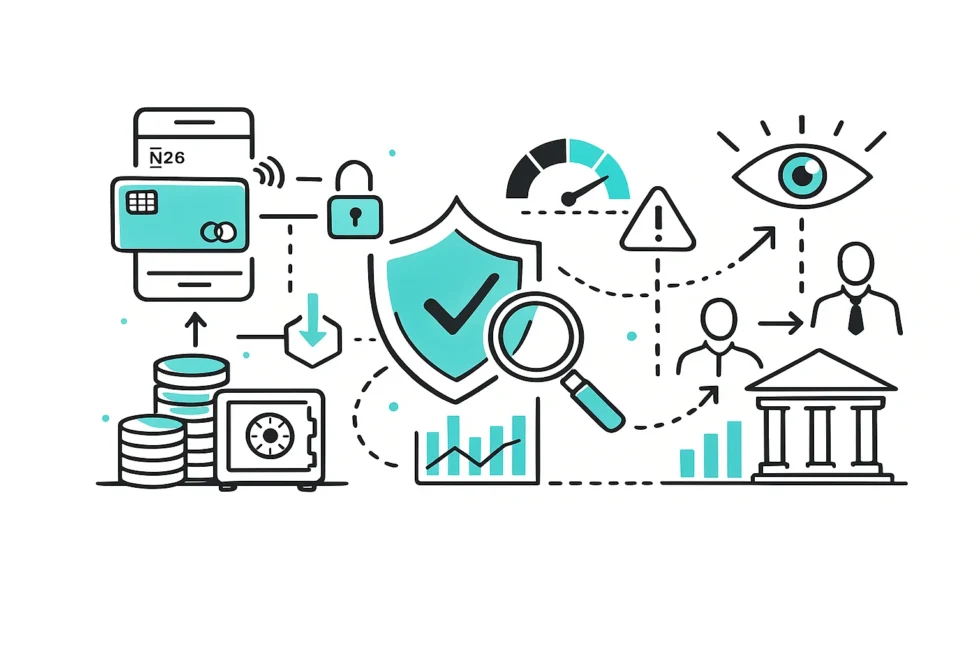
Germany’s financial watchdog BaFin has imposed far-reaching restrictions on the Berlin-based digital bank N26, citing serious deficiencies in risk management and internal business organisation. The measures represent one of the strongest supervisory interventions taken against a major European fintech in recent years and underline the regulator’s growing impatience with unresolved structural weaknesses. This is reported by NewsToday24 editorial team, citing Der Spiegel and Manager Magazin.
What triggered BaFin’s intervention
According to BaFin, the decision follows the findings of a special supervisory audit conducted in 2024, as well as the review of N26’s annual financial statements for the same year. The regulator identified significant shortcomings in several core areas, including risk management, complaint handling and the organisation of the bank’s lending operations.
BaFin concluded that these deficiencies constitute violations of Germany’s Banking Act (Kreditwesengesetz) and raise doubts about N26’s ability to maintain a proper and orderly business organisation. The authority stressed that the issues are structural rather than isolated and require immediate corrective action.
Which measures have been imposed
BaFin has ordered a comprehensive package of binding measures, all of which are already legally effective. These include:
- the appointment of a special supervisory representative to monitor implementation of corrective actions,
- additional capital requirements to strengthen the bank’s financial resilience,
- a ban on new mortgage lending business in the Netherlands,
- and a prohibition on securitising receivables from the mortgage portfolio.
Such measures are considered exceptional and are typically used only when earlier supervisory interventions have failed to produce sufficient improvements.
Who is BaFin – and why its role matters
BaFin is Germany’s federal financial supervisory authority, responsible for overseeing banks, insurers and financial service providers. Its mandate is to safeguard financial stability and protect customers.
When BaFin restricts a bank’s business activities, it does not automatically signal insolvency or an immediate threat to deposits. However, it is a clear indication that the regulator has lost confidence in the institution’s internal controls and governance structures.
What does this mean for N26 customers
For existing customers, the immediate impact is limited. Accounts, cards and payment services continue to operate as normal, and deposits remain protected under Germany’s statutory deposit guarantee scheme.
The restrictions primarily affect N26’s internal processes, growth strategy and risk exposure. That said, customers may experience indirect effects, such as stricter onboarding checks, longer processing times or delays in the rollout of new products.
Management changes under regulatory pressure
As Manager Magazin reports, the ongoing regulatory pressure has already led to significant changes at the top of the company. Co-founder Valentin Stalf previously announced his withdrawal from the management board. Now, former UBS executive Mike Dargan is set to take over as chief executive in April 2026, replacing founders Maximilian Tayenthal and Marcus W. Mosen.
The appointment of an experienced banking executive from a global institution is widely seen as an attempt to restore regulatory confidence and stabilise governance structures.
N26 promises reforms
In a statement, N26 said it is in close and constructive dialogue with BaFin and the appointed special representative. The bank pledged to implement the required measures over the coming months, including adjustments to governance structures, internal processes and control mechanisms. According to the company, work on these reforms has been under way since early 2025.
A long-running conflict with regulators
N26 has been under scrutiny from BaFin for several years, particularly over weaknesses in anti-money laundering controls and risk management. In the past, the regulator capped customer growth and imposed a €9.2 million fine for late reporting of suspicious transactions.
The latest intervention suggests that BaFin considers previous improvements insufficient and is prepared to escalate further if progress remains slow.
Why the case matters beyond N26
The crackdown on N26 is widely viewed as a warning to the broader fintech sector. German regulators are making it clear that digital banks are subject to the same supervisory standards as traditional lenders. Rapid growth and technological innovation do not exempt institutions from robust governance, compliance and risk controls. For Europe’s fintech industry, the message is unmistakable: regulatory tolerance has limits, and sustainable growth depends on operational discipline as much as innovation.
Stay connected for news that works — timely, factual, and free from opinion — and insights that matter now: How to sell an apartment in Germany: NFL Berlin 2025: Colts vs. Falcons – alle Infos zu Tickets, TV, Kickoff und Show