



Fuel Price Crisis 2026: Why the "Austrian Model" Failed and How a Logic Flip Could Save Drivers
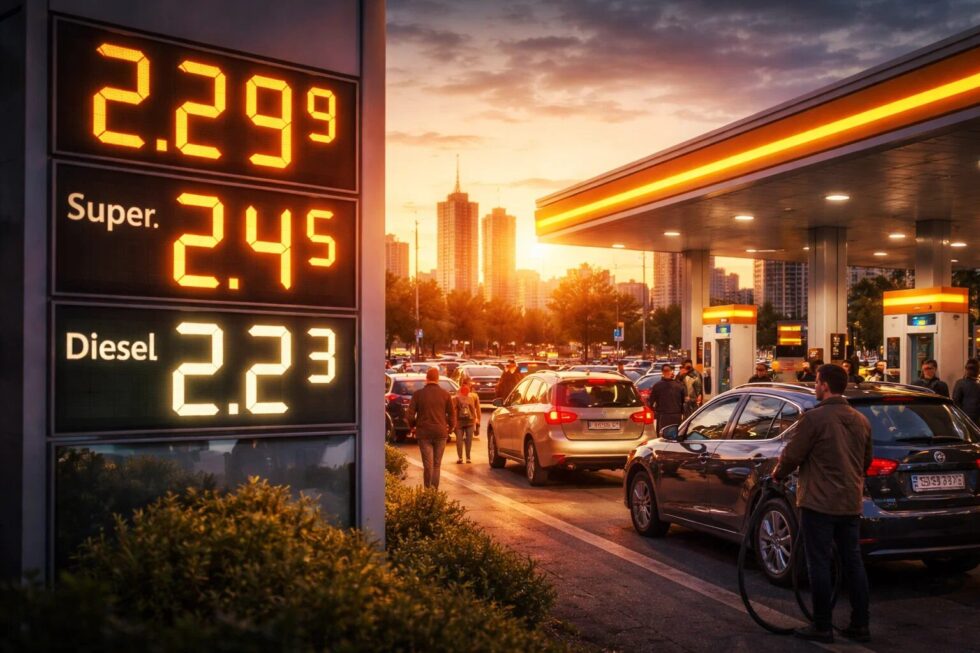
The year 2026 has brought a bitter realization for millions of motorists across Germany: the government's attempt to curb skyrocketing fuel costs through the so-called "Austrian Model" has not only failed but has actively driven prices to record highs. By mandating that gas stations can only increase prices once a day at noon while allowing unlimited decreases, the state intended to protect consumers. Instead, it created a legal loophole for mineral oil corporations to take a "massive gulp from the bottle," as experts call it. This regulatory disaster has left commuters in Frankfurt and beyond facing unprecedented financial strain, proving that well-intentioned market interventions can backfire spectacularly if they ignore the fundamental mechanics of corporate profit maximization and competitive psychology. This situation is reported by NewsToday24, citing the n-tv.
The 12 PM Failure: How Limiting Increases Actually Triggered Hikes
At the heart of the current crisis is a fundamental misunderstanding of how competition works at the pump. Under the current 2026 regulations, gas stations are locked into a single price increase daily at 12 PM. While this sounds protective, it has essentially signaled to oil companies that they must set their "noon price" at the highest possible ceiling to cover any potential market volatility for the next 24 hours. Because they can lower prices at any time, there is zero risk in starting the day with an exorbitant hike. If competitors stay high, everyone earns record profits; if one drops, the others simply follow suit gradually throughout the afternoon. This "one-way street" regulation has removed the danger for corporations, allowing them to test the limits of what drivers are willing to pay without the fear of being undercut for a full day.
- The Rule: Prices can only be increased once daily at 12:00 PM.
- The Loophole: Unlimited price decreases are allowed throughout the rest of the day.
- The Result: Initial noon prices are set artificially high to maximize potential daily revenue.
- Expert Insight: Competition economist Justus Haucap warned of this "safe bet" for corporations as early as 15 years ago.
- Consumer Impact: Average gas prices in Germany reached an all-time high in March 2026 despite the regulation.
- Market Behavior: Corporations engage in "tacit collusion" where the 12 PM hike becomes a synchronized market signal.
- Data Point: Studies in Austria, the namesake of the model, showed years ago that the rule did not lead to lower average prices.
- Administrative Failure: The government ignored warnings from competition experts who predicted this exact outcome.
Flipping the Script: The Case for Restricting Price Decreases Instead
If the goal of the German government is truly to lower prices at the pump, economic logic suggests a radical reversal of the current policy: allowing price increases at any time but limiting price decreases to once a day. This "Inverse Model" would force gas stations into a high-stakes game of chicken every morning. If a station can only lower its price once (for example, at noon), it must guess the lowest possible price its competitors will offer for the next 24 hours. If they set their price too high, they remain uncompetitive and lose customers for a full day with no way to "fix" it through a mid-afternoon drop. This would create a powerful incentive for "combat pricing," as companies would be forced to reveal their true minimum profitable price to ensure they aren't the most expensive option in town for the next cycle.
| Pricing Model | Frequency of Increases | Frequency of Decreases | Corporate Strategy |
| Current 2026 (Austrian) | 1x Daily (12 PM) | Unlimited | Start high, drop only if forced by competition. |
| Proposed (Inverse) | Unlimited | 1x Daily (12 PM) | Start at absolute minimum to stay competitive. |
| Fixed (Daily) | 1x Daily | 1x Daily | Full transparency of daily strategy; zero volatility. |
| Free Market | Unlimited | Unlimited | High volatility, constant algorithmic adjustments. |
Why Competition in Frankfurt is Stalling: The Driver's Responsibility
Beyond the failing laws, the lack of effective price competition in 2026 is also attributed to consumer behavior and the inherent scarcity of global oil supplies. In major hubs like Frankfurt, many drivers still do not consistently use price-comparison apps or switch to cheaper independent stations, preferring the convenience of well-known brands along major arteries. This lack of "price sensitivity" gives corporations a cushion; they know that even if they are 5 cents more expensive than the station three blocks away, a significant portion of the morning traffic will still pull in. Experts recommend that for any price regulation to work, the "demand side"—the drivers—must be willing to "punish" expensive stations by consistently seeking out the lowest local offers, thereby forcing the market to react to lost volume.
- Use Comparison Apps: Apps like "Benzinpreis-Blitz" are essential in 2026 to track the noon fluctuations.
- Avoid Highway Stations: Prices on the A3 and A5 around Frankfurt remain up to 25 cents higher than city stations.
- Timing the Pump: Despite the 12 PM rule, the late evening (8 PM - 10 PM) remains the cheapest window as stations fight for the last daily sales.
- Brand Loyalty is Expensive: Independent stations often offer the same fuel quality for 2-4 cents less.
- Refuel Early: Don't wait until the tank is empty; refuel when you see a "bottomed out" price below the weekly average.
- Volume Matters: If a station loses 20% of its daily volume to a cheaper neighbor, it is forced to lower its next 12 PM "ceiling."
- Sprit-Sharing: For commuters in Frankfurt, carpooling remains the most effective way to cut fuel costs by 50% regardless of pump prices.
- Digital Transparency: Check the "Markttransparenzstelle für Kraftstoffe" (MTS-K) data for real-time government-verified prices.
The Global Reality: Scarcity of Crude Oil and Diesel in 2026
While domestic price regulations dominate the headlines, the underlying cause of the 2026 fuel crisis is a genuine global shortage of crude oil and refined products like diesel. International sanctions, logistical bottlenecks, and a slower-than-expected transition to alternative energies have kept the world market tight. No amount of local price-fixing can change the fact that the cost of a barrel of oil is determined on the global stage. At best, clever regulations like the "Inverse Model" can prevent oil companies from adding "artificial" profit margins on top of these high global costs. However, as long as demand outstrips supply, the "floor" for fuel prices will remain high, making fuel efficiency and reduced consumption the only guaranteed ways for citizens to save money in the long term.
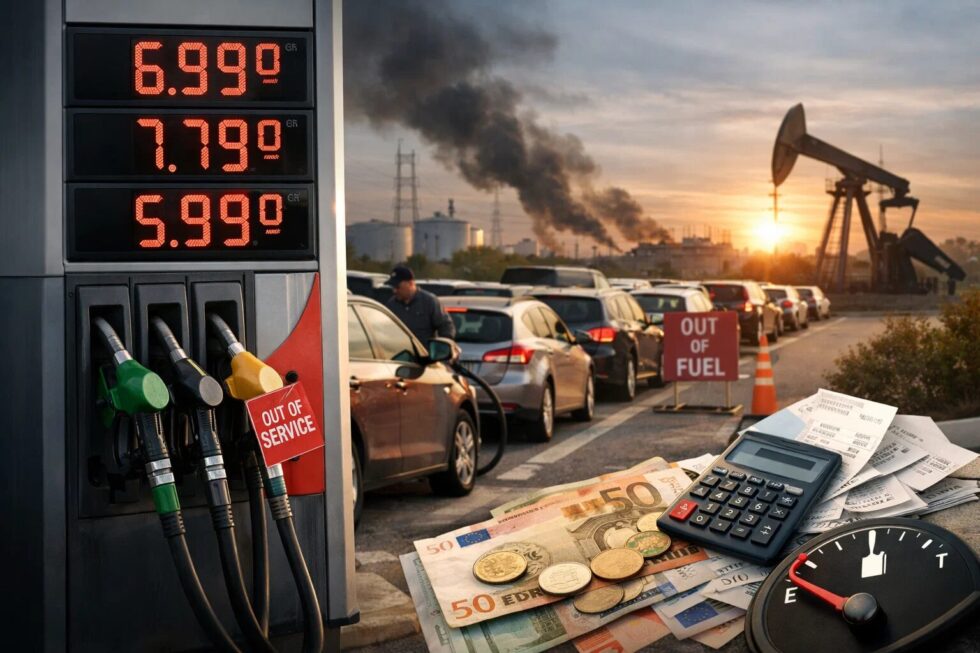
- Global Supply: Crude oil production has not returned to pre-crisis levels as of April 2026.
- Diesel Shortage: Refineries in Europe are at 95% capacity, yet diesel remains the most volatile product.
- Economic Impact: High fuel costs are a primary driver of inflation in the transport and logistics sectors.
- Regulation Limit: Local laws cannot lower the purchase price of crude oil; they only limit the "markup."
- Market Myths: The idea that "greedy gas station owners" are the only cause is a myth; they often work on razor-thin margins.
- Corporate Profits: While station owners struggle, the parent mineral oil corporations are reporting record dividends in 2026.
- Policy Suggestion: Economists argue for a temporary "speed limit" or subsidies for public transport rather than meddling with gas prices.
- Future Outlook: Prices are expected to remain above the €2.10/liter mark for the remainder of 2026.
Regional Focus: Navigating Frankfurt’s Fuel Landscape
For residents in Frankfurt, the geography of fuel prices creates specific "pockets" of savings that savvy drivers can exploit even under the failed Austrian Model. Stations located near industrial zones like Höchst or near the airport often have higher throughput and more aggressive pricing strategies than those in residential areas like Westend or Nordend. Furthermore, the 12 PM rule has created a predictable pattern in the Rhine-Main area: prices peak exactly at noon and then "decay" in steps of 1-2 cents every few hours until about 10 PM. By understanding this local rhythm, a commuter traveling from Frankfurt to Wiesbaden can save up to €10 per full tank simply by timing their stop for the evening return trip rather than the morning rush.
- Hotspots: Hanauer Landstraße often features the most aggressive price competition in the city.
- The "Airport Tax": Stations directly at Frankfurt Airport (FRA) are consistently the most expensive in the region.
- The "Decay" Strategy: Prices typically drop by 8-12 cents between 12:15 PM and 9:45 PM.
- Commuter Tip: Refuel in the outskirts (e.g., Offenbach or Maintal) where land costs for stations are lower.
- E10 vs. E5: With a price gap of often 6 cents, E10 remains the most cost-effective choice for modern engines.
- App Alert: Set a "price alarm" in your smartphone app for your favorite local station to catch the daily low.
- Public Transit Alternative: In 2026, the Deutschlandticket (now at €59) is often cheaper than two full tanks of gas for city residents.
- Night Surcharge: Some stations in Frankfurt add a small surcharge after midnight; try to refuel before 11 PM.
Reclaiming Control in a High-Price Environment
The failure of the 12 PM rule in 2026 serves as a cautionary tale: you cannot fix a broken market by limiting its ability to correct itself downward. While the government continues to debate whether to stick with the Austrian Model or pivot to more aggressive restrictions on price decreases, the power remains largely in the hands of the individual driver. By utilizing real-time data, timing purchases for the evening "decay" period, and abandoning brand loyalty for the sake of the lowest price, consumers can fight back against corporate profit-taking. In an era of global oil scarcity, intelligence and flexibility at the pump are the only tools left to protect your wallet from the "big gulp" of the mineral oil giants.
Frequently Asked Questions
Why did fuel prices go up after the 12 PM rule was introduced?
Because stations can only increase prices once, they set the 12 PM price at a maximum "safety level" to cover themselves for the next 24 hours, leading to higher averages.
What is the best time of day to refuel in Frankfurt in 2026?
Typically between 8:00 PM and 10:00 PM. Prices are at their highest at 12:00 PM and gradually decrease until the late evening.
Does the 12 PM rule apply to all types of fuel?
Yes, the regulation covers Benzin (E5/E10) and Diesel at all public gas stations in Germany.
Can I still save money by using a gas price app?
Absolutely. The apps are more important than ever because they track the "decay" rate of prices throughout the afternoon and evening.
Is there a difference in fuel quality between cheap and expensive stations?
No. In Germany, all fuel must meet strict DIN standards (e.g., DIN EN 228 for gasoline), meaning the "cheap" gas is the same quality as the "premium" brands.
Will the government change the rule in 2026?
Economic advisors are currently pushing for a "Logic Flip" (restricting decreases instead of increases), but no official legislative change has been finalized yet.
Are electric cars cheaper to "refuel" in 2026?
Generally, yes. Despite rising electricity costs, the cost per 100km for an EV remains significantly lower than the €2.20/liter cost for internal combustion engines.
Latest events in politics and global economy at Cryptonews – practical tips on how to act and invest. Read: Energy Revolution 2026: How German Subsidies are Saving the Crypto Industry