



Germany’s New V2G Rules: What Changes for EV Owners in 2026
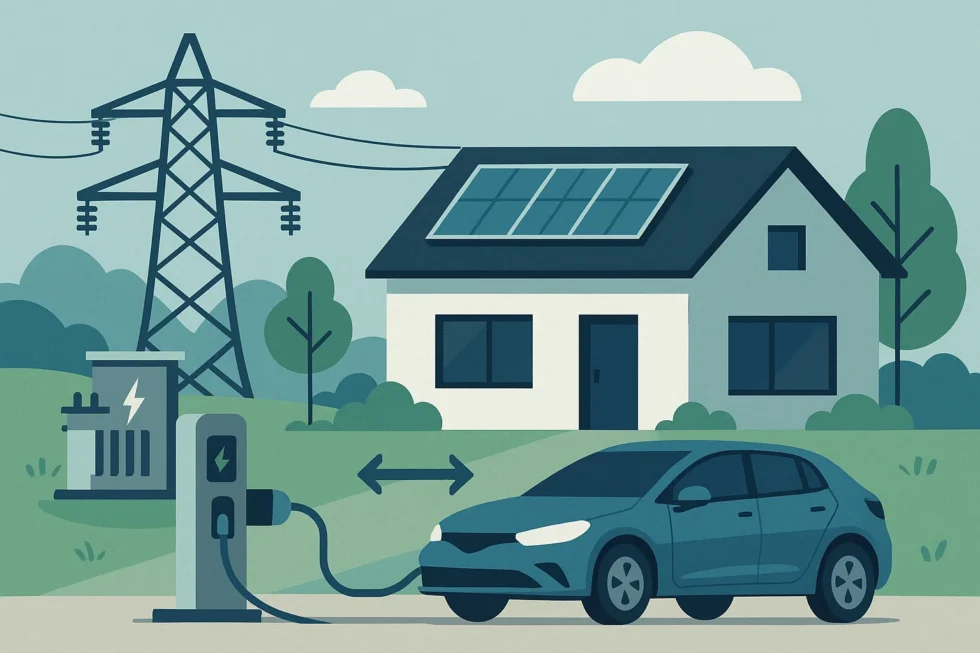
Germany has adopted one of its most consequential energy reforms in recent years. With a revision of the Energy Industry Act (EnWG) and adjustments to electricity-tax rules, the Bundestag has abolished the double grid-fee burden on electricity stored in an electric vehicle and later fed back into the grid. Until now, EVs were treated solely as final customers: electricity was charged when taken from the grid and again when returned, making vehicle-to-grid (V2G) technology economically impossible.
The reform changes this principle fundamentally. From 2026 onward, EVs will be treated like stationary storage or pumped-hydro plants, meaning stored electricity will be billed only once. This creates, for the first time, a complete regulatory foundation for bidirectional charging, enabling EV batteries to absorb excess renewable power and release it back to the system during peak demand. NewsToday24 reports this development based on official Bundestag documentation:
Ending double charges: Why the reform matters
Removing the double billing of stored electricity is the centrepiece of the reform. Key consequences include:
- Stored electricity is no longer treated as “new consumption.”
- Grid charges apply only once.
- Several V2G use cases receive electricity-tax relief.
- EV owners can participate in commercial flexibility markets previously limited to large storage operators.
- Energy suppliers gain new tools to balance renewable volatility.
This directly benefits:
✔ EV owners with home charging
✔ Consumers with solar installations
✔ Operators of bidirectional wallboxes and community-energy systems
✔ Grid operators seeking flexible capacity
✔ The broader energy system adapting to higher shares of wind and solar
The timeline: When V2G becomes available in real life
The new rules will not become active overnight. The rollout is structured as follows:
- 1 January 2026:
Grid-fee reform takes effect; stored electricity is no longer double billed. - 1 April 2026:
The Federal Network Agency introduces new market rules (“MiSpeL”) for measuring, recording and balancing electricity from storage units, including EV batteries. - Late 2026–2027:
Grid operators update metering and billing infrastructure; experts estimate a 6–12-month adjustment period. - From 2027 onward:
Commercial V2G tariffs, pilot programmes and remuneration schemes appear across Germany.
A remaining bottleneck is the slow rollout of smart meters. Without legally certified intelligent metering systems, V2G cannot be measured or billed precisely. The Bundestag explicitly urged the government to accelerate deployment and impose stricter sanctions on operators who delay installation.
A virtual power plant: The storage potential of 1.65 million EVs
Germany currently has more than 1.65 million registered electric cars. Even if only 20–30% of them participate in V2G, analysts estimate:
- 3.3 to 5 GWh of decentralised storage capacity
- 1.0 to 1.5 GW of flexible dispatchable power
- comparable to a large natural-gas power plant
This capacity could transform the system by:
- storing excess wind and solar power,
- reducing the need for fossil backup plants,
- balancing the grid during evening peaks,
- cutting system-stability costs,
- and lowering long-term electricity prices for consumers.
Energy companies such as The Mobility House describe the reform as the first moment when V2G becomes economically meaningful for everyday drivers.
Industry reaction: Strong approval, clear criticism
The German Association of the Automotive Industry (VDA) calls bidirectional charging a “key technology of the future energy system.” Automakers emphasise:
- German brands already offer or prepare V2G-capable EV models.
- The reform removes a crucial regulatory hurdle.
- Electricity-tax reductions improve consumer economics.
However, the VDA criticises one major limitation:
Tax relief for V2G initially applies only to EV owners with their own photovoltaic systems.
The association demands:
- broader electricity-tax exemptions for all V2G scenarios,
- simplified metering concepts,
- rapid deployment of mass-market V2G infrastructure,
- and fully harmonised rules for commercial flexibility markets.
Additional reform areas: Energy sharing and smart-meter acceleration
Beyond V2G, the EnWG reform includes several structural measures:
1. Energy sharing
- Citizen energy cooperatives will be permitted to share electricity internally.
- Small municipal companies gain access to collective generation models.
- Commercial activity will no longer block participation in shared-energy systems.
2. Grid-connection improvements
- Streamlined approval for distributed generation and storage.
- New rights for consumers to participate actively in electricity markets.
3. Smart-meter reform
- Easier cooperation between metering operators.
- The Bundestag demands a stricter sanction regime for delayed rollout.
- Mandatory corrective measures may be introduced when installation numbers fall behind.
These elements are crucial for the wider energy transition: without modern meters, dynamic tariffs and decentralised balancing, V2G cannot reach scale.
Practical guidance for EV owners: What you can already do now
1. Check whether your wallbox supports bidirectional charging
Most current devices do not. Look for compatibility with the ISO 15118-20 standard, the technical foundation for V2G communication.
2. Compare dynamic electricity tariffs
Dynamic tariffs based on hourly wholesale prices will become even more attractive once V2G remuneration models start appearing in 2026–2027.
3. Request a smart meter early
Certified smart meters are essential for precise V2G billing. Consumers may ask their metering operator to prioritise installation.
4. Consider V2G-ready electric models
Manufacturers preparing or offering V2G capabilities include:
Nissan (Leaf), Hyundai (Ioniq series), Kia (EV models), Volkswagen (ID. series), BMW and Mercedes (pilot programmes).
5. Check regional subsidies
Some German federal states already support V2G-ready wallboxes and PV-plus-storage systems.
6. Analyse your daily driving pattern
Low daily mileage = more free battery capacity to sell back to the grid.
7. Monitor pilot programmes by grid operators
As soon as MiSpeL enters into force, grid operators will publish invitations for V2G pilots. Early registration helps secure a place.
8. Review battery warranty conditions
Bidirectional cycles count as charge cycles. Make sure the manufacturer officially supports V2G and maintains warranty coverage.
9. Combine PV with V2G for maximum benefit
Homeowners can store their excess midday solar electricity in their EV, then release it during evening peaks — increasing self-consumption and lowering annual costs.
10. Follow updates from federal authorities
Rules will continue to evolve. Reliable sources include:
- bundesnetzagentur.de
- bundestag.de
- bmwk.de
Stay connected for news that works — timely, factual, and free from opinion — and insights that matter now: Berlin, Ukraine, and the world: Amazon Prime Black Friday 2025: All Top Deals, Dates & Expert Tips