


Which Bank Is Better in Germany in 2026: N26, Commerzbank or Sparkasse
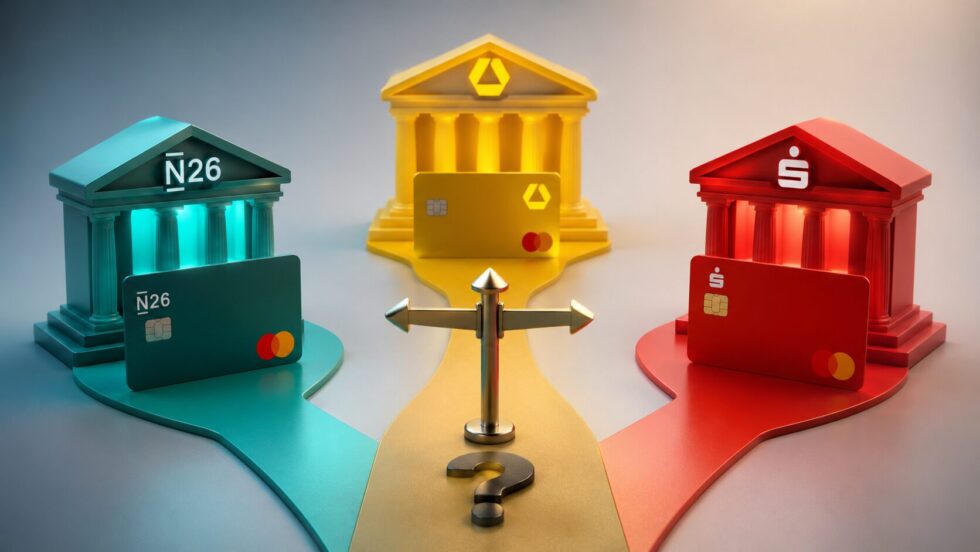
N26, Commerzbank oder Sparkasse remains one of the most searched banking questions in Germany in 2026 because the difference between digital banks and traditional institutions is now directly affecting daily life, monthly costs and even salary payments. German customers increasingly compare not only account fees but also ATM access, real support during fraud cases, app quality, international transfers and whether a bank still works smoothly with landlords, tax offices and employers. Across Berlin, Frankfurt, Munich and Hamburg, users are moving toward mobile-first banking faster than before, yet Germany still remains heavily dependent on cash payments and Girocard systems. That contradiction is forcing millions of residents, students, freelancers and expats to reconsider which bank actually works best in real conditions, not only in advertising campaigns, with NewsToday24 observing that the debate around Girokonto costs and digital banking convenience has intensified significantly during 2026.
At the same time, German banking became more expensive. Traditional branch banks continue increasing maintenance fees while online competitors push free accounts and instant onboarding. Some customers now pay more than €100 annually simply for account maintenance, card fees and basic banking services. Others switched completely to app-based banks like N26 but later discovered limitations involving cash deposits or customer support. The result is a market where no single bank dominates every category anymore. Instead, customers increasingly choose according to lifestyle, salary structure, travel habits and how often they still use physical cash in Germany.
Why the German banking market changed dramatically in 2026
Germany’s retail banking system entered another transition phase in 2026 after rising operating costs forced many branch-based institutions to increase prices or reduce free services. Physical branch infrastructure remains expensive, especially for regional savings banks operating large ATM networks and local offices. Sparkasse and Volksbank groups continue facing pressure because customers increasingly expect modern digital banking while simultaneously demanding branch access and cash services.
The strongest pressure comes from digital competitors. Online banks now open accounts within minutes through smartphone identification systems while traditional institutions often still require appointments, paperwork or additional verification. Younger customers increasingly consider speed a standard expectation rather than a premium feature. This is particularly visible among freelancers, students and international workers arriving in Germany for the first time.
Another major factor is internationalisation. Germany’s economy continues attracting foreign workers, remote professionals and startup founders who expect English-language banking and fast digital services. Traditional German banking culture, however, developed around physical branches, paper documentation and local trust structures. This difference explains why many expats initially choose N26 or similar fintech banks before later opening accounts at traditional institutions as well.
There is also a psychological factor. German consumers increasingly associate online banks with convenience and low costs, but still associate traditional banks with reliability during emergencies. Fraud protection, account freezes and customer support response times became more important after rising phishing attacks and compliance reviews across Europe. Customers therefore now compare not only monthly prices but also how quickly they can solve problems when something goes wrong.
What German consumers now compare most often
| Banking factor | Why it matters in 2026 |
|---|---|
| Monthly fees | Costs increased at branch banks |
| Cash withdrawals | Germany still uses cash heavily |
| Mobile app quality | Real-time banking expectations |
| English support | Important for expats |
| Branch access | Still valued during emergencies |
| International transfers | Higher demand from global workers |
| Card compatibility | Girocard vs Mastercard issues |
| Fraud support | Major customer concern |
N26: Germany’s strongest digital banking brand
N26 remains one of the most influential fintech banks in Europe because it fundamentally changed how many Germans interact with banking. The core attraction is simplicity. Accounts can often be opened entirely online within minutes through smartphone verification, without branch visits or long paperwork procedures. This speed became one of the bank’s biggest competitive advantages.
The mobile experience is still considered among the strongest in the German banking market. Users receive instant notifications after purchases, real-time spending insights and app-based security controls. Customers can freeze cards instantly, manage subscriptions and create budgeting spaces directly from the app interface. Younger consumers especially value these features because traditional banks still often feel slower or more administrative by comparison.
For foreigners arriving in Germany, N26 remains particularly attractive because the app and onboarding process function smoothly in English. Many expat guides still rank it among the easiest banks for newcomers who do not yet have complete German documentation. Some users can even begin account setup before final Anmeldung registration is finalised.
The bank also benefits from transparent entry pricing. The standard account remains free in many situations without mandatory salary deposits. This directly contrasts with several traditional banks that now require regular monthly income to avoid fees.
However, the weaknesses are equally important. Germany still operates partly around cash, and N26’s limited physical infrastructure creates inconvenience for customers regularly depositing money. Another criticism involves customer support accessibility during complex account reviews or fraud investigations. Users sometimes report frustration when trying to resolve urgent issues entirely through digital channels rather than face-to-face conversations.
Main advantages and disadvantages of N26
| Advantages | Disadvantages |
|---|---|
| Fast online opening | Limited cash deposit options |
| Strong mobile app | Almost no branches |
| English-language interface | App-only support structure |
| Free standard account | Less ideal for cash users |
| Real-time notifications | Some compliance reviews slower |
| International-friendly | Girocard limitations |
Who usually benefits most from N26
- Expats
- Students
- Freelancers
- Remote workers
- Frequent travellers
- Younger digital users
“N26 remains the easiest entry point for many newcomers in Germany,” according to a 2026 expat banking analysis focused on digital onboarding and English-language accessibility.
Commerzbank: the middle ground between digital and traditional banking
Commerzbank occupies a strategically important position because it combines a nationwide branch network with increasingly competitive digital services. Unlike Sparkasse, it operates as a national commercial bank rather than a regional savings network. Unlike N26, it still provides full in-person infrastructure for consultations, mortgage discussions and emergency support.
One reason many salaried employees choose Commerzbank is institutional compatibility. Employers, landlords and public offices in Germany generally interact smoothly with established traditional banks. Customers therefore often perceive Commerzbank as a safer “standard” banking option without fully abandoning modern online functionality.
Its digital banking systems improved substantially over recent years. Mobile apps, online transfers and digital account management are now much more competitive than earlier generations of German banking software. Yet many younger users still consider fintech apps faster and more intuitive. This gap matters because consumer expectations increasingly resemble technology platforms rather than traditional finance systems.
The pricing model is more complex than N26’s. Commerzbank often advertises free accounts, but conditions usually apply. Customers frequently need a minimum monthly deposit — often around €700 — to avoid maintenance fees. Users with irregular freelance income sometimes discover additional costs later.
At the same time, Commerzbank remains stronger for customers who require physical support. Mortgage meetings, financing consultations and business banking discussions are easier to manage face-to-face. This becomes particularly relevant for families, entrepreneurs and older customers less comfortable solving everything through mobile chat systems.
Commerzbank in daily practical use
| Category | Commerzbank |
|---|---|
| Branch access | Strong nationwide |
| Mobile banking | Modernised |
| English support | Available in larger branches |
| Cash deposits | Easy |
| Fees | Conditional |
| Mortgage services | Strong |
| Business banking | Well developed |
| ATM infrastructure | Reliable |
Where Commerzbank performs best
- Salary accounts
- Mortgage customers
- Families
- Small business owners
- Customers needing branch support
- Long-term residents in Germany
A growing number of users now choose Commerzbank because it feels safer than a fintech bank while remaining significantly more digital than older Sparkasse systems. This hybrid positioning is exactly where much of Germany’s banking competition now exists.
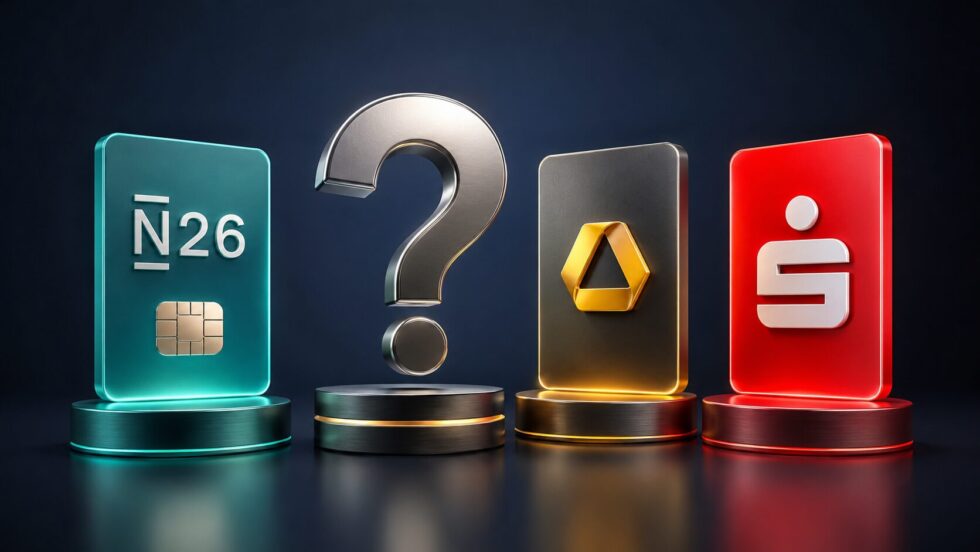
Sparkasse: why millions of Germans still trust local banking
Sparkasse remains deeply integrated into German daily life because it operates through hundreds of regional savings banks connected to local communities. In smaller cities and towns especially, Sparkasse often still dominates practical banking infrastructure. The network’s visibility alone creates trust among many customers.
The biggest advantage is physical accessibility. Sparkasse maintains one of the largest ATM and branch networks in Germany. For users regularly handling cash, this still matters enormously. Depositing money, replacing cards or solving account issues can often happen locally without waiting for online support systems.
Another major strength involves customer acceptance. Sparkasse accounts integrate smoothly into German financial systems, local payment culture and administrative structures. Older residents especially continue preferring Sparkasse because the institution represents familiarity and stability rather than experimentation.
However, the system also has clear disadvantages. Pricing differs significantly between regions because local Sparkassen operate semi-independently. One city may offer reasonable conditions while another charges considerably more for nearly identical services. This inconsistency frustrates many consumers comparing prices nationally.
Digital innovation improved, but Sparkasse still primarily focuses on reliability rather than fintech-style disruption. The apps function competently, though many younger users consider them less modern than app-first competitors. International transfers and travel-oriented features are also often weaker compared with fintech platforms.
Sparkasse strengths and limitations
| Strengths | Weaknesses |
|---|---|
| Huge ATM network | Higher fees in many regions |
| Strong local trust | Less innovative apps |
| Excellent cash handling | Slower onboarding |
| Broad branch coverage | Regional inconsistency |
| Reliable support | More traditional systems |
Sparkasse is often strongest for
- Families
- Older customers
- Rural residents
- Cash-heavy users
- Long-term German residents
- Customers preferring in-person support
Which bank is actually cheapest in Germany in 2026
The answer depends entirely on behaviour patterns. N26 remains among the cheapest options for digitally focused users because standard accounts often remain free without salary conditions. Sparkasse frequently becomes more expensive once maintenance fees, Girocards and regional costs are included. Commerzbank sits between both models because free banking often depends on monthly deposits.
Yet headline prices alone rarely tell the full story. German banking still contains many hidden costs that customers underestimate when opening accounts.
Common hidden banking costs in Germany
- Girocard fees
- Foreign currency charges
- ATM withdrawal limits
- Overdraft interest
- Paper statement fees
- International transfer margins
Some branch banks now charge separately for Girocards, while overdraft rates in Germany can exceed 10 percent annually. Foreign transaction costs also remain surprisingly high at many traditional institutions.
Realistic annual cost comparison
| Customer type | N26 | Commerzbank | Sparkasse |
|---|---|---|---|
| Student | Low | Low | Medium |
| Freelancer | Low | Medium | Medium |
| Family | Medium | Medium | Medium |
| Traveller | Low | Medium | High |
| Cash-heavy user | Medium | Low | Low |
| Elderly customer | Medium | Low | Low |
Which bank works best for expats and foreigners
Foreign residents increasingly prefer online banks during their first months in Germany because traditional institutions often require Anmeldung documentation and longer verification processes. N26 became especially popular because of English-language support and faster onboarding.
Commerzbank, however, remains one of the strongest traditional options for foreigners who eventually want a more established German banking relationship. Several expat guides specifically mention it as one of the easier branch banks for international residents.
Sparkasse can also work well for foreigners, especially those living outside major cities or requiring stable long-term local support. Some expat communities mention Sparkasse as more flexible for customers who encounter difficulties opening accounts elsewhere.
What expats usually value most
| Feature | Most preferred bank |
|---|---|
| Fast setup | N26 |
| English app | N26 |
| Branch support | Commerzbank |
| Cash handling | Sparkasse |
| Salary compatibility | Commerzbank |
| Rural accessibility | Sparkasse |
The real question German customers ask before opening a Girokonto
The debate in 2026 is no longer about whether digital banking works. It clearly does. The real question is how much convenience customers are willing to trade for physical infrastructure and traditional support.
N26 works best for digitally comfortable users who prioritise speed, low costs and international flexibility. Commerzbank increasingly attracts customers wanting balance between modern online banking and physical reliability. Sparkasse continues dominating among users who value local trust, cash access and branch relationships.
Germany’s banking market is therefore becoming more personalised rather than universally standardised. Some residents now even combine multiple banks: using N26 for travel and online purchases while keeping Sparkasse or Commerzbank for salary accounts and local administration.
The smartest banking decision in Germany in 2026 often depends less on marketing slogans and more on brutally practical questions: How often do you use cash? Do you travel internationally? Do you need English support? How important is branch access when problems appear? And are you willing to pay monthly fees for physical infrastructure you may barely use? Those questions now define the real German banking experience far more than advertisements promising “free accounts.”
Stay connected for news that matters — timely, factual, and free from bias. Read trusted updates from Berlin, Ukraine, and around the world: Nebenkosten Deutschland: Why Hidden Rental Costs Are Reshaping Renting in Germany